Showing posts with label Conservative Government 1992-1997. Show all posts

Monday, April 6, 2026

A touch of Blaired vision (1994)

TV Review from the November 1994 issue of the Socialist Standard

Watching last month’s Labour Party Conference on BBC was a heady experience. The splendour of the Winter Gardens ballroom. Blackpool, the green-blue space-age set, the forward looking slogan “New Labour, New Britain" boldly outlined for all to see. the pinstripe suits, the floral ties and the presence of that nice young man Mr Blair, all combined to give the effect that was intended by the media men and spin doctors — Labour is back, but this time with a difference. Today it is a Labour Party that you could take home to meet your mother without the worry of it doing anything to embarrass you. This time round father can safely talk to it about how the plants in the greenhouse are coming along. Gone are the bad old days when it wore a donkey-jacket and was the political party from hell spitting on the pavement and farting in public. Labour is back, they say. and it has brought a bunch of chrysanths round and a box of Terry's Old Gold.

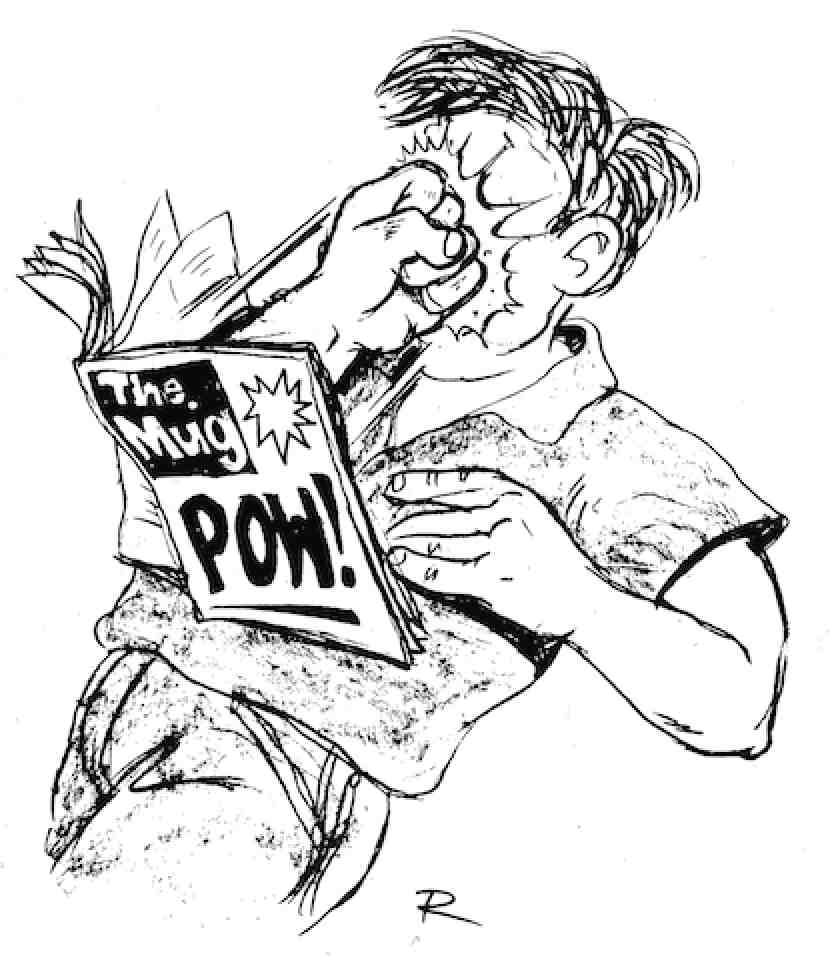
Not that Labour hasn’t tried to impress before. In 1992 it tried to sneak its way in the backdoor with claims that it had presents for granny and the young children, but father said he didn't trust it being in same room as his wallet. And father should know — he bitterly remembers being mugged by Labour back in the 1970s. It may all have happened on a dark night but he vividly recalls the bushy eyebrows. Father is not fooled by the new image and won't have Labour in the house again, let alone near his precious greenhouse.

But mother and the kids are not so sure. After all, Labour looks so attractive these days, and says some awfully nice things. It really is a charmer. And it's so boring having the same people round time and again — the bloke from number ten is always popping in with tales of woe. Nobody likes him and even the woman who did the catering for him doesn’t want to see him any more. The chap in the hush puppies from number eleven is no better and father suspects him of siphoning petrol out of the car. Compared to them, Labour seems like a breath of fresh air, but you can never tell can you?

Telling it like it isn’t
Labour is now busy convincing everyone that it is a bad egg that has reformed. Its conference was, in reality, not a conference at all, but an extended Party Political Broadcast aimed at Mr and Mrs Viewer with this end in mind. Its only discernible message was "you have nothing to fear from us — we are on your side”. Capitalists and workers, bosses and unions. Labour loves you all. Co-ordinated by the image-men for the benefit of TV, it was a stream of tepid speeches and meaningless assertions designed to connect with the hopes and, to some extent, prejudices of its potential voting fodder, generally workers whose views are moulded by the self-same media and advertising gurus.

And how the politicians tried to please. TV loves the soundbite, and there were plenty of them to be going on with "Tough on crime, and tough on the causes of crime", “traditional values in a modern setting", “a strong economy and a just society" rang out like a mantra, and all to demonstrate that Labour has a new user-friendly identity. Pity the poor TV interviewers, bombarded by a stream of verbal diarrhoea for five days. Sheena MacDonald, the anchor presenter, gritted her teeth every time she was forced to interview one of the front-bench robots, while on other occasions, such as when she had to interview John Prescott, she had to visibly stifle laughter at what are now vainglorious attempts at sobriety.

Tony Blair = I’m Tory Plan B
The Chief Robot’s speech was the ultimate triumph of form over content. Expertly delivered with the help of idiot boards, it was 62 minutes of a vision of a capitalist utopia that has never existed and which, with all certainty, will never exist. He even had the cheek to call it socialism, claiming that socialism was based on the understanding that “the individual does best in a strong and decent community of people with principles and standards. and common aims and values". How many in capitalist politics are going to disagree with that? Answer that question and you are well on the way to understanding what Blair and "new Labour" are all about.

But despite the hours of prolonged tedium, the TV coverage of the Conference did provide a few minutes of welcome relief just before Blair's speech. It is then that the Labour Party “Merit Awards" are handed out to long-serving Party members. The first up was an 86-year-old gent who had worked to help the strikers in the General Strike of 1926. To the palpable embarrassment of those around him, he delivered a speech which denounced the market economy and the world capitalist system and then singled out the drug religion as one of the greatest evils in modern society. Quite what he had been doing in the Labour Party for seventy years wasn’t clear, but it certainly took the cheesy grin off Blair’s face. If only Sheena MacDonald had done us all a favour and interviewed the old guy afterwards she would have found herself confronted by a critical intelligence for the first time all week. 
Dave Perrin

Tuesday, November 25, 2025

Who needs leaders? (1993)

From the November 1993 issue of the Socialist Standard
John Major looks like he’s in deep trouble with his party. But what difference does a change of leadership make to the operation of Capitalism?
Who would you like to be Prime Minister of Great Britain? Or leader of the Labour Party? Of the Liberal Democrats? And when you have made your choice ask yourself why — not why you chose that particular person but why you bothered to make a choice. Ask yourself what persuaded you that whoever is nominally in charge of things makes any noticeable difference to what happens to us.

We ask these questions in response to the present void in both Conservative and Labour parties, in which they are wracked with doubt over whether their recent choice of leader was advisable. In both parties the doubts have triggered off the usual frenzied but surreptitious campaigning by aspirants to the leadership, while they all deny any such ambitions and profess undying loyalty to the leader.

This is especially noticeable in the Tory Party because, as the government, their mistakes, disputes and obvious impotence to control capitalism are so clearly exposed. This is not good for John Major, who came to be Prime Minister on the assumption — which he encouraged — that his government's style would be different from Thatcher's and that this would ensure it would be more successful in tackling current problems like unemployment, housing, shortage of medical services and so on. His lack of success makes it embarrassing for Tories to remember his promise in November 1990, to lead "a nation at ease with itself.

After nearly three years of his government whatever the nation is at case with it is not John Major, whose popularity is at the point where it causes friction in his and a campaign lo replace him much as Thatcher was replaced. One seasoned MP tells of the day when a senior Tory minister advised him never to forget that loyalty was the party's secret weapon. Of an enquiring mind, this MP soon realized that the opposite is the ease — that the Tories are as disloyal and ruthless when they decide their leader is likely to lose them seats in parliament. When it gets down to it that is why Thatcher had to go and why Major’s job is in jeopardy.

The relentless and fruitless search for the perfect leader is, like so many of the delusions which bolster the capitalist system, clearly influenced by prejudice. For example, nothing in a leader appeals to British people so much as an apparent firmness of purpose. But when that same characteristic is shown by an "enemy" leader — like Saddam Hussein, it is a very different matter. Saddam, says the prejudice was not firm and consistent in his policies; he was mad, just like all the other bogeymen of the Sun and similar papers.

In any case, how valid are the memories of Thatcher single-handedly beating off all those mad, grasping foreigners and doing something called "putting the great back in Great Britain"? The decline of British capitalism since the First World War has done much to fashion the political history of this country. In one way or another every government has had to accept, and work with, that reality. Some have done this more readily than others; some have skilfully practised deceit on the issue, so that the voters were convinced they were not doing what they were.

Part of this deceit has been in the speeches of leaders who have suggested that the decline in British power was avoidable and that they could reverse the trend. This posture has not been confined to the Tories; Harold Wilson, especially during his first spell in power, consistently talked about British power and the British economy forcing their way to the top in the world. At times he was so absorbed in this crazy notion that his voice lost its Yorkshire twang and took on a Churchillian growl when he spoke about it.

The idea is to conceal reality so that all those voters who are deluded into thinking that if Britain is a super power they will become super-workers will gratefully vote for a Wilson or a Thatcher. For her entire period in Number Ten Thatcher was one of the cleverest at hiding the reality and persuading British workers that it could be avoided. That was why so many of them voted for her. But the deception is self-perpetuating because it reinforces the notion that the decline — or the rise — of a capitalist power is not a matter of history but of political policy. The assumption is then that the collapse of the British Empire would not have happened had it not been for feeble egalitarians such as Clement Attlee is mistakenly supposed to have been. It is a delusion which does not help to understand the place and the function of leaders nor what happens under capitalism.

And that brings us to the crucial question of how useful are leaders. Do they really change the course of events? One field in which they are confident they have control is the economy. When things are going badly — when British capitalism is in recession or a financial crisis — the Chancellor of the Exchequer assures us that they have the remedy; trust them and all will be well. And when things are going well — when there is a boom — they claim the credit, saying it is due to their skill and intelligence.

About a year ago British capitalism went through a crisis which has come to be known as Black Wednesday. It was a day when a panic-stricken Chancellor (who, as one of those clever political leaders, is supposed never to gel in a panic) ended a succession of juggling with interest rates by withdrawing sterling from the European Exchange Rate Mechanism. This was supposed to be yet another example of politicians’ skill but in fact it happened only a short while after the Chancellor — the hapless Norman Lamont — and John Major had lectured us on the theme that the only way to prosperity for us all was lo keep sterling in the ERM. They were in no doubt about this quite sure that sterling would not be taken out of the ERM. Now many Tory politicians are asserting that the withdrawal is an example of their cleverness and that things for British capitalism are better as a result. For example, Norman Lamont is now very clear on the issue, urging “the Prime Minister to stand up and say once and for all that Britain should never again have anything to do with a single currency. Then we could all sing in the bath" (Well he was writing in the Sun).

Parasitic minority
Different conclusions have been drawn from that muddle, as from all the other episodes of similar chaos which regularly burst on the scene, stimulating more speeches, lectures and promises from political leaders. But only one conclusion fits the facts. No matter how clever and learned leaders may be, they can have no significant effect on how capitalism works and how it affects us. This social system works to its own priorities, to the benefit of a small parasitic minority. It cannot be controlled or manipulated. The cleverer leaders may be able to conceal this for a time; the not so clever — like Lamont and Major — can’t conceal it and that is why they arouse such contempt. To choose one leader against another is to choose one style of futility before another. It would be better to abandon the whole sorry mess and opt instead for efficacy for our own ability to change society so that we operate it, trusting ourselves to run the world for ourselves.
Ivan

Thursday, October 23, 2025

Letter: Twyford Down (1993)

Letter to the Editors from the October 1993 issue of the Socialist Standard

Dear Editors,

Since last year, 1 have been involved in the fight to save Twyford Down. This has been presented by the media as a "green" issue with particular appeal to New Age travellers, students, environmental activists (such as Earth First!) and conservationists. The destruction of many sites of archaeological and historical interest there has scarcely been mentioned. The political aspects of the Government's roads programme are ignored. The corrupt dealings between Conservative Party members and MPs with Winchester College, the construction industry and the Department of Transport have not been exposed at all.

The Government is interested in only one thing — power. This is true of all governments, but the present one is particularly nasty and corrupt. Their overriding concern is that they and their Establishment friends (the Establishment is not just a mental construct but consists of real people who live and interact with each other in a social milieu most of us cannot even imagine) should continue to hold their positions of wealth and power at our expense.

Roads are not built for (although they are built by!) working people, despite encouragement to buy cars and use them. Their main purpose is to boost profits by offering cheap transport (roads are paid for and subsidised from taxes) for the owning class. Tory support for the roads lobby also ensures the continued payment into Party funds of huge subventions by the British Road Federation and construction industry companies, and the continued appointment of worthies to lucrative directorships.

The people who run this country, like those who benefit from the capitalist system everywhere in the world, are not interested in the well-being of ordinary people, although they pretend to be when they want us to sanction their robbery with our votes. They will spare no destruction — of our communities or the natural environment — in pursuit of power and profit.

The roads programme is an important issue not because of any intrinsic values but because the government chose to make it so. The Twyford Down struggle eventually took on the proportions of Orgreave, with the use of Group 4 Securitas as a private army, hired and equipped by the DoT to show us who was boss. Nearly 200 security men. plus construction workers and police, were sent against 25 protestors (I was one) who were camped on the Down overnight on the 9th December — to set an example, not merely to enable Mott MacDonald's vandals to destroy an irreplaceable ecosystem and scheduled ancient monument.

Despite what has happened at Twyford Down and what we are threatened with at many places around the country, people are not going to shut up and go away — to do that would be to abandon any thought of standing up to the worst excesses of this evil Government and to abandon the future of the planet as a place fit for life. It is vital that our non violent protests continue and grow. It is no use waiting for the Tories to be voted out of office, let alone for "the revolution". If direct action is not taken now there may soon be precious little left for politicians to argue about.
Katy Andrews, 
London E11


Reply:
It's all very well saying it’s no use waiting for "the revolution" (we agree: we shouldn't "wait" for it we should work for it). But unless it takes place — and the basis of society is changed to common ownership, democratic control and production solely for use. instead of private ownership, stale control and production for profit, then capitalism will go on destroying the environment, and the most that can be done will be to occasionally slow this down a little. The record shows, however, that defeats (as a Twyford Down) are more frequent than any minor victories. This is not really surprising as nothing, not even government action let alone direct action, can stop the economic laws of the profit system ensuring that profits come first. Editors.

Sunday, June 30, 2024

Passing the parcel (1995)

TV Review from the June 1995 issue of the Socialist Standard

Election nights are almost exciting, and Local Elections ‘95 on BBC 1 last month proved to be no exception. There was David Dimbleby with a twinkle in his eye and a Mars bar in his pocket. Peter Kellner looking studiously professorial next to a bank of computers. Anthony King thumbing through his mental book of historical precedents and the ubiquitous Peter Snow arms flailing like a whirling dervish in conversation with Magnus Pike. "Just a bit of fun” is Snow’s catchphrase. and of course it all is just that, at least for him.

For the politicians it is different—election night is akin to a life-or-death prognosis. John Selwyn Gummer had seldom looked glummer as the news trickled in of the most humiliating Conservative defeat in local elections on record. Frank Dobson chortled like a Father Christmas on Prozac and the Liberal Democrats' spokesman was there as well, popping up like Chad over a wall occasionally in the hope that nobody would forget he was there too. But it was Labour's night, and if all Frank Dobson's Christmases had come at once. John Prescott beamed as if his political marriage to Tony Blair had just been consummated in spectacular style. He opened a bottle of champagne at Labour Party headquarters and thrust the spray orgasmically at the cameras, adjectives tumbling over one another just as the Moet tumbled out of the bottle.

It was indeed touching that the working class could have had such an effect on their fellow human beings. Touching, though not altogether surprising, as it is the workers who put the politicians in their exalted position to start with.

If local election night demonstrated anything it was that the Labour Party . . . pardon me. New Labour, is on a roll of gigantic proportions and that the Tories are digging themselves further into a hole and not out of it. Labour, on this performance seems set to win a General Election and they will be aware at this time like at no other that dangerous talk costs political lives. During the election campaign itself they showed themselves cognisant of this fact, fighting the battle on presentation, managerial abilities, sharp suits and white teeth. "Policies" has become the most dangerous word in their vocabulary. When tackled about this by Dimbleby. Frank Dobson shrugged his shoulders and gave a "what can we do" look. Local government, he said, is hamstrung by government subsidies and capping, and so even if Labour wanted to spend more on education or local services, it couldn't.

At this point John Gummer intervened to claim that you could not blame the Conservative government for the belt-tightening consequences of the world recession and that in any case things were getting steadily better under the foresighted stewardship of John Major. But then came the pièce de résistanceSir Teddy Taylor. Tory rebel, beamed in via satellite or some such device to tell the panel that they were all wrong as the real problem was Europe. "I know I'm being a bore . . ." he said, and of course he was right. And right about something else too. He went on to say that just as it didn't matter which of the parties controlled the councils, neither did it matter much which party controlled Westminster, as they were all prisoners of the system, the headquarters of which he identified as being somewhere in Belgium. Now he might have been misplaced about the importance of the last bit. but his substantive point, of course, has a lot going for it.

Travel with Teddy
Travel round Britain and can you tell where a Conservative council ends and a Labour one begins? Travel around Europe or any other part of the world and try doing the same with governments. It is very difficult indeed, and Sir Teddy has obviously noticed. Given all this, quite what his function is as a politician must be in some doubt, his obsession with Brussels notwithstanding. If he thinks politicians are as impotent as this (and they generally are) then it cannot be long before he packs it all in forever and takes to the stage.

But have some sympathy for him. Sir Teddy showed that he had grasped, in his own hamfisted way, a fundamental truth of capitalist politics, even if he lacks the full explanation for it. And this is that, in reality, election nights at present are momentary interludes in a mind-numbingly tedious and pointless exercise. They are the time when the two rival but otherwise identical brands of cola release their sales figures, when two bluebottles climb up a wall to see who can reach the ceiling first. Pointless, though at the same time mesmerising if your life is empty enough. And if the phrase "get a life" should be directed anywhere, the BBC studios on election nights are as good a place as any to aim. 
Dave Perrin

Wednesday, December 6, 2023

Greasy Pole: Howard’s Beginning (2003)

The Greasy Pole column from the December 2003 issue of the Socialist Standard

Among what is politely called the cut and thrust of politics the Tory Party has always taken comfort from the notion that, when all is said and done, they have the priceless asset of loyalty as their secret weapon. Anyway that is the kind of nonsense they dish out to the grass roots party members, presumably because they alone are crazy enough to believe it. Consider, for a start, the case of Iain Duncan Smith. As it became more and more obvious that the Quiet Man of Chingford could not survive much longer in the hot seat into which those same grass roots had thrust him, he tried again and again to put off the inevitable by appeals to party loyalty. In this he was supported by the majority of MPs, including some of the more prominent in the Shadow Cabinet. At that stage only a few were ready to put their heads above the parapet. And among those most loudly protesting their unswerving loyalty to their doomed boss were Oliver Letwin – and Michael Howard.

So strongly were these two driven by the passion of their loyalty that shortly before IDS was shown the door by the parliamentary party they allowed themselves to be photographed standing in support of him outside Conservative headquarters. The question is, was anyone really impressed by this? The body language and facial composure of both men did not suggest that loyalty was in the forefront of their minds. And that was how it really was because directly IDS had been deposed Howard announced that he was ready to offer himself, with all due modesty, as a candidate for the leadership. But he did this with a speed not to be expected in someone still grieving loyally for the lost leader. At the same time Letwin was busily negotiating a deal between Howard and his only real rival – David Davis – to ensure that Howard would be the only candidate. It was, as you might say, political business as usual.

Guilt
If either of these men was troubled by feelings of guilt at their double standards (and there is no evidence whatsoever that politicians are ever vulnerable to such distractions) they could have consoled themselves with the memory that in his day IDS himself was not famous for being loyal to his leader. He was, in fact, one of John Major’s “bastards” – a group of swivel-eyed Tories who plotted relentlessly against Major and his policies. In fact there is a case that when the leadership was being contested in 2001 it was the very fact that IDS had been one of the “bastards” which persuaded the grass roots to vote for him. Then there is the fact that, in the previous leadership election in 1997, Howard was outmaneuvered (a rare occurrence for him) by William Hague going back on an agreement between them not to stand. And what about the disloyalty of the parliamentary party towards the grass roots membership – all those patient, unfulfilled blockheads who stuff envelopes and organise coffee mornings but who were denied their chance to vote for a new leader? It seems clear that the underhand operations to get Howard as the only candidate were designed to avoid giving the membership a chance to elect another IDS. So much for party unity. So much for trusting the party members. So much for democratic elections. Well, we did say it was cut and thrust.

One reason the Tories were so keen on Howard was that he was about the only one with a public image; the others, like Letwin, Fox and Davis, are hardly known outside the party rubber chicken circuit. Howard was different; after all he had been a Home Secretary. Which was part of the problem because if anything he was rather too well known in an undesirable way. If he is remembered for anything it is for the cruelty with which he pursued anyone caught breaking the laws which protect capitalism’s right to legalized theft. This made him hugely popular with the grass roots in their conferences but it had the opposite effect on anyone at the sharp end of crime and the legal system. “Michael, stand and deliver” was how Jeffrey Archer (before he began his personal experience of the punishment which Howard was responsible for) introduced him at one conference. In response to which Howard brought the faithful to their feet with a rousing stimulation of their most hardened prejudices and delusions on the theme of “Prison works… I know what causes crime: criminals”. And in case there was any doubt about his opinions he chose as his minister for prisons that strange woman Anne Widdecombe, who justified his confidence in her by overseeing the shackling of women prisoners while they were giving birth.

Smirk
Whatever protest was aroused by incidents like these left Howard unmoved, his oily smirk undisturbed. In the view of a fellow minister he was a Home Secretary whose policies were “largely determined by the Conservative Party Conference…may have been the worst Home Secretary in the two centuries the office has been in existence”. (Since then we have had experience of Jack Straw and David Blunkett, who have put in a strong bid for that distinction). The fact that Howard’s family came to England in 1939 as refugees from the intensifying repression of Jews in Romania did not persuade him to speak out against the anti-immigration policies of the Thatcher government; nor did it make him protest against Thatcher’s raging about the country being “swamped” by immigrants. In the 1997 Conservative leader election Campaign he said that “Tories should not believe in ‘one nation’ policies but in ‘one British nation’ policies. All of this was in the cause of helping his bid to be leader of his party, eventually Prime Minister.

Then came the New Beginning. The prospect of leading the Tories, with the golden dream of upsetting precedent and winning power at the next election, wonderfully concentrated Howard’s mind. Something drastic was needed to get rid of that unfortunate image as the slippery darling of the Tory grassroots. The first priority was to embrace the concept of renewal: “Of course we have got to change” he announced, “The world has changed, the country has changed and we have to change”. A few days later he was giving his party the bad news of what that change entailed: henceforth they “…must be a party broad in appeal and generous in outlook”. He might have put it more simply: “Trust me, elect me”. This all provoked unhappy memories of Thatcher and her reference to St Francis: “Where there is discord may we bring harmony” and John Major drooling about presenting us with “a nation at ease with itself”. History will record that Thatcher’s government did not set out to introduce us to social harmony, or any other kind of it and Major became infamous for presiding over a nation so disturbed with itself that they blamed him enough to eject him emphatically from office at the first opportunity so that his party could then eject him from the leadership.

Charm Offensive
A lot of work, some of it in unexpected quarters, is being put into recasting Howard, to persuade us to forget the memorable description of him by Anne Widdecombe – who should have known – that there was “ something of the night” about him. We are being informed that we have cruelly misjudged the poor man. We thought he was a slimy, manipulative conspirator – just the kind of person to survive in the adversarial world of barristers which he inhabited – when all along he was, as one of his admirers put it, “Warm, charming and witty”. Even worse, in the Daily Telegraph of 1 November Anne Robinson took time out from being – well, Anne Robinson – to reassure us that when he was at Cambridge Howard was “a very fine lover” and that he has now grown up into someone who is “shy, witty and clever”.

The Labour Party are banking on the voters being resistant to this charm offensive and preferring to live with, and to vote on, their memories of the Michael Howard of old. But this may not be the wisest tactics for them. Every capitalist party has a murky past, populated by leaders whose responsibility for asserting the primacy of the ruling class has made them widely hated. If the workers had voted in the 1997 election with proper recall of the experience of previous Labour governments they would never have put Tony Blair into Number Ten. In 1979, if they had remembered what their life had been like under past Tory governments they would not have put themselves up for another dose of it. The leaders of capitalism personify the fact that it is a vicious, murderous, repressive way of organising human affairs. And capitalism relies for its continued existence on the defective memories and responses of the very people who suffer under it. There is no reason for Michael Howard not to benefit from this; we might yet see him realising his all-consuming dream of going through the front door at Downing Street.
Ivan

Sunday, November 19, 2023

Press, privacy and profit (1992)

Cartoon by Peter Rigg.
From the September 1992 issue of the Socialist Standard

When David Mellor’s affair with the unemployed actress suddenly ceased to interest the newspapers it left room on the front pages for such trivial matters as the world economic recession, the fighting in Bosnia, the famine in Africa which threatens to kill three million people, the crisis in the Gulf, the riots in British cities . . . But of course there was more to it than a bit of prurient excitement about a Minister and a woman; for one thing, did Mellor and de Sancha merely drop out of the headlines or were they pushed?

The affair happened when Mellor’s marriage was in difficulty—although it was not clear which came first and whether one caused the other. In any event the Minister might have got away with it— like so many other prominent politicians—had he not revealed in a bugged telephone conversation that after a night with de Sancha he was too exhausted to write a couple of speeches. Some people might have thought that she had done us a favour but to the People newspaper the prospect of thousands of desperate voters being deprived of listening to Mellor was too much. In the national interest, they decided, they must act; we simply can’t have the country run by a lot of weary and wordless Ministers. However it may damage Mellor and the government—and of course with absolutely no regard to whether it increased the paper’s sales—all must be revealed.

Privacy
And revealed it was, in all the detail customary to what is politely known as the “tabloid”—or, in the best of circles, the “compact”—press. To say that this area of the media operates on double standards would be to understate the arithmetic of how they operate. It is commonplace for them to denounce on one page an example of sexual excess— thunderously scourging some alleged sexual offender as a “beast"—while on another page they excite sexual tensions with pictures of a scantily clothed woman whose condition is explained in a succession of soggily provocative puns. This seeming contradiction survives and flourishes through the admitted skills of the newspapers’ wordsmiths. to devalue the whole thing as an innocent joke. This trick is pulled with the help of a specialised vocabulary, in which sexual intercourse becomes “bonking” and, for example, the ex-boss of Burtons is not just another customer of an expensive prostitute but “five times a night Halpern”. That type of vocabulary not only pushes up the sales of papers like the Sun and the Star but gets the readers chuckling, in the bus queues and the works canteens. at the discomfiture of the subjects of the reports.

This situation is so traditional in the press that there has been a long-running battle about whether reporters have an unrestricted right to invade a person’s privacy. Most recently this was scrutinised by the Calcutt Committee, which concluded that the press should be left for a probationary period to mend its ways voluntarily rather than be subjected to any legal restrictions. It is just possible that one of the motives behind the People publishing Mellor’s affair was to re-open the debate over privacy in such a way as to establish their right to intrude, at whatever cost to the victims, whenever they judged it would boost their sales.

The depths
The depths to which newspapers will sink in this quest are as yet unplumbed. Here is how the father of Julie Ward, who was murdered in the Masai Mara in 1988, reacted to the breathtakingly dishonest reporting of the murder by the Sunday Mirror:
David Barritt is a freelance reporter. Tony Frost was the deputy editor. Eve Pollard was editor and Robert Maxwell the publisher. I loathe them all . . . if I could have got my hands round Maxwells or Pollard's necks that morning I would have choked the life out of them.
In 1982 the loudly trumpeted patriotism of the Sun did not prevent it concocting an interview with Marcia McKay— whose husband had been killed in the Falklands war— which had never taken place. In 1989 Peter Bottomley, who was then Transport Minister, was smeared in a Mail On Sunday headline: “Minister in Sex Case Row”—an implied accusation for which the newspaper was later forced to apologise and pay substantial damages. And in 1990 two reporters from the Sunday Sport—which is hardly a newspaper—entered the hospital room where the actor Gordon Kaye lay seriously injured to take photographs of him and attempt to interview him. This kind of hard-nosed and callous intrusion is another tradition; according to Ray Snoddy, who is media correspondent of the Financial Times, “in the old days, dressing up as a doctor to get a hospital interview was just one of the tricks of the trade”.

Mellor’s attitude to all this might kindly be described as ambivalent, although some might prefer the opinion of one Tory backbencher that he had “made an ass of himself’. As a politician who has always been acutely aware of the need to keep himself in the public eye, Mellor did not know whether to plead to be left alone or to set up a series of photo opportunities. So, just to be safe, he did both.

The family
Of course there was the little problem that he was a member of Thatcher’s government when it suddenly began to espouse its peculiar version of “Victorian values”, which included a reverence for the sanctity of monogamous marriage. He was one of the Ministers instructed by Thatcher to go away during a parliamentary holiday and “think about the family”—because the Tories had decided that the supposed stability and protectiveness of the nuclear family was a vote winner. Finally there is the fact that Mellor, like other politicians, has used his family to appeal for votes, as if a conscientious and caring father could be trusted to run capitalism more humanely than one who has an affair with an out of work actress.

The People could hardly have believed its luck when it got the offer of the tapes which exposed Mellor’s hypocrisy. At a time when the newspapers were under a lot of pressure to clean up their act—to stop their reporters dressing up as doctors, to stop concocting and printing stories—Mellor had made his views clear. In a Hard News programme in December 1989 he posed as a fearless defender of truth and probity, saying that he was “almost embarrassed to live in the same society" as the people responsible for press invasion of privacy and for the ghoulish reporting of tragedies like Hillsborough. He moved right into the bull’s-eye in the sights of the press when Major put him in charge of the new ministry responsible for the press.

On the day after the story of his affair broke, Mellor announced that he was reviving the Calcutt investigation, which clearly implied that the press had failed its period on probation and might now expect the laws on trespass and intrusive technology to be tightened. The press responded to this by squealing that any such laws would be used to protect the government of the day, which would have been more impressive if the press itself did not use such disreputable methods to push its own political opinions. For example the support which the Murdoch papers give the Tory government is consistently and hysterically based on distortions of reality.

Hypocrisy
But just as the debate—if that is the word for it—was heating up the Mellor affair suddenly dropped out of sight. Anyone who was disappointed at not getting their daily ration of revelations about de Sancha sucking someone’s toes may ponder that this may have happened because a deal was struck between the government and the press: no more exposure of the Minister’s indiscretions in exchange for a promise not to impose any further restrictions on the press? If such an agreement would be a prime example of hypocrisy on both sides—well, that is what the whole matter was all about.

In a Commons debate in 1989 the Tory MP Julian Critchley said “the truth is that as standards drop circulation figures rise. Such newspapers lie in search of profit". It is all very well—and very convenient—for an MP to condemn some of the nastier effects of the profit system but this is done only by ignoring the fact that those effects are inseparable from the basis of the system, which they accept and support. Capitalism produces its wealth—including newspapers—for sale and profit and its morality is fashioned by that. If truth reticently stated sold newspapers the Sun would be as staid as the "quality" press. As it is, what pushes up circulation into the millions are lurid concoctions about private lives, a distortion of human sexuality, gruesome horror stories, pointless intrusions into grief, . . . None of that is a pretty sight but capitalism and its profit motive, and what that does to human beings, are not pretty either.

The Mellor affair was not pretty, nor was the way the press exposed him for the canting humbug he is; nor was the way the government and his fellow politicians responded. And while we are on the subject neither is this society pretty, with its seething problems beside which the wretched Mellor and his woman friend are reduced to the historical non-entities they are.
Ivan

Monday, October 16, 2023

Harder times for the unemployed (1996)

From the October 1996 issue of the Socialist Standard
There is nothing governments can do to solve the capitalist problem of unemployment. Indeed, there is little talk these days about 'solving' it, the emphasis is simply on what to do with the 'culprits'
From October Unemployment Benefit—the Dole—will be known as the “Job Seekers Allowance”. Along with this will come targeting agreements, directives, responsibilities, job plans, prescribed programmes, reviews and flexibility. Buried under the tarnished gloss of this jargon lie compulsion, regimentation, sanctions and hardship for those who challenge the myth of exploitation by an employer as a “choice”. It means that the Tory government have finally recognised that the exercise of continually massaging the jobless figures is a worn-out facade and that the use of coercion is the only alternative in an effort to reduce the cost of maintaining the jobless white at the same time this will provide an opportunity for employers to take full advantage of short-term orders and low stocks for which cheap casual labour is ideally suited.

Austerity measures
The JSA should be viewed in the context of a long list of austerity measures affecting Social Security payments over many years. With the cost of Social Security a burden on the capitalist class all changes have been implemented with a view to reducing this financial bill. But paradoxically government intentions have not been matched by the reality. For despite the efforts to deter claimants by increasing the complexity and size of the benefit forms, along with tougher criteria on claimants' entitlement, the working class under the pressure of circumstances have in increasing numbers applied resourcefulness to find loopholes in the DSS minefield. Hence, the total bill for running the DSS has escalated to £93 billion. Whilst actual payments have decreased in relative value the total number of claimants has actually increased—along with fraud and the take-up rate for different benefits. Yet fortunately for the capitalists the take-up rate still falls far short of that estimated, resulting in a surplus of £3.2 billion returned to the Treasury in 1995/96, the difference between expected claimants and actual payments.

The government hope that the full enforcement of the sanctions contained within the JSA will make substantial savings and reductions in the unemployment register. Firstly by deterring registration, and secondly by placing the onus of finding a job on the individual claimant irrespective of the state of the labour market. By ignoring the fact that labour market demand is virtually stagnant and that the unemployed reserve are on hold until more production becomes profitable, it is a short step to asserting that the non-existent jobs are really there and that it only needs the unemployed to become “Jobseekers” to winkle them out or even to create them.

Workers who disagree with their Job Agreement (which is in fact a contractual obligation backed up by penalty reductions in benefit if not carried out) and its clauses of Job Plan, Jobseekers Directives, Review Procedure, regular attendance at Job Centres for “active signing” and are unable to prove they are “actively seeking work”, can expect a withdrawal of benefit for 1 to 26 weeks, or at least be faced with the misery of applying for hardship payments for their dependants only.

When these measures are combined with the changes that have already taken place in limiting Unemployment Benefit, Housing Benefit and Mortgage Interest payments and the action taken to align accommodation with the circumstances of unemployment through a notional “Relevant Rent” —take your choice, bedsit or doorway—they amount to increasing oppression and frustration for the unemployed.

Job Centre chaos
It is not only the claimants who are going to suffer the consequences of implementing the sanctions contained in the JSA. On the other side of the counters are another group of workers who have to deal with the short fuses generated by capitalism in a panic. On them falls the burden of being the paid enforcers when it comes to applying the sanctions. To help them in their endeavours they will be computer-linked with other Job Centres nation-wide and with the local labour Market System so they can ensure claimants are targeted and doing the rounds and that the Job Centres are also expected to reach the target demanded by Peter Lilley of 25 percent efficiency savings over the next three years. On top of this they will have received training in counselling skills to persuade claimants that the various options (which they have no choice on), contained within their Job Plan—retraining, employment placement; voluntary-work; signing up with employment agencies etc. are all in the claimants’ short-term interests, provided that is that they are happy to ignore the low wages, part-time and casual one-hour contracts and adverse working conditions which are not even acceptable to the low standards of the Health and Safety Executive. In order to protect Job Centre staff from the expected fallout from the outraged claimants who have sussed they have been classified as forced labour, the staff will be enclosed in booths protected by hardened shatterproof Perspex with security guards patrolling the floor.

Such a volatile situation with workers blaming each other instead of the system of wage slavery can only be expected from capitalism. Indeed as long as capitalism lasts the workers’ relative misery', destitution and deprivation will continue to fluctuate with the sway of boom and crisis.

This continuing uncertainty will find no relief by supporting the Labour Party. They have made it quite clear they agree with Peter Lilley that some form of sanctions are necessary for the unemployed. Their total agreement with letting the market set its own level of compulsion is sufficient testimony to the fact that they will end up doing much the same as the Tory ratbags are now applying. In any event it is not which party is in government but the compulsion built-in to the wages system that is detrimental to human relationships and the obstacle to our social well-being.
Gravedigger

Friday, August 25, 2023

Press Exposure: Oo dun it? (1995)

The Press Exposure column from the August 1995 issue of the Socialist Standard

"It's The Sun Wot Won It" was how Rupert Murdoch’s finest, in a page one full-frontal, analysed John Major's victory in the 1992 general election. This was the latest in the Sun's history of brilliantly impactful headlines—cheeky, in words of one syllable, hitting you in the eye will a roll-your-own, crude concept of something which you might otherwise regards as serious.

That front page said a great deal about how vulnerable the working class are to inducements to grievously abuse their power to make urgent fundamental changes in society. It also contributed to the delusion.So persistent among the press, that it can influence—even decide—the outcome of elections. This delusion must profoundly boost the egos of the press barons and the editors and the cynical hacks who write up those items and compose those artistically misleading headlines. Perhaps that is what encourages people like Murdoch and Conrad Black, and before them Robert Maxwell, to shell out millions to buy the papers.

There are, however, obvious flaws in this concept. To begin with, the press in this country overwhelmingly supports the Conservative Party so if the voters always voted as the papers advised the Tories would never lose any by-elections and there would never have been any Labour governments to pick up where the Conservatives had left off and Winston Churchill may well still be prime minister. Not that it would matter if he were, except to the morticians, because the notion that the lives of people who have to work for their living are affected in any significant way by which party they elect to try to control capitalism is just another of those stories in the papers which should not be believed.

On your bike
The most recent example of the news papers kidding themselves that they control large political issues was in the fight for the leadership of the Tory Party though this time they were primarily attempting to influence the rather small electorate of Tory MPs. The greater— and certainly the more popular—part of the Tory press were firmly opposed to Major. The Sun, wot done it for Major in 1992, has now decided that he "has loser written all over him. He is damaged goods". A screaming page one headline drove home the point that Tebbit had come out against Major: "On Your Bike, John." The front page of the Daily Mail was devoted to a cartoon of a sinking liner—the Torytanic—and the advice: “Time To Ditch the Captain." In what preens itself as the quality press the Times and the Daily Telegraph were keen for a change, with the Telegraph condemning Major as unlikely to alter his policies so "as to give the Tories a realistic prospect of winning a general election". There is no equivalent in elections to the Trades Description Act, but if there were disgruntled voters would have had grounds of complaint about this apparent exposure as an incompetent wimp of the man the press were urging us to vote for so recently.

Only the Daily Star, the Daily Express ("the voice of reason in a cacophony of extremist nonsense") and the Financial Times supported Major but their combined circulation is little more than half that of the Sun by itself. So it turned out that the press campaign had little effect on what is surrealistically known as the most sophisticated electorate in the world. (Anyone who has observed Honourable members prancing and preening before the electoral hoi polloi in the lobby or behaving like empty-headed disruptives in the House must wonder why they call themselves sophisticated, but never mind.). Although the Tories voted to keep Major there were enough who did not support him to make a significant body of irritants which must be eager to exploit his problems in the future, with or without the approval of the press.

Losers
What decides how an MP votes in a leadership election is whether the leader is a vote-winner or a loser. That was why the Tories ditched Heath and then Thatcher. The voters did not reject Thatcher, she had led the Tories to victory in three successive elections but by 1990 enough MPs were convinced that the Iron Lady was corrosive of their majorities to overthrow her. She said it was a funny old world and she wept real tears as she left DowningStreet but someone should have told her that this was politics. If the Tory press had been asked they might well have wanted to keep Thatcher, who had seen off Callaghan and Foot and Kinnock not to mention General Galtieri and a few hundred Argentinean sailors on the Bclgrano. But reality—the Tory confidence that they are the great election winning machine—intruded in the persons of the men in grey suits and, whatever the papers said, her time had come.

However loud the Tory papers screamed, Major won because he was the safer bet while Redwood could not reassure enough Tory MPs that their majorities would endure and flourish with him as leader. It was, in other words, not the papers but the MPs—fearful, ambitious, calculating—wot done it. 
Ivan

Sunday, June 5, 2022

What community (1993)

From the June 1993 issue of the Socialist Standard
Community (dictionary definition): Hie people living in one locality; a group of people having cultural, religious, ethnic or other characteristics in common. Community (governmental definition): Anything that suits us, provided it gives the impression of a united co-operating and supportive social unit.
Of all the politicians’ buzz words “community” is one which has been in use for a long time and which shows no sign of dropping out of fashion. A month or so ago John Major was trying to enthuse the Carlton Club (which is its own community of a particular kind) with phrases like "an unbroken chain of community” and “little unions of communities”. A few days later John Smith ranted about “your communities . . . our communities . . . together in our communities”. This abuse of a very useful word has something of a pedigree. In the 1960s the Liberals won a lot of votes through a bit of electoral sleight-of-hand called community politics. In what they call the war on crime the police have named some insignificant rearrangement of their system community policing. The notorious Poll Tax was officially known as the Community Charge, as if it was something we all contributed to for the common benefit. We should all be on our guard whenever we hear the word: after all the Nazis’ name for the carriage of mentally ill people to the extermination camps was The Community Patients Transport Service.

Care
For some years now we have been hearing a lot about something called community care. What this has often meant in practice has been the closing of mental hospitals, which has released some very valuable sites for profit-hungry developers, and the ejection of the patients into—well, into the community. Often the result of this has been that a lot of people who are so damaged that they have disabling problems in coping with the everyday stresses of working-class life in this so-called community have been thrown on to their own, very inadequate, resources.

In many cases they don't make it, they don’t find a job or get somewhere manageable to live or settle down with a partner or with friends. They descend into vagrancy or alcoholism or psychosis. At the extreme they commit suicide or kill someone else—like the young woman in Yorkshire who randomly stabbed an 11-year-old girl to death in the street; or the Sussex mother who drowned her two small children in the bath. Whatever argument there is in favour of closing mental hospitals and substituting "community care” for the mentally ill it is not the motivation behind the policy. What has counted here—as usual—is cost; "community care” is cheaper and has the bonus of profitably developing the buildings and the grounds where the patients once lived and strolled about.

The latest episode in this saga has been the new Act which has transferred responsibility for community care from the Department of Social Security on to the local councils. This has serious implications for the most vulnerable and needy people. Smooth-tongued ministers justify the change on the grounds that local councils can deliver a better service because care and treatment which is locally-based can be tailored more suitably for each individual.

To the unfortunates on the receiving end this may sound reassuring until they come up against the fact that the responsibility which has been passed to local councils is not just a matter of provision but of finance as well. And there are strict limits on what councils can spend on it. For example, three London boroughs have pooled the funds available for the treatment of drug and alcohol addiction but they are still between £1 million and £1.5 million short of what they need. So in those boroughs about one-fifth of those who ask for treatment for their addiction won’t get it.

Local authorities as a whole are complaining that funding for community care is over £200 million short of what is needed for proper care to be provided. Of course, addicts do not rate too highly in public sympathy. But what about old people, who represent what one writer has called a "big financial mountain"? The outlook for them is not reassuring; as a TV programme recently pointed out, local authorities are already exerting a lot of pressure on relatives to pay for their care. In this pitiless game these are among the losers. The winner is the DSS. who stand to reduce its expenditure to the tune of millions of pounds.

Degrading
The new policies on community care mark another retreat from the promises which were so plentiful during the war, that the lessons of a miserable past had been taken to heart. Politicians who were anxious to get the greater commitments to the war effort from the working class were very free with their assurances that never again would poverty be left to chance. In future the state would make it its duly to look after all the most needy people—the old, the sick, the homeless, the children . . . To all those millions of people who did not understand how capitalism works, how it must condemn the majority to poverty, what is the nature of that poverty and the true function of political parties, it was seductive stuff. Out of that auction in electoral bribes the so-called welfare state emerged.

Since then one government after another—Labour as well as Conservative—has pledged to keep the “welfare state" in being while they have been busily considering and implementing plans to dismantle it. If this Tory government has been particularly active and more open about this it is because British capitalism is in slump, which means that the lowering of workers' living standards is that much worse for the most impoverished. What is happening to old people is especially bitter and poignant because these are people whose lives have been devoted to being exploited to make profits for the class whose interest is represented by the government. There could be no better example of how capitalisms class system operates, how it enriches a minority while it degrades the majority, and to call it community care illustrates how sickeningly capitalism degrades the very language we use.

Community is a mellifluous word. What is implies—social cohesion with mutual co-operation and support is not only desirable to human beings but vitally necessary to them. But it is a contradiction to use the word about a social system which essentially divides the human race on the basis of what they own. Capitalism adjusts to such contradictions by distorting the meaning of the word to the point at which it is unrecognizable. Anyone who looks beyond the superficial issues of capitalism to a saner and more competent social order should concern themselves to defend such words, as a start to building what will properly be called a human community.
Ivan.

Tuesday, July 6, 2021

Whose fault is it anyway? (1994)

From the July 1994 issue of the Socialist Standard

On the day the Tories won the 1979 general election a group of trade unionists in the telecommunication industry gathered in their local and assured each other that within six months they would bring the Thatcher government down through a campaign of industrial sabotage. The rest, as they say, is history: but those boozy, disgruntled Labour supporters are not alone in a desire to forget the promise of fifteen years ago.

The Tory election manifesto then had recommended itself as based on "reason, on common sense, above all on the liberty of the people under the law". That was how things were going to be run — on reason, common sense, liberty — and Thatcher had emerged from Number Ten to tell us how her government would bring harmony and prosperity as well. It is all very different now as the government staggers from one crisis — economic, diplomatic, political, personal — to another. The Tories, who have always won votes from a popular prejudice that they are in control of events, are being seen as dramatically out of control and they have paid for this in their electoral losses. However brave the face they put on it the fact is that the Conservative Party is in a country-wide panic about what has gone wrong for them and how they might put it right.

Back to basics
So far they have not been very successful. Each diversionary ruse they have tried has failed - sometimes worse than failed. Back to Basics, for example, had hardly been launched before it suffocated beneath a blanket of sleaze, as Tory MPs seemed to be queueing up to expose its hypocrisy by revelation of their business activities and what they chose to call their private lives.

So until something better comes along the Tories will probably continue in their efforts to excuse their government’s failure in the simplest possible way: they will blame it onto someone else. This is not a new idea, nor one exclusive to Conservatives; Labour governments were always ready to explain their impotence and confusion onto currency speculators or Tory saboteurs in the civil service or greedy and irresponsible workers who wanted more wages than they "rightfully" earned.

Politicians who have to face up to their inability to produce profitable markets out of nothing, to control prices when economic forces are pushing them inexorably up or down, often ascribe it all to a lack of confidence, to industry "talking itself into a slump". They ignore the fact that if it is possible to create a slump by talking about it, it should be equally possible to create a boom by talking about that: in reality the economic problems which undermine confidence in that way are very real.

For example in September 1990 Thatcher was upbraiding a meeting of Welsh business leaders about the "voices of gloom . . . newspaper talk of recession . . . self-doubts assailing the business community — or perhaps more accurately the press". But it is simply not good enough to say it has all been got up by the press. Thatcher’s outburst was partly in reply to a CBI survey which reported some 10,000 jobs were being lost monthly as orders for goods, and consequently output, fell. At the same time NatWest Bank had been forced to write off £230 million in bad debts — which they would hardly have had to do in a boom — and reported 235 companies going into receivership during the first six months of 1990 — about twice as many as the previous year. The CBI had described British capitalism as "on the brink of recession" — they were not being pessimistic; they were facing facts.

Beggars and homeless
It is not only industrialists and bankers who have been talking themselves unnecessarily into difficulties. One of the most distressing symptoms of the so-called prosperity of Tory governments has been the re-emergence of beggars on the city streets. In the West End at night nameless bundles of misery huddle under whatever they can find to cover them. On the tubes frail youngsters listlessly display placards appealing for lose change. Some of these are mentally sick people who before the benefits of "community care" descended on us would probably have been in hospital. The minister responsible for housing, Sir George Young, an Old Etonian toff, once described such destitutes as the people you have to step around as you leave the opera. It was a chilling illustration of what one of the soggier Tory wets thinks about the homeless, whose number have doubled since 1979.

In rather different circumstances — Young never has to avoid them on the pavement after a night out — are those people who have become homeless because they could not afford to keep up their mortgage payments. In recent years numbers of such people increased to such an extent that even the banks and building societies — not to mention estate agents — became worried. By a typically grisly misnomer, this process is known as "repossession", as if the evicted people had ever owned the house in the first place. "Repossessions" climbed to a peak in 1991, when from October to December nearly 40,000 took place. This year they have fallen, presumably because the real possessors of property — the banks, building societies and so on — have worked their way through the defaulters. The people who have been turned out of their home may reflect bitterly on the Tory 1979 manifesto which informed us that "to most people ownership means first and foremost a home of their own".

As Lady Porter demonstrated in Westminster, there is an assumption that anyone who takes out a mortgage on a home is, for some reason, a Conservative voter. So those who have suffered "repossession" come in for a certain amount of cold sympathy from ministers. But the destitute are not believed to be Tories so they don’t get such sympathy; their hapless condition is all their own fault. As John Major said:
"They are not on the streets because they have to be on the streets. There are empty accommodation units across London and in other areas where people could go if they wished. But they choose not to stay there and that is a cultural point. It is a strange way of life that some of them choose to live."
And so it goes on. The government can have no responsibility for any of the problems they promised to solve because the fault really lies with the people who suffer the problems. Millions of people are unemployed because of some peculiar determination to endure the deeper poverty of being out of work, which has suddenly affected them all like a virus.

All our fault
The figures for recorded crime go up and up because indolent parents and mischievously trendy teachers have failed to instil into children the proper values and ability to discern right from wrong — which really means compliance with the demands of class society and with their degraded place in it. It is almost as if the Tories have not been in power for the past 15 years, as if they have not had time to deal with all these problems.

So whose fault is it? Well it doesn’t make sense to blame the politicians because they only make up the lies and excuses, they only urge us to forget their failures and to trust them again and again when all reason and experience tells us not to do this. So the responsibility lies with the people who allow themselves to be cheated out of their historical role, their power to make a basic change in society and prefer instead to hope for a few piddling adjustments which have no effect on capitalism’s continued existence and on its power to wreck our lives. To go back to those trade unionists — the task is not to bring down a government but to abolish the entire social system.
Ivan

Sunday, April 18, 2021

Dead left and rotten right (1993)

Cartoon by George Meddemmen.
From the April 1993 issue of the Socialist Standard

Rarely have the political defenders of the profit system looked less savoury. The Left is all but dead, buried beneath the rubble of the Berlin Wall, the most despicable side of which they had spent their histories celebrating or apologising for in the name of socialism. The Right survives, grotesquely repeating the excesses of its past in its more extreme forms, but, more generally, diminished to the corrupt post-Thatcherite ethos of the Bingo Hall.

The Left seeks to persuade us—and itself—that it is not really dead, but lying down. Like the unemployed actor who was never much good, the Labour Left and the other impotent radicals within the capitalist parties insist that they are merely "resting". But this is not true. All that is left of the Left is Tony Benn, destined to become a patronised elder statesman of a lost cause: Dennis Skinner, a parliamentary court jester; countless leftist sects of diminishing proportions selling meaningless newspapers mainly to each other; and Tony Cliff doing the Trotskyist music-hall circuit with increasingly implausible, incredible and embarrassing Lenin impersonations intended to inspire amongst the highly-impressionable the conviction that a British Bolshevik revolution is going to be the denouement of the Major chapter in history.

Of course, the remaining leftist believers will not give up—they will simply become less and less relevant, even to radically-minded workers, until the day will come, not far from now, when to read the works of Lenin will be as socially eccentric as is the study of Ron Hubbard's scientological madness now.

Irrelevant
Perhaps the most spectacular example of leftists doing what doesn’t come naturally and facing up to the historical truth is that of the Communist Party of Great Britain which simply dissolved itself in disgrace. The charmless cult members of the SWP or the RCP can be expected to enter into no such collaboration with historical reality.

The membership of the Labour Party is now more than ever made up of people who owe their jobs to Labour local authorities. The days when schoolboys in Barnsley or Leith rushed to the library to study the writings of the old reformers and then, flushed with the belief that the future was theirs to take (gradually, of course), threw themselves into the Labour Party, are long, long gone. Which schoolboy or girl of the 1990s would study the sterile thoughts of a plain John Smith or a presidential Tony Blair? And if they did they would be more likely to blush with embarrassment than perspire with enthusiasm. The nearest that Labour comes to exciting anyone are the wisecracks of Dennis Skinner. But if one-liners made a revolution Ben Elton would be head of the Fifth International.

If the Left has perished, the Right is a shadow of its former self. There was once a time when the British political right had about it a kind of political dignity; its leading lights were personally harmless old twits like Macmillan. Home and even Heath. It was possible to march in the streets against what Rab Butler or Willie Whitelaw stood for, but few felt motivated to march against them. They were only doing the traditional job of the keepers of the capitalist system, and both upbringing and temperament allowed them to perform it with what what now looks like an almost quaint aristocratic remoteness.

Bingo hall ethos
The Thatcher years changed all that. Too much has been written about those ghastly times for it to be worth saying more here, but the enduring memory is that of aggressive audacity. They not only robbed workers blind, but robbed blind workers, their faces straight as they lied, their hands bloodstained as they celebrated the freedom of the jungle.

Now that capitalism is in this deep crisis which has cast to the litter bins the Eighties’ manifestoes of a property-owning democracy, the remaining advocates of the Right are characterised chiefly by the non-erasable tattoo of the estate agent: they are a shifty, witless lot. From the odious Kenneth Clarke to the wimpish Major to the lamentable Lamont to the hateful Michael Howard, the spectacle is one of anaemic Thatcherites. Of course, socialists are never slow to stress that we are against the system and not its upholders as people, but when the upholders come to resemble so closely the image of the system it becomes almost impossible to distinguish between the body and the scabs.

The most manifest rottenness of the modem Right comes not from the ranks of the party of Maastricht, but from their supporters in the press. The smarmy Andrew Neil, editor of the Sunday Times, is the perfect political figure in this age of intellectual emptiness: a man with no loyalty or principle. only an unstoppable commitment to profit. The Murdochian assault upon the monarchy is not a concession to workers' distaste for unearned privilege, but the spiteful vengeance of the plebeian estate agent against those who have greater attachments to culture than to commerce.

Andrew Neil and his ilk object to snobbery because snobs quite rightly look down upon them. Richard Littlejohn, a Sun columnist with his own three-hour daily phone-in show on London local radio, epitomises the victory of semi-literate vulgarity over anything vaguely resembling the pursuit of knowledge. In the world of Littlejohn, just like the world of little John who became an accidental Prime Minister, there are only "good blokes" (mainly the English), "loony lefties” (anyone who is not a right-wing lout) and "scum” (the criminal legions whose growth is all because the government won’t listen to the Sun and give them all "a good flogging”).

More misery
Rarely more explicitly was all of this plain to see than in the political reactions to the James Bulger tragedy. The dying Left raised itself from its life-support machine to publish banal explanations about unemployment, Tory policies and the need for more social workers. (It is not that these points are all wrong, but why can the Left never dare to extend its vision beyond the blinkered world-view of economic determinism?) Devoid of a cogent radical voice, the Labour leaders simply endeavoured to outdo the Right in calling for more law and order. The sight of Tony Blair as a red-rosed cop was not pretty. Meanwhile, Clarke, the Home Secretary, spewed loutishly about "vicious little thugs” and the tabloids delighted in their favourite pastime of calling everybody "scum" (which is what in fact they seem to think that most of their readers are).

Marx spoke of capitalism becoming increasingly more miserable. He was right—it has. Its defenders have become more miserable too. They are intellectual degenerates. Just as popular culture has climbed into the pit of tasteless baseness with the cult of the new Madonna, so the politics of the deviant mind now prevails.

To enter the ranks of the Leninist left is less a wrong than an act of necrophily; to jump into bed politically with the modern Right is to flirt with the intellect, but not the body, of the tabloid-made Samantha Foxes. If there is any light out there in the hateful capitalist world it comes from the thousands—maybe millions—who know that there is something wrong and cannot believe that there is nothing better than what is on offer. They will understand what this article has been about.
Steve Coleman

Saturday, March 27, 2021

What about the miners? (1993)

From the March 1993 issue of the Socialist Standard

The recent furore over the pit closures has been notable for the number of public figures, politicians, ex-politicians, lords and landed gentry who were desolated by the prospects of unemployment with its consequent hardships and miseries involved for the miners. From the minister himself, Michael Heseltine, interviewed emoting at peak levels in front of his Adam fireplace in his stately home, to Winston Churchill clarifying the issue in typical upper-class fashion by calling for “a level playing field”, the depth of emotion shown on behalf of the miners has been truly touching, or would be if you were daft enough to believe it.

Huge amounts of energy, enthusiasm and work have been expended to gain a reversal of the decision to close the best part of what remained of British Coal. The eventual outcome is not yet clear but it looks as though some stay of execution might have been gained, and possibly some jobs saved. Are these gains of real significance? Has a “victory" been achieved? If the fight is content with that, if it stays at the level of reversing, or attempting to reverse a political decision, the answer must be a decisive “no”.

This is not to disparage the miners or their struggle. In fact one of the most heartening aspects of the whole sordid business has been to see the regeneration of enthusiasm in the miners' movement, but to the extent that some jobs at the pits have been saved at the expense of others in the nuclear or gas power stations we cannot speak of a working class gain. This can only be applied to a fight which benefits the entire working class.

Limited aims
For those miners who blacklegged in 1984-5 the depths of ruling-class perfidy must now be clear, had they thought that crossing the picket-line would give them any guarantees for the future. The message is evident. There is no such thing as an honourable bargain with the ruling class. They can never be trusted.

The other incontrovertibly clear message is: the power of the working class when we wish to use it. Those workers who are doubtful of the possibility of socialism prevailing against the power of the state must surely take heart. The truth is the capitalists have no power other than what is voluntarily given to them by the workers. We don't have to fight them, we only have to stop supporting them. The capitalists can only have power when they are resisting a minority opposition and even then are totally dependent on the support given them by the remaining majority of workers.

In other words, it is only by getting worker to fight worker that the ruling class maintains control and any close study of ruling-class tactics in their unceasing endeavours to maintain their dominant position will show this stratagem to be a consistent favourite. It therefore follows that the only impediment to bringing socialism into being is the lack of development of socialist understanding.

Unfortunately there is no evidence in the coalmine dispute to show that either the miners or their supporters are looking for anything other than very limited objectives within the capitalist system. They are not even looking for changes to the system nor demanding the restitution of past coal rundowns. They merely asked for a “review".

Because the workers are committed to capitalism they cannot press their demands to the point of threatening the stability of the system. If they push too far and go over the edge they have nothing to replace it with. The capitalists know this too and are ready to use this weapon when it suits them: “If you go on strike we'll lose that valuable overseas order which gives you jobs, and then we shall have to shut the factory down".

This situation is happening on a major or minor scale, continually. It is the reason why the heroic struggles of the oppressed must end in comparative failure and it is why trade union struggles of any kind can at best only ever achieve a limited success.

Tyranny of economics
What is possible or not possible in the context of capitalism is dictated by capitalist economics, and not only capitalist economics but the immediate pressing economic demands of the moment. When Heseltine, being interviewed by Dimbleby was asked about the prospects of North Sea gas in fifty years’ time he positively laughed at the prospect of making any decision for fifty years’ hence. The strength and the weakness of the capitalist system is that it is dynamically balanced to respond to immediate pressures and survive, but it cannot do more than that.

Capitalism is a system geared to the demands of the market. It has devised endless techniques to cope with the varying demands of the market, but it can never break away from them to plan a long-term strategy. It can react but can never act. Therefore the only argument which really has any validity for the capitalist politician is the economic argument. Not all capitalists or even all politicians realize this. After all, they do like to have some human illusions and for them to admit that they support a system which is utterly sterile of all human values, and which in the long run is a living nightmare, is a bit bleak for them to face.

But the Heseltines and Majors and Thatchers and Kinnocks and Smiths probably do realize it and usually make a fairly good job of concealing it from their own followers, knowing that if they allow the truth to present itself without the fancy wrapping there may be some opposition. This time Heseltine got so carried away with the beauty of his own arguments that he forgot to bring out the wrapping paper. Major must have been absolutely furious with him.
CYR

Saturday, February 27, 2021

Neither coal or dole (1993)

From the February 1993 issue of the Socialist Standard
  "The underground mining of coal is an arduous and potentially dangerous occupation, even using modern mechanised methods . . . the mining of thermal-grade coal could, in theory, be eliminated"—scientific report quoted in Independent, 30 November.
Imagine today’s headlines in a future, sane society. “Savage Government Axe Kills 30,000 Mining Jobs” screams the headline. How would someone from a future society, one based on common ownership of all the worlds resources, view such a message?

The first difficulty would surely concern trying to decipher the language. Such words as "Government" and "Jobs” would be as anachronistic as Middle English is to us today. Once the problem of defining the meaning of these words had been overcome the more difficult task of interpreting the meaning of the message and the various reactions to it would have to be tackled.

In a sane world the news that 30,000 people would be liberated from a tiresome and dangerous task would surely occasion great rejoicing. Imagine, then, people from a sane society trying to make sense of the storm the government announcement of the loss of 30,000 mining jobs has caused. They would have great difficulty in doing so if they were not well versed in the peculiar absurdities of the present system we live under.

Absurdities
Firstly, it would come as a great surprise to them that it was the miners themselves who objected most to the news that they were no longer needed to go down the mines. If our friend from the future assumed from this that miners were some kind of masochistic martyrs to an obscure cause she could be forgiven.

"The miners are upset because they will not have to go down the mines any more” does not really tell the truth though, even though our friend from the future might be led to believe this by reading and listening to some of the media coverage of this issue. The miners are upset because they are being denied use of their one marketable attribute in a world that is one big marketplace. They are being denied the chance to sell their labour power because their employer has decided that it is no longer required.

Cartoon by Peter Rigg.
Our friend from another place will need some help in understanding the forces at work here. In the sane society where she comes from work is only undertaken if society as a whole decides it is necessary or if it gives pleasure. There are no economic factors to distort the issues against humanity. If energy is required to sustain a desirable way of life then ways are sought to obtain that energy in a way that is most convenient to most people. If people decided that coal-mining was an option they would like to use then the work could be done on a rota basis by as few people as possible for as little time as is needed.

However, coal-mining would be unlikely to be an option humans would need to undertake since either machines could be developed to do the work or other forms of energy, such as wind and sun power could be developed. In a sane, moneyless world the development of such energy sources would not be hindered by the financial interests of a small powerful minority or by the workers who depend on obsolete industries. In such a world we would not see people who had hitherto had to do unpleasant tasks for the benefit of all complaining that their burden had been lifted.

Having been completely baffled why the liberation of people from a dangerous and needless toil should be such a contentious issue our friend from a sane world would then have to try to cope with the even more baffling arguments each side put forward in defence of either keeping the mines open or closing them down. Here our friend would once again have to master terms completely alien to her own environment.

Arthur Scargill argues that mining is more economical (for “economical" read profitable to the ruling class) than other forms of obtaining fuel and that therefore the miners should be allowed to continue their thankless task. Our friend, on discovering the meaning of this strange word "profit”, would be surprised to learn that Scargill was putting the case for the miners.

Divorced by time and experience from the propaganda of the profit era, she would see profit for what it plainly is— the robbery of the working class by their employers. Scargill's assertion that it is more profitable to exploit miners than other types of workers in similar industries would seem like another reason why the miners should wish to discontinue their occupation.

The employer's stance would be equally baffling. To blame lack of productivity for the closure of the mines in a time of recession would take a jump in logic that our friend would find well nigh impossible. Outside of the warped logic prevalent under capitalism historians would have a clear understanding of what caused periods of recession.

Our friend would know that a recession, purely a historical phenomenon not affecting her own era of a sane social system where goods are produced only to satisfy human needs, was caused when workers had produced too much for their masters to sell. Recessions, and all the hardships these entailed for the working class, only occurred when the warehouses of the world were overflowing with the goods that the people who had produced them were in need of. Our friend would probably become dizzy if she tried to follow the verbal gymnastics of those who apologized or endorsed the system that made these recessions inevitable.

I doubt if she would be able to come to grips at all with the contradictions of capitalism. Anyone brought up in a sane world, where all the technological advances that had been made under the adverse conditions of enforced scarcity had been utilized for the benefit of the whole of mankind, would never be able to understand why it took so long for the majority of people to do away with a system that denied them so much when an abundance of all that was necessary for a pleasant and fulfilled life was there for the taking.

The mining fiasco, along with such things as the war in the former Yugoslavia and the starving millions in various countries around the world, are but the latest details in the rich tapestry of bitter lessons the dispossessed majority have had to endure in their acceptance of the capitalist system. Only when the majority of people come to fully appreciate the wonderful future that it is within their power to create will "our friend” cease to be a figment of our imagination and become the people around us. Until then the tragedies brought to us every day on the news will remain.
J.C.