Another nasty jolt has been given to the fiction that the workers have not the capacity to understand the fundamental problems of life and should seek guidance from experts.
Not only do philosophers merely view the world differently but individual philosophers, after insisting for the best part of a lifetime that their view is the only true one, will suddenly recant and put forward an opposite view with equal conviction. They recognise their past errors with the ease, impudence and dogmatism of the Communist Party. It is just a further illustration of the utter futility of relying upon philosophy as an assistant in the struggle for working-class emancipation.
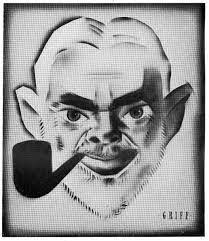
A recent example of the recanter is Dr. C. E. M. Joad, who, for some peculiar reason, is credited by reformers with a reputation for brilliance as a thinker. He also figured as the backbone of the B.B.C. Brains Trust, and is a teacher of philosophy at one of the Universities.
Before the outbreak of war Dr. Joad wrote a book supporting the pacifist attitude on war, but shortly after the war commenced he recanted this view. Recently he has written an article recanting his fundamental views on philosophy. This article is entitled “From Sunlight to Shadow” (Evening Standard, 25/8/42) and the Evening Standard have printed in thick letters above this title : “After 30 years of agnosticism, Dr. C. E. M. Joad has become a believer in God.”
Dr. Joad is fond of presenting different points of view (most of which only appeal to people on account of the language in which they are embedded), and in the process he has either got his own points of view mixed up or else he never had any. May we add that to be logical and honest Dr. Joad should have all his writings on philosophy to date withdrawn, and added to the waste paper collection, along with other rubbish, as he is now starting once again from scratch. We wonder if he will still have the face to carry on his job as teacher of philosophy, though, of course, capitalist economic experts still hold down their jobs in spite of their admitted bankruptcy on such questions as crisis and unemployment, and the most ghastly mistakes in forecasting the future. If an ordinary worker exhibited similar incapacity in the job he was paid to do he would soon find himself walking the streets. However, there is a reason why the “experts” keep their jobs, but we cannot go into it at the moment.
Let us now consider Dr. Joad’s article, and see what message, if any, he has for the workers in his new-found philosophy.
He opens with a discussion of the reasons that led him to agnosticism thirty years ago. His criticism of Christianity, including the question of whether earwigs had souls, he finally sums up with the following statement : “Seeing no answers to these questions, I consigned the whole religious bag of tricks to the shelf, where they have mouldered in cold storage ever since.”
Notice the phrase he uses, “mouldered in cold storage.” Now things don’t moulder in cold storage, and this is true of Dr. Joad’s putting “on the shelf.” What in fact, he did was to put the problem on the shelf because he was unable to solve it, and yet he has presumed to stand as an authority and guide on the subject ever since ! Now, appalled by the spectacle of the world at war and a debauch of unbridled savagery, Dr. Joad, the philosopher, savant, and guide, finds himself out of his depth. His superficial understanding will not guide him through the morass, so, like the primitive savage, he throws up his hands and appeals for supernatural aid. It hardly seems credible that a man with his opportunities should not have reached sufficient understanding years ago to realise that war was inevitable and that he would therefore have adjusted his ideas accordingly. But perhaps this is too much to expect from an “expert” who lives in a cloud of words and thrives upon clever and empty repartee.
He tells us in the article that he never held the view that matter was the only reality but believed that there were “certain absolute values of beauty, of truth, perhaps of goodness, perhaps even of God, who revealed Himself in the values”; that there was something else that accounted for beautiful music and Shakespeare’s sonnets. The fathead ! Darwin considered a worm far more beautiful than any music, and mathematicians are enthralled with the beauty of figures. What about the “Back Room Boys,” who produce designs for “beautiful bombs” and beautiful bombers with the object of decimating beautiful cities and beautiful bodies ? Is the present writer expected to believe that a principle of evil or a principle of good is responsible for the production of the wonderful caterpillars that are eating up his cabbages ? And what about the weather that simply won’t do its stuff—has the principle of evil got hold of this too ? or does Dr. Joad now believe that earwigs have rather shabby souls ?
Stumped for an adequate explanation of the latest catastrophe of war he can only see in it a proof that there is another absolute value—evil. What he completely fails to grasp is that as our physical and mental faculties evolve over hundreds of years so also do our ideas of what is pleasing and our capacity to produce what is pleasing. Thus there are no such things in his sense as absolute values. All values are relative and change with social evolution. To kill is evil in peace times but in war it becomes good, and Christianity, to which Dr. Joad is appealing, supports it.
Dr. Joad writes that he had been trained to regard evil as a by-product circumstance, economic and psychological, and that by removing the circumstance the evil would be abolished. Now observe the meaning the learned professor applies to these terms in the following extract:—
“I can believe this no more. The evil in the world to-day is too widespread and obtrusive, our noses are being rubbed too firmly into it, to enable us to take any longer so easy a view of its nature and origin. Is all the torturing and murdering and persecuting and raping that disgraces contemporary Europe to be dismissed as a by-product of the poverty and/or psychological maladjustment of young men born in Germany 20 or 30 years ago ? It seems unlikely ! Evil, then—there seems no escape from the conclusion—is endemic in the heart of man. But to believe in the reality of evil and to have no recourse against it save such as lies in the sporadic efforts of one’s own will and the slender integrity of one’s own judgment, that is, for me, a frankly intolerable position.There must, one feels, be some outside source from which assistance can be invoked. ‘So there is,’ says religion, ‘there is God, and if, believing, you pray to Him, grace will be vouchsafed whereby evil may be resisted.’ Hence arises the paradox, that one is driven to believe in the existence of a benevolent and participating God, precisely because of the fact of evil.”
What a pity he doesn’t do a bit more knowing and less believing and feeling. The present writer knows that if he abolishes the caterpillars he will save the cabbage and therefore he is picking them off, and, given adequate assistance, would be completely successful.
The quotations from Dr. Joad’s statement provide a glaring example of what little knowledge he possesses of the subject he is discussing. Who claims that the evils of war are a by-product of poverty or the psychological maladjustment of young men ? Only ignoramuses like Dr. Joad ! Was the Franco-Prussian War, the Russo-Japanese War, the Boer War, or the last Great War due to these causes ? Of course not. Was any war in history due to them ? Again of course not. Was even the Peloponessian War in Greece two thousands odd years ago, with which Dr. Joad should be very familiar, due to these causes ? The suggestion is absurd and could only come from an idle and disillusioned dreamer. One fact alone should banish from the mind any such ideas, and that fact is that for hundreds of years it has been the wealthy, property-owning class who have decided whether or not war should be declared. For the mass of the people the position has been—their’s not to reason why, their’s but to do and die.
The main fact is that wars are a product of the clashing economic interest of various property owners in different parts of the world who struggle for markets, trade routes, sources of supply of raw materials, and so forth. While private property with its clashing sectional interest remains war in all its barbarity will always cast a shadow over the social picture and no help can come from a mythical outside force.
If Dr. Joad had faced up to this position thirty years ago he would have realised that wars are always barbarous, no more so now than centuries ago. Greece in the age of Pericles, one of the brightest periods of all time, was disfigured in its warfare by just the same torturing, murdering, persecuting, and raping as has disfigured every war from that day to this.
Dr. Joad has put the wrong title to his article. He should have called it “From the Shadows to Despair.” This mental collapse is not an isolated instance, and it just reinforces our contention that to understand what is happening to-day it is essential to grasp the real basis of the social system, the capitalist private ownership of the means of production, which is beneath the hunt for profit and the consequent class division, economic conflicts, and wars. Given the conditions that lead to war then war will always produce the barbarities that have upset Dr. Joad’s mental apparatus. The solution is the building up of a new system of society in which private ownership will have no place.
In conclusion, we would call attention once again to the fact that philosophers only view the world differently; the point is to change it.
Gilmac.