Showing posts with label Art Review. Show all posts

Thursday, February 13, 2025

Exhibition Review: Being here (2025)

'Private Face'
Exhibition Review from the February 2025 issue of the Socialist Standard

Black people may be said to have been excluded from art in two ways. Firstly, there have until fairly recently been few black artists, and secondly, black people have been rarely depicted in works of art and, where shown, are often placed in a subordinate role. These and other issues are addressed in an exhibition of the work of Barbara Walker, ‘Being Here’, at the Whitworth Art Gallery in Manchester. The Whitworth display closed in late January, but it will move to the Arnolfini in Bristol from March.

Walker (barbarawalker.co.uk) was born in Birmingham in 1964, and only in 1996 did she obtain a BA in Art and Design. Since then she has been a prolific artist, in both painting and drawing, and one aspect of her oeuvre is that she usually works in series, producing not just individual works but linked pieces.

Between 1998 and 2005, for instance, she painted a series of portraits of black people under the heading of ‘Private Face’: friends and neighbours shown undertaking everyday tasks such as playing cards or having their hair arranged. Louder than Words (2006–9) focuses on her son Solomon, who was frequently subject to stop and search by West Midlands Police. The report forms from the searches have portraits of Solomon or local scenes added to them. Also included is a reference to the police killing of Jean Charles de Menezes in London in 2005, a newspaper report with a drawing of Solomon on it.

Perhaps the most original and striking is the series Shock and Awe (2015–20). Walker scoured archives for photos of black soldiers in the two world wars, such as a South African general inspecting members of the South African Native Labour Corps in France in 1917. Her drawing based on this photo, ‘Parade II’, emphasises the soldiers, and the general is an almost blank outline. A similar approach is taken in other drawings from the same series, and again in Vanishing Point (since 2018), where classical paintings are re-presented in a new way, with the black individuals drawn more precisely and the white people (the focus of the original paintings) again shown as outlines.

All in all, an unexpected and thought-provoking exhibition.
Paul Bennett

Wednesday, May 17, 2023

Mixed Media: Richard Hamilton at the Tate Modern (2014)

The Mixed Media Column from the October 2014 issue of the Socialist Standard

Richard Hamilton at the Tate Modern

There was a major retrospective of the work of Richard Hamilton at the Tate Modern in 2014. He is acknowledged as the inventor of 'Pop Art' which he described as 'popular, transient, expendable, low-cost, mass-produced, young, witty, sexy, gimmicky, glamorous, and Big Business.'

The exhibition reconstructs his installation Fun House, originally shown as part of the Whitechapel Gallery’s 1956 show This Is Tomorrow. It incorporates film, music, distorted architecture, op art and Hollywood film imagery and pin-ups such as Marlon Brando, Charlton Heston, Marilyn Monroe, and Robbie the Robot from Forbidden Planet. It is an homage to 'Americana', as well as a celebration of the new youth and 'pop' culture of 1950s capitalism.

In his 1956 collage Just What is it that Makes Today's Homes So Different, So Appealing? Hamilton has a muscle-man provocatively holding a lolly with the word POP and a woman with bare breasts wearing a lampshade hat, surrounded by emblems of the affluence of 1950s capitalism from a vacuum cleaner to a large canned ham. Capitalism is portrayed as 'cool', it was riding high in its 'golden age' of the post-war economic boom, the reformists believed capitalism could work in the interests of the working class, and Macmillan proclaimed 'people have never had it so good.' Hamilton particularly admired the German electrical company Braun and its Chief Design Officer Dieter Rams whose 'consumer products came to occupy a place in my heart and consciousness that Mont Sainte-Victoire did in Cézannes', and in 1964 he began to base works on Braun's marketing images.

After the failure of Keynesian capitalism in the 1970s, Hamilton was horrified by the 1980s capitalist restructuring under Thatcher, and the reintroduction of unfettered free market capitalism. His 1984 installation Treatment Room is inspired by the bleak, clinical style of the capitalist state reflected in the DHSS office or NHS hospital waiting room. A TV monitor where the X-ray machine would be repeats footage of Thatcher from the 1983 Tory Party Conference. His War Games (1991-92) used TV news footage of the 1991 Gulf War which portrayed the war as a sport for viewers and reminds us of the BBC Newsnight coverage with Peter Snow's sandpit and models. Later Hamilton portrays 'war criminal' Tony Blair as a gun-toting cowboy against a backdrop of military inferno in Shock and Awe (2010).

The Hamilton retrospective has some salutary lessons: you cannot 'reform' capitalism to work in the interests of the working class, and war is endemic to capitalism due to competition between capitalist groups for raw materials such as oil in the Middle East.
Steve Clayton

Sunday, September 22, 2019

Exhibition Review: Bauhaus (2012)

Exhibition Review from the August 2012 issue of the Socialist Standard
  “To create a new guild of craftsman, without the class distinctions which raise an arrogant barrier between craftsman and artist” – Walter Gropius
It is apt for an exhibition about the Bauhaus, the Modernist architecture and design school to be taking place at the Barbican (till 12 August), that icon of brutalist architecture.

Architect Walter Gropius, inspired by William Morris, established the Bauhaus in Weimar in Germany in 1919 where he aimed to challenge the hierarchy between fine and applied arts, by creating art for the people, fashioning functional artistic products, and creating an aesthetic to counter bourgeois furbelows. Klee wrote it was “a community to which each one of us gave what he had.” The exhibition features paintings such as Kandinsky’s ‘Small worlds’ and Feininger’s ‘expressionist’ ‘Studio window’ and ‘Cathedral’.

The working class in Berlin went on general strike in the Spartacist uprising of January 1919 and armed struggle ensued. The Social Democratic Party (SPD) government (akin to the Labour Party) brought in Freikorps soldiers to crush the revolutionary uprising, and socialists Rosa Luxemburg and Karl Liebknecht were brutally murdered. A year later, when threatened by the right-wing Kapp putsch, the SPD felt no shame in calling on workers to strike to save them. Gropius designed an ‘expressionist’ Monument to the March Fallen in honour of workers killed in the putsch.

The Bauhaus was part of a cultural renaissance that took place in Weimar Germany which included cinema like ‘The Cabinet of Dr Caligari’, the theatre of Brecht, paintings by Grosz, the Frankfurt School of Fromm and Marcuse, Hirschfeld’s struggle for sexual law reform, and Reich’s ‘SexPol’ clinics for the working class.

The Bauhaus exhibition features products from its workshops such as the Wagenfeld table lamp, Brandt tea services, Albers’ tables and Breuer chairs. Gropius drew up designs for the ‘total theatre’ of Brecht-producer Erwin Piscator. The workshops were ultimately making exclusive products for the affluent and not for large-scale manufacture. Gropius had not solved the dilemma that Morris had faced.

In 1928 Marxist architect Hannes Meyer was appointed Bauhaus director and moved away from aesthetics and artistic intuition towards functionality and building theory. He believed buildings should be low-cost and fulfil social needs: “the people’s needs instead of the need for luxury”. Meyer expanded the workshops on a co-operative basis to meet the requirements of industry: his aim, the “harmonious organisation of our society”, and interestingly the Bauhaus made its first profit in 1929. The photography workshop was established; Maholy-Nagy made his trippy film ‘A Light Play’; there was the Warholian Metal Party; and the Bauhaus students moved towards Marxism. Gropius had built workers houses for the Torten-Dessau estate, which Meyer extended by building balcony access apartment houses. Meyer also designed the ADGB Trade Union School in Bernau.

Meyer was sacked in 1930 because of the politics and went to Moscow as an architecture professor. Eventually he ended up in Mexico. In the 1930s he was an active participant in the discourse about suppressing the bourgeois concept in architecture.

The Bauhaus was closed in 1933 by the Nazis who deemed its concept as “degenerate”.
Steve Clayton

Tuesday, September 17, 2019

Exhibition Review: Edvard Munch at the Tate Modern (2012)

Exhibition Review from the September 2012 issue of the Socialist Standard

Edvard Munch’s art portrays alienation, angst and madness in bourgeois capitalist society at the beginning of the 20th century. Munch grew up in a world turned upside down by Darwin, Nietzsche, and Karl Marx. Norway witnessed the development of feminism, and the changing role of women is seen in plays by Ibsen. Munch portrays his ambivalence about this sexual revolution in works like ‘Ashes‘ which evokes a sense of sexual guilt, and ‘Madonna‘ which is a hybrid of Ophelia and Salome, although his ‘Sister Inger‘ portrays a strong, independent woman.

Munch lived in the bohemian milieu in Christiania which was infused with socialism, and opposed the complacency, hypocrisy and reactionary nature of bourgeois middle-class society. He was friends with Bakuninist anarchist writer Hans Jaeger. His ‘Evening on Karl Johan‘ shows an oppressive crowd of bourgeois middle-class people with uncommunicative faces constrained by their norms and values.

Munch’s most famous work ‘The Scream‘ can represent human alienation in bourgeois capitalist society. Marx identified that humans are alienated from their work, their fellow humanity, and from nature itself; in fact, the proletarian is ‘annihilated‘ which can be seen in the horror of the figure in ‘The Scream‘. ‘The Scream‘ can also represent a person experiencing synaesthesia – the union of the senses – a feature experienced by some artists, those in the stages of madness or under the influence of LSD.  Munch wrote that he had been “trembling with anxiety and I sensed an infinite scream passing through nature,” which also has echoes of Kierkegaard’s Christian existentialism. Munch’s ‘The Sun‘ is also startling in its synaesthesia, and evokes William Blake’s visionary pictures. Psychological ‘heaven and hell’ were all too familiar to Munch. ‘The Scream‘ evokes the plight of the sane man in an insane society which Erich Fromm identified. He also pointed out that the solution lay in a sane socialist society.

‘Friedrich Nietzsche‘ (1906)
Shortly before his mental breakdown, Munch completed ‘Friedrich Nietzsche‘, a posthumous portrait of the philosopher whose ideas about existential authenticity and eternal recurrence can be elicited from a study of ‘The Scream‘.  Nietzsche posited the theory of eternal recurrence as “the greatest weight” which could be with ‘amor fati,’ the ultimate affirmation of life, and guarantee an existential authenticity or lead to a terrifying nihilism.

Nietzsche was admired by anarchist Emma Goldman who wrote of him as the champion of the self-creating individual advocating spiritual renewal, and she combined this with the anarchist communism of Kropotkin. Nietzsche himself loathed the state, capitalism, ‘herd morality’, and Christianity as all exhibiting a lack of the “nobility of spirit”. The alienated working class in bourgeois society has no self-esteem; it does not have a high estimate of itself, being in the grip of false consciousness. In Nietzschean terms, the working class “is the dwarf of himself… a god in ruins”, and what is needed is a “transvaluation of values”: a class consciousness to create a new man and woman in a socialist society.
Steve Clayton

Thursday, August 22, 2019

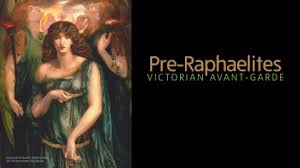
The Pre-Raphaelites (2012)

Art Review from the November 2012 issue of the Socialist Standard

The Pre-Raphaelites exhibition at Tate Britain is sub-titled Victorian Avant-Garde, although the Pre-Raphaelites did not reflect contemporary bourgeois capitalist society in Britain but hearkened back to the early Italian Renaissance of the 1400s.

The Pre-Raphaelite Brotherhood was founded in 1848, the year of Revolutions and of the publication of Marx and Engels’ Communist Manifesto. British industrial capitalism was booming, free trade was triumphant, the Great Exhibition showcased Britain’s superiority as the ‘workshop of the world’ but the antagonisms between the capitalist class and working class were becoming visible. Dickens and Mrs Gaskell, and Engels in the Condition of the Working Class in England, described the poverty of the working class, but the Pre-Raphaelites rejected the machine age of modern industrial capitalism, believing beauty and spirituality had been lost, and wanted to provide an alternative to the materialism of the age.

The Pre-Raphaelites brought a realism to biblical subjects such as Millais’ portrayal of the ‘holy family’ as working class in Christ in the House of His Parents which shocked bourgeois sensibilities. Holman Hunt evoked bourgeois sexual guilt when a woman sees the error of her ways in the Awakening Conscience.

Ford Madox Brown portrayed a young couple sailing from the White Cliffs of Dover in the Last of England, which highlighted the fact 300,000 people emigrated in 1852, and in Work he showed labour as a noble and sacred duty in capitalism. In contrast, The Stonebreaker by Wallis depicts the exhausting toil of an agrarian worker. Holman Hunt painted a portrait of industrial capitalist and patron of the Pre-Raphaelites, Thomas Fairbairn, who had tried to smash an early trade union, the Amalgamated Society of Engineers, in 1852.

This exhibition also includes the decorative arts of William Morris, Philip Webb and Burne-Jones which covers furniture, stained glass, textiles, carpets and tapestries depicting Chaucerian themes. Morris’s ‘medievalism’ revived older forms of production in protest at the cheap, mass produced goods of capitalist society, and a desire to have “attractive work” in producing objects. Later Morris, with Eleanor Marx and others, founded the Socialist League, a forerunner of the Socialist Party of Great Britain.

The Pre-Raphaelites are in stark contrast to the ‘realism’ in French painting in the same period where Millet depicted Woman Baking Bread, and Courbet portrayed the Stone Breakers (a work admired by Proudhon), and the Origin of the World which depicted a woman’s genitalia (John Ruskin would have fainted). Interestingly a friend of Rossetti called Bell Scott painted an industrial scene in Iron and Coal. However this is overshadowed by the mammoth productive forces of industrial capitalism in Menzel’s the Iron Rolling Mill (Modern Cyclops), a picture which adorns the cover of the Penguin edition of Marx’s Capital Volume 1.

Marx identified the popularity of Greek art as stemming from “the childhood of human society where it had obtained its most beautiful development”. Did the Pre-Raphaelites yearn for the adolescent phase of human history?
Steve Clayton

Sunday, August 11, 2019

Painting Dutch Capitalism (2012)

The Night Watch by Rembrandt
Art Review from the December 2012 issue of the Socialist Standard

The Rijks Museum in Amsterdam is home to the art of the Dutch Republic of the 17th century, which was ‘the rosy dawn of the era of capitalist production.’

The Dutch bourgeoisie declared their independence from the Spanish in 1581. The Explosion of the Spanish Flagship during the 1607 Battle of Gibraltar by van Wieringen reflects pride in the victory of the Dutch fleet over the Spanish. The Celebration of the Peace of Munster, June 1648 by van der Helst depicts a banquet and displays the bourgeois pride in independence and victory over feudalism.

The world financial centre was in Amsterdam. It had the first ever Stock Exchange, the Bank of Amsterdam, capitalist cycles of boom-and-bust, speculative asset inflation (‘Tulip Mania’), and Isaac Le Maire, the first stock ‘bear trader’.

The Syndics of the Amsterdam Drapers Guild by Rembrandt depicts the sampling officials who checked the quality of dyed cloth, and it reflects the Calvinist simplicity of bourgeois self-confidence.

Amsterdam was noted for its ‘schutterij’, the bourgeois civic militias and these are portrayed in two famous paintings of the era: The Company of Captain Reynier Reael by Hals, and The Company of Captain Frans Banning Cocq better known as The Night Watch by Rembrandt. 

The bourgeois religious sensibility was dominated by Calvinism which provided a theological justification for the developing capitalist mode of production. The Merry Family by Steen appears to be a celebration of alcohol, music, and tobacco but a note in the painting provides the subtitle of ‘as the old sing, so pipe the young’ which warns the viewer not to copy such dissolute behaviour.

The Dutch Republic was the imperial power (‘the colonial system of trade and navigation ripened like a hothouse’) with colonies and trading posts in North America, Brazil, the East Indies and South Africa. The Dutch East India Trading Company controlled the maritime trade routes and dominated world trade for 200 years. By 1650 there were 16,000 Dutch merchant ships. View of Olinde, Brazil by Frans Post depicts the former Portuguese colony that had been taken by the Dutch in order to exploit Brazil’s sugar cane plantations.

Economic competition with England for control over the seas and the trade routes led to three naval wars between the Dutch Republic and England which confirmed Dutch domination of world commerce until the Napoleonic Wars.  Several marine paintings by van de Velde depict Dutch merchant and naval supremacy such as The Cannon Shot and Dutch Ships on a Calm Sea.

The Portrait of Baruch de Spinoza depicts the great Dutch philosopher who advocated a classical pantheism, opposed Cartesian dualism and was admired by Marx for his materialism. Hegel believed ‘you are either a Spinozist or not a philosopher at all’.

Marx concluded ‘the total capital of the Republic was probably more important than that of all the rest of Europe put together and the people of Holland were more overworked, poorer and more brutally oppressed than those of all the rest of Europe put together’.
Steve Clayton

Sunday, July 21, 2019

Mixed Media: ‘Albanian Art’ (2013)

Vojo Kushi by Shijaku
The Mixed Media Column from the January 2013 issue of the Socialist Standard

‘Socialist Realism’ was the official art of the People’s Republic of Albania between 1944 and 1990. Socialist Realism originated in the state capitalist USSR and was adopted throughout Eastern Europe. When Soviet leader Khrushchev denounced Stalin in 1956, state-capitalist Albania alone opposed this ‘revisionism’ and continued to revere ‘Uncle Joe’ right up to the fall of the Berlin Wall.

The Partisan War against the Germans and the Liberation of Albania in 1943-44 is a source for Socialist Realist paintings in the National Gallery in Tirane. The Victor by Haxhiu depicts a heroic partisan amidst ruins with German POWs trudging into captivity in the background, while Vojo Kushi by Shijaku heroically romanticises a partisan in a red shirt atop a Wehrmacht tank throwing a hand grenade inside.

Workers in Albanian industry are portrayed, notably in the steel works depicted in 30 July 1978 by Ceka which recalls Iron Rolling Mill (Modern Cyclopes) by Menzel. The Assembler by Kokushta is an inspiring painting of a worker on a girder with red flag flying above an industrial landscape of the building of Albania’s hydro-electric scheme in the 1970s.

Female Nude (1961) by Shijaku is beautiful and definitely not ‘socialist realism’ but it is ‘realism’ in the style of Courbet.

The enhanced status of women in Albanian society is captured by Socialist Realism in a painting of male and female engineers by Hysa in 1969, Milk Woman by Sulovari, Factory Worker by Blido, Bricklayer by Dule, and as athletes in The Relay Race by Nalbani. In the 1970s art in a Formalist style of Modernism (mainly Expressionism and Fauvism) developed operating within the official parameters of Socialist Realism.

Socialist Realism was formulated by Stalin in his 1932 On the Reconstruction of Literary and Art Organisations which decreed that art had to be unambiguous and elevate labour to heroic status. In 1934 the Soviet state instructed that art had to be ‘proletarian’, of everyday life, realistic in the representational sense, and support the aims of the Party. This effectively discouraged the avant-garde and any form of experimentation.

Socialist Realist rigidity was not encouraged by Lenin. He did not believe in a ‘year zero’ for Art: ‘proletarian culture must be the logical development of the store of knowledge mankind has accumulated’. In the years after the 1917 Bolshevik revolution experimental ‘revolutionary’ art was encouraged in the shape of Constructivism, and in the cinematic art of Vertov and Eisenstein.

Marx in the Economic and Philosophical Manuscripts identified the role of labour in man’s ability to reproduce ‘in accordance with the laws of beauty’. Engels wrote in The Part played by Labour in the Transition from Ape to Man that ‘labour has given the human hand the high degree of perfection required to conjure into being the pictures of a Raphael’, and in Dialectics of Nature he wrote ‘Italy rose to an undreamt-of flowering of art, which seemed like a reflection of classical antiquity’.

Marx and Engels would be uncomfortable with the rigidity of ‘Socialist Realism’.
Steve Clayton

Friday, May 17, 2019

Mixed Media: William S Burroughs – All Out of Time and into Space (2013)

The Mixed Media Column from the April 2013 issue of the Socialist Standard

The William S BurroughsAll Out of Time and into Space exhibition at the October Gallery in London recently showcased his abstract expressionist paintings, drawings and talismanic art objects created  in Lawrence, Kansas in the last years of the life of the writer who Mailer hailed as ‘possessed by genius.’

Orpheus Don’t Look Back (1990) can be seen as key to his artistic creativity: Burroughs as artistic outlaw in the lineage of Villon, Rimbaud’s ‘derangement of the senses’ and Baudelaire’s soaring ‘heaven or hell’ who visits the underworld of junkies, pimps and thieves and returns, although tragically Burroughs killed Eurydice, his wife Joan, in 1951.

Self Portrait (1987) is a vague representation and recalls Burroughs’ nickname in Tangier, ‘El hombre invisible,’ when he turned his back on his bourgeois upbringing and Harvard education, advocating Hassan I Sabbah’s dictum: ‘Nothing is true, Everything is permitted,’ and his heroin addiction inspired the writing of his novel Naked Lunch published in 1959.

Death by Lethal Injection (1990) highlights Burroughs’ antipathy towards to all forms of control and authoritarianism be they political, economic, religious or sexual; his rejection of the puritan morality of bourgeois Christian civilisation and his aim to ‘make people aware of the true criminality of our times.’

Radiant Cat (1988) is a red, green and yellow dayglo painting. The Burroughs ‘weltanschauung’ was shaped by the Atomic bomb and the Cold War world of the military industrial complex. Burroughs was influenced by Spengler’s Decline of the West, Vico’s circular theory of history (Marx: ‘a whole mass of really inspired stuff ‘) and Wilhelm Reich’s Cancer Biopathy.

Untitled (1988) is spray paint and gunshots on a ‘No Trespassing’ metal sign. Burroughs opposed rapacious capitalism, detested social class and was an egalitarian with anarchistic and Emersonian individualist traits. He wrote that the Industrial Revolution with its ‘quantity and quantitative criterion’ was a ‘death trap’. He saw that international capitalism ‘always creates as many insoluble conflicts as possible and always aggravates existing conflicts.’

The Prison Scribe (1990) is a paint and photo collage depicting Madagascar Lemurs, highlighting his growing concern for the planet, ecology and the environment.

23 (1992) is marker pen and gunshots on watercolour paper and refers to the ’23 enigma,’ which is a key to understanding the Burroughs universe where ‘synchronicity’ unlocks the dead thermodynamic ‘hostile war universe of winners and losers.’

Burroughs wrote in Nova Express (1964): ‘Listen all you boards, governments, syndicates, nations of the world / And you powers behind what filth deals consummated in what lavatories, / To take what is not yours, / To sell out your sons forever! To sell the ground from unborn feet forever?’
Steve Clayton

Tuesday, May 14, 2019

Mixed Media: ‘Death: A Self Portrait’ (2013)

The Mixed Media Column from the May 2013 issue of the Socialist Standard

Death: A Self Portrait at the Wellcome Collection in London was an exhibition of art related to mortality taken from the collection of Chicago antique dealer Richard Harris. The key to Christian art about death is ‘memento mori’ (remember you must die). Pascal’s words ‘It is easier to endure death without thinking about it than to endure the thought of death without dying’ is fundamental to humanity’s thinking about ‘this mortal coil.’

Christian art of ‘memento mori’ in the Late Middle Ages was portrayed in the Dance of Death, which reflected the fragility of life in the midst of famines, the Black Death, the Hundred Years War, and the Peasant War in Germany. The ‘danse macabre’ depicting revelry uniting humans and skeletons is portrayed in Toten Tanz by Wolgemut in the 1493 Nuremberg Liber Chronicarum. Inspired by the Book of Revelation, the 1498 woodcut The Four Horsemen of the Apocalypse by Albrecht Durer depicts the staples of medieval life; plague, war, famine, and death.

The Miseries of War of 1633 by Callot are eighteen etchings of the Thirty Years War portraying soldiers pillaging, burning and killing their way through towns and cities. Engels described this war as ‘devastation’. It killed eleven million people, and ‘annihilated the most important parts of the productive forces in agriculture.’ The Disasters of War by Goya are eighty-two prints from 1810-20 which portray abuse, torture, killing, starvation, and other atrocities of the French invasion of Spain in the Napoleonic Wars.

The iconic images of the Mexican Day of the Dead originate with the painting of Calavera de Huerta by Posada which satirised bourgeois General Huerta in the Mexican Revolution. Posada’s Calavera de La Catrina is a satire on the 1875-1910 bourgeois dictatorship of Diaz which was an ‘industrial capitalism on top of the hacienda system, debt-peonage in the shell of a corrupt feudalism.’

The George Grosz 1958 collage Faces of Death references his own 1920 painting Republican Automatons. Both works are an attack on the mediocrity and mendacity of bourgeois capitalist civilisation which kills the individual human spirit.

According to bourgeois psychoanalyst Sigmund Freud in his 1930 work Civilisation and Its Discontents, the drive to death (Thanatos) now ruled supreme over Eros (Love). He wrote that ‘people need a Reality Principle to keep the Pleasure Principle under control otherwise we’d have anarchy.’ Wilhelm Reich replied that ‘the Reality Principle of the capitalist era imposes upon the proletarian a maximum limitation of his needs . . . the ruling class has a Reality Principle which serves the perpetuation of its power.’
Steve Clayton

Friday, May 3, 2019

Mixed Media: ‘Edwin Butler Bayliss‘ (2013)

Tipping the Slag
The Mixed Media column from the July 2013 issue of the Socialist Standard

Wolverhampton Art Gallery recently showed the industrial landscapes of Edwin Butler Bayliss (1874-1950), ‘poet painter of the Black Country’ (Birmingham Gazette 1918) who was prolific in the early twentieth century. Bayliss was the son of industrial capitalist Samuel Bayliss who owned iron foundries in the Black Country which Bayliss painted along with the blast furnaces, steel works and coal mines owned by Tory MP and baronet Sir Alfred Hickman.

Tipping the Slag portrays a grey industrial landscape with smouldering slag heaps and smoking chimneys. Slag was the impurities from smelting iron drained from the molten iron during the smelting process and is painted in vivid orange against the grey wasteland. Blast Furnaces, Night is a black and grey industrial landscape with blast furnaces and chimneys and flecks of orange flame against the black and grey sky.

The Black Country is defined by geology; a 30 foot coal seam plus seams of coal, iron, limestone and clay which supported the development of coal mines, coking plants, iron foundries, and steel mills in the towns of Sandwell, Dudley, Walsall and Wolverhampton. In the Victorian period   it was the beating heart of   industrial capitalism, the industries of iron-making, steel production and coalmining forming the bedrock for the ‘workshop of the world’ showcased at the Great Exhibition of 1851. In 1866 Queen Victoria visited Wolverhampton and knighted the Mayor Sir John Morris.

Charles Dickens wrote in 1841 that the industries ‘poured out their plague of smoke, obscured the light, and made foul the melancholy air’ while the US consul visiting in 1862 wrote that the area was ‘black by day and red by night’. By 1860 within five miles of Dudley there were 441 pits, 181 blast furnaces, 118 iron works, 79 rolling mills and 1,500 puddling furnaces. Blast Furnaces, Bilston, Hickman’s from the Canal and In the Gin Pit (coal mined near to the surface) portray the ‘beauty in the Black Country’.

In the Black Country depicts a black and grey industrial landscape of blast furnaces and chimneys against a smoky sky with a worker struggling across the landscape. Evening in the Black Country shows three workers trudging up a dirt track between areas of dirty green vegetation towards industrial buildings and smoking chimneys.

The Condition of the Working Class in England in 1844 by Friedrich Engels details ‘an industrial revolution, a revolution which at the same time changed the whole of civil society’. This industrial capitalism meant the working class endured ‘filth, ruin and uninhabitableness’ in ‘the frightful condition of this Hell upon Earth’.
Steve Clayton

Thursday, April 25, 2019

Mixed Media: Ice Age Art (2013)

The Mixed Media Column from the September 2013 issue of the Socialist Standard

The recent exhibition Ice Age Art at the British Museum demonstrates what Marx called 'the vitality of primitive communities' in the Upper Palaeolithic era 12,000 to 50,000 years ago. It is widely believed that human beings in this period lived in 'primitive communism' where women were held in high esteem, sexual relationships were unregulated, and society was based on the maternal clan. Upper Palaeolithic Art includes carving, engraving, and sculpture in baked clay, bone, stone, reindeer antler, and mammoth ivory.

There are many depictions of the female form which as Evelyn Reed describes in Woman's Evolution: From Matriarchal Clan to Patriarchal Family, in the matrilineal clan system of hunter gatherer communistic households there was a belief in women having superior magic, demonstrated by their ability to produce children, men were kept well away from child birth and may not even have known where babies came from. Bertell Ollman wrote 'for the greater part of human history the link between sexual intercourse and paternity was not even known'.

Woman of Willendorf is a 24,000 years old limestone statuette tinted with red ochre with large breasts and abdomen and a detailed vulva. Woman of Dolni Vestonice is a 30,000 years old baked clay (ceramic) statuette with large pendulous breasts, large abdomen and wide hips. Woman of Hohle Fels known as the 'Schwabian Eve' is made of mammoth tusk ivory and because of a perforated protrusion was probably an amulet. At 40,000 years old it is arguably the oldest discovered piece of figurative art.

Hohle Fels Flute is a 35,000 years old musical instrument perforated with five holes and made from the wing-bone of a griffon vulture. Lion Human of the Hohlenstein Stadel is a mammoth ivory lion-headed figurine 40,000 years old and in a modern experiment using the stone tools available then it took 400 hours to create this highly skilled carving. Swimming Reindeer, 13,000 years old, is carved from the tip of a mammoth tusk and depicts two reindeer swimming nose to tail probably on their way to mating grounds or winter pastures. Head of a Musk Ox is a rare limestone three dimensional sculpture 18,000 years old. Hooked Spear Throwers are 13,000 years old hunting implements to increase speed and the force of the throw, carved from reindeer antler in the form of a mammoth.

Ice Age Art is a fascinating glimpse into a period of early human history which ended with what Engels called 'the overthrow of mother-right [and] the world historical defeat of the female sex' and the rise of the patriarchal family, private property and the state.
Steve Clayton

Wednesday, April 24, 2019

Letter: Ice Age Art (2013)

Letter to the Editors from the October 2013 issue of the Socialist Standard

Ice Age Art

Dear Editors

Thank you very much for forwarding the copy of the review (Mixed Media, September). It is great to read a piece in which the Marxist arguments are remembered and there are certainly excellent discussions to be had on these themes. More information on the topics mentioned can be found in the book that accompanied the exhibition. In both I tried to get away from the notion that these societies were ‘primitive’ or ‘savage’ as this is the language of the nineteenth century used to place modern western Europeans at the top of the evolutionary tree. The language of Marx and Engels that pursues evolution from savagery to barbarism and then civilization also need to be brought up to date with modern knowledge. It also sought to avoid the concept of Rousseau’s noble savage that is also inherent in the Marxist approach.

Ice Age art shows the developing skills in language and communication that enable modern humans to form larger, successful communities with many forms of organisation. Hunter gatherer communities have to be collaborative to survive and as I say in the book, these people probably did have gender specific activities but without concepts of male/female superiority or measures of value for activities. Men and women served one world through different tasks. The breakdown of this comes with agriculture and the measured values for activities. The concept of Mutterrecht as fully expressed by Jung’s disciple Erich Neumann also needs to be used with care.

The elaborate ornaments in the exhibition also express ideas about personal and social identities, wealth and status that may have been politically, socially or spiritually hierarchical but as always it is difficult to be conclusive about the implications from the archaeological record.

There is as ever much to debate.

Jill Cook, 
Curator Ice Age Art: arrival of the modern mind, British Museum

Mixed Media: L. S. Lowry (2013)

The Mixed Media Column from the October 2013 issue of the Socialist Standard

The Lowry exhibition currently at Tate Britain in London includes all the popular ‘matchstalk men and matchstalk cats and dogs’ paintings paid tribute to in the 1978 song by Brian and Michael. Lowry portrayed working class life in Pendlebury, Salford and Manchester from the economic depression of the 1930s to welfare state Britain of the 1950s or as John Berger wrote in New Society in 1966: ‘this is what has happened to the ‘workshop of the world’, the production crisis, the obsolete industrial plants’.

The ‘matchstalk’ paintings such as Coming Home from the Mill, People Going to Work, Returning from Work, Coming from the Mill and Outside the Mill are repetitive and convey the world of factory whistles, wage slavery and payday for the Manchester working class only a few generations after Engels wrote his investigative book.

Lowry’s more interesting work includes the 1926 A Northern Hospital which is fundamentally a workhouse (‘a Bastille of the proletariat’) which contrasts with the NHS in Ancoats Hospital Outpatients Hall from 1952. For all his ‘solid Lancashire conservatism’ Lowry quietly welcomed the post-1945 new world of the NHS and welfare state.

Lowry’s industrial landscapes and The Pond commissioned for the 1951 Festival of Britain are impressive panoramic views of industrial Manchester. The Pond with its smoking chimneys, terraced houses and the Stockport Viaduct was used as a Christmas card by prime minister Harold Wilson in 1964.

Lowry’s 1937 The Lake is all fetid spillage in an industrial scene and demonstrates clearly his opposition to sentiment in art and his statement that he ‘was affected and inspired by the beauty of the industrial scene’.

Going to the Match, 1953.
Going to the Match from 1953, one of his football paintings which the Professional Footballers Association bought for £1.9 million in 1999 depicts Burnden Park, home of Bolton Wanderers Football Club, which was the scene of a disaster in 1946 when 33 football fans were crushed to death. Football was central to masculine working class culture at this time and Burnden Park was later used prominently in the 1955 Arthur Askey film The Love Match.

The Funeral from 1928 and the cemetery in Necropolis of 1947 are a reminder of the centrality of death in life but also the financial cost. Today there is a rise in ‘public health funerals’ which is another name for ‘paupers funerals’ and the working class have to resort to pay-day lenders and credit cards to pay for funerals.

Although conservative in many respects, Lowry was an enemy of privilege and turned down all ‘gongs’ and a knighthood.
Steve Clayton

Tuesday, April 16, 2019

Mixed Media: Harris Art Gallery, Preston (2014)

Preston Workers Memorial stone statues
The Mixed Media Column from the June 2014 issue of the Socialist Standard

Harris Art Gallery, Preston

Preston in Lancashire is one of the birthplaces of the industrial revolution and modern capitalist society. Two major pieces of art in the Preston Harris Art Gallery are Sir Richard Arkwright (1932), a bronze bust by William Norris Smith, commissioned for the bicentenary of Arkwright’s birth by the Corporation of Preston, and the painting Portrait of Richard Arkwright (1783-85) by Joseph Wright of Derby. Arkwright invented the water frame, a water-powered machine for spinning cotton into strong thread in Preston in 1768. RS Fitton wrote that Arkwright was ‘the founder of the Factory System, he was the creator of a new industrial society that transformed England from a nearly self-sufficient country with an economy based on agriculture and domestic manufacture, into the workshop of the world.’ The first cotton mill was opened in Preston in 1777 and by 1857 there were seventy five textile factories in the town.

A few hundred yards from the Harris Gallery, on Lune Street outside the former Corn Exchange are the Preston Workers Memorial stone statues, a permanent memorial to the killing of striking cotton workers. It was unveiled in Guild Year on 13 August 1992, the 150th anniversary of the shooting. The memorial was designed and produced by the British artist and sculptor Gordon Young, inspired by Goya’s painting The Third of May 1808 picturing Spanish civilians being executed by Napoleonic troops. It was commissioned by Preston Trades Union Council, and supported by Preston Labour History Group, Preston Borough Council, Lancashire County Council and the then Lancashire Polytechnic.

The strike of Saturday 13 August 1842 was part of the 1842 General Strike, a Chartist-led action in order to secure a fair day’s pay for a fair day’s toil. In Preston several thousand textile workers went on strike with the result that four workers were shot dead by the military on Lune Street. The Chartist newspaper The Northern Star of 20 August 1842 wrote ‘the Mayor (Mill owner Samuel Horrocks) ought to be tried for wilful murder.’ Later on 10 September 1842 Chartist leader and Preston hand-loom weaver Richard Marsden wrote in The Northern Star ‘the humiliated town of Preston, where the well-known Peter-loo tragedy hath just been re-enacted.’

The class struggle continued in Preston as this article by Marx from the New York Daily Tribune of 1 August 1854 demonstrates: ‘’The eyes of the working classes are now fully opened: they begin to cry: “Our St. Petersburg is at Preston!”’ Indeed, the last eight months have seen a strange spectacle in the town; a standing army of 14,000 men and women subsidized by the trades unions and workshops of all parts of the United Kingdom, to fight out a grand social battle for mastery with the capitalists, and the capitalists of Preston, on their side, held up by the capitalists of Lancashire.’
Steve Clayton

Sunday, November 12, 2017

Exhibition Review: Wyndham Lewis - Life, Art, War (2017)

Exhibition Review from the November 2017 issue of the Socialist Standard
Vorticism is sometimes seen as Britain’s only avant-garde art movement. It was founded in 1914 by Wyndham Lewis (1882–1957), who is now the subject of a sizeable retrospective at the Imperial War Museum North in Salford Quays, on until the end of the year.
The First World War inevitably limited the spread and impact of Vorticism, and Lewis himself fought in an artillery regiment before becoming an official war artist. After the war he produced a variety of art works, together with a series of books (novels, criticism, polemics), most long out of print. He seems to have been a contrarian with a rather prickly personality, and he disliked privileged cliques such as the Bloomsbury Set. He was vehemently against Bolshevism, and his experiences in WW1 made him very much opposed to war. Unfortunately, these considerations led him to some sympathies for Nazi Germany and to describing Hitler as ‘a man of peace’. He changed his mind on these matters after visiting Germany in 1937, but by that time he had already made himself rather unpopular in many cultural circles.
Many of Lewis’s paintings from WW1, however, contain significant and perceptive comments on the fighting. Drawings from 1918 show violence and death, with soldiers reduced to the status of machines. His 1919 picture ‘A Battery Shelled’ is an impressive work which depicts dehumanised figures running for cover as the shells rain down, while three more realistically-depicted men watch or simply ignore what is going on. This was considered too controversial to be an appropriate memorial painting, and it was passed from the Imperial War Museum to the Tate.

A Battery Shelled (1919)
‘The Surrender of Barcelona’ (1936) refers to the city being captured by Spanish forces in the fifteenth century, but surely relates to the Spanish Civil War as well. ‘Inferno’, dating from 1937, is a pessimistic presentation of corpses and the flames of hell, as Lewis combines his hatred of war with an expectation that another large conflagration is approaching.
The IWM publicity describes Lewis as ‘Britain’s original rebel artist’, and he did set up the short-lived Rebel Art Centre. Despite his  – to say the least – dubious political views, many of his paintings undermine the role of official war artist and reveal both the boredom and the horror of war.           
Paul Bennett

Sunday, December 14, 2014

Mixed Media: British Folk Art (2014)

The Mixed Media Column from the December 2014 issue of the Socialist Standard
British Folk Art at Tate Britain, London this year was a rare exhibition of working class and artisan art from the mid-seventeenth century until the mid-twentieth century when folk art would become a commodity, and too self-conscious. Jane Kallir in 1982 defined folk art as 'everything that everybody always thought was not art before the modernist revolution at the turn of the century.' Bourgeois condescension labelled such art as 'peasant art' or 'vernacular creativity', and it was such art and crafts that were deliberately excluded from the Royal Academy of Art when it was established in 1769.
The exhibition includes giant trade signs when shops and businesses hung painted or carved signs in the street outside to advertise their goods or services at the time of the 'golden age of trade signs' which lasted from the late seventeenth to the early nineteenth centuries. Notable examples are Scotsman tobacconist shop figure (1812) in a 1934 photograph of 37 London Street, Norwich, and Highlander tobacconist shop figure (c. 1866-1900). The rise of Glasgow as Britain's leading port dealing with tobacco in the mid 1700s explains the association with a highlander. There are examples of the Blackamoor tobacconist shop figure (1700s) which signified exoticism and cultural difference. 'Blackamoor' was a variant on 'Black Moor', a dark-skinned African from North Africa.
These artisan trade signs are from the early days of capitalism when a shop had a merchant's counter, and there was social interaction between the merchant and the customer. This was the time of the Petty Bourgeoisie, the owners of small stores, 'the small trades-people, shopkeepers' who worked alongside their employees. The Petty Bourgeois 'as owner of the means of production he is a capitalist; as a labourer he is his own wage-labourer' (Marx). This was the early days of retailing before bourgeois notions of refinement and good taste, mass production and supermarkets and 'the inevitable ruin of the petty bourgeois.' During the 1871 Paris Commune the shopkeepers set a good example by siding with the working class.
Rural Art is represented by The Four Alls, a popular pub sign found particularly in the West Country and Wales which was described as 'a country sign' in 1785. This example is from Caernarvonshire c. 1850 with the four figures representing 'I Govern All, I Pray For All, I Fight For All, I Pay For All', the last a John Bull character of yeoman country stock, stolid, stocky, the heroic archetype of the freeborn Englishman. George Smart was a tailor in Frant near Tunbridge Wells who painted The Earth Stopper c. 1835. In this a male figure jumps in fright from his horse at night in a country lane by the shock of what he takes to be the Devil, who is in fact the Earth Stopper having stopped up the fox's earth while he is out feeding prior to the next day's hunt. The Rampton 1800s painted wood 'All vagrants who are seen begging in this town will be apprehended and punished as the laws directs' is a salutary reminder that the introduction of new technology to replace agricultural workers meant that by the early 1830s the established system of poor relief was proving to be unsustainable. This was remedied by the consolidation of the institution of the Workhouse ('bastilles of the proletariat') in the 1834 Poor Law Act. The triumph of the bourgeois class in 1846 with the repeal of the Corn Laws would mean small, under-capitalised farmers were squeezed out by low prices and inability to increase production.
Mid-nineteenth century working class sports are represented in several oils by anonymous worker-artists. Boxers (c 1850) portrays the pugilist world of the bare-knuckle London Prize Ring Rules, pre-Marquess of Queensbury, and is reminiscent of the boxing scene in Richard Lester's 1975 film of George MacDonald Fraser's Royal Flash with Henry Cooper as John Gully, prize fighter and MP. Bear Baiting (c.1830s) and Champion Ratcatcher (c.1840) portray the popular sports of the period. The 1835 and 1849 Cruelty to Animals Acts prohibited bear-baiting and cock-fighting but rat catching or 'ratting' was not enforced, and became a very popular sport (London had 70 ratting pits). A dog, usually a terrier would be let loose on a rabble of rats in a round or square pit set up at a pub. Henry Mayhew in his London Labour and the London Poor (1851) described 'brightly lit ratting pits with high wooden rims' and 'that these vermin are becoming a trade commodity.'
A room is dominated by the HMS Calcutta figurehead from the Royal Navy ship launched in 1831 in Bombay. HMS Calcutta saw action in the blockade of Russian ports in the Gulf of Finland in the Crimean War, and in the Second Opium War against the Qing Dynasty of China when the British Empire sought to legalise the opium trade, expand 'coolie' (indentured labour) trade and open China to British capitalism.
British Folk Art is a refreshing working class antidote to bourgeois sycophancy such as the Queen's Gallery exhibition The First Georgians: Art & Monarchy 1714-60 which 'explores royal patronage and taste.'
Steve Clayton

Tuesday, November 18, 2014

Mixed Media: Barnsley: Working Class Culture in the Tarn & Gilbert Daykin at the Cooper Gallery (2014)

The Mixed Media Column from the November 2014 issue of the Socialist Standard
Barnsley: Working Class Culture in the Tarn
Barnsley's history has been dominated by the glass industry and coal mining but marked by disasters that befell the working class such as the 1838 Huskar pit disaster when 26 children were killed, and in 1866 the worst pit disaster in England at Barnsley Oaks when 361 miners were killed.

The Barnsley Museum at Barnsley Town Hall is well worth a visit and showcases Barnsley's coal mining history, with many artefacts from the class struggle that was the 1984-85 Miners' Strike such as an Orgreave police riot shield. The museum also houses the NUM Yorkshire Area North Gawber Branch banner 'from darkness into light' i.e. 'socialism' via various reforms such as nationalisation and ’employment for all’.
British cinema is represented by the 1969 Ken Loach film Kes filmed in Barnsley, based on the novel A Kestrel for a Knave by Barnsley writer Barry Hines. This working class film publicised as 'They beat him. They deprived him. They ridiculed him. They broke his heart. But they couldn't break his spirit' starred Dai Bradley, a non-professional from Barnsley. The 1996 film Brassed Off filmed in Grimethorpe near Barnsley was set during the pit closures programme of the John Major Tory government in 1992 when 31 out of 50 remaining deep mines faced closure with the loss of 31,000 jobs. In 1980-81 Grimethorpe Colliery had produced 1.2 million tonnes of coal. Barnsley is famous for Charlie Williams, the son of a Barbadian and a Barnsley girl, who was a miner and footballer at Upton colliery then joined Doncaster Rovers in 1948, and was later the first black comedian on British TV in the 1970s.
It's just like watching Brazil is an exhibition about Barnsley Football Club, founded in 1887, nicknamed the 'tykes' with a motto of 'spectemur agendo!' ('let us be seen together in action!') from Ovid's Metamorphoses, and an emblem of a glass-blower and miner. Barnsley were FA Cup winners in 1912 but the exhibition title is from the 'cherished 1996-97 season' when Barnsley were promoted to the Premiership. In March 2014 Barnsley football supporters would unfurl an Orgreave Truth and Justice Campaign banner '30 Years of Lies, No Justice, No Peace, Never Forget, Never Forgive' at the Oakwell ground. Tommy Taylor, according to John Roberts in The Team That Wouldn't Die: The Story of the Busby Babes learned his skills in Barnsley on 'the bog, a rock-hard piece of ground where local boys played in clogs, pit boots or bare feet.' Taylor worked in the pit, then aged 15 signed to Barnsley as a ground-staff boy, and in 1948 his weekly wage was £2, 8s, 1d. He was signed for a transfer fee of £29,999 to Matt Busby's Manchester United but was later killed in the 1958 Munich Air Crash aged 26.
************************************************************
Gilbert Daykin at the Cooper Gallery
The Hidden Art of Barnsley at the Cooper Gallery in Barnsley highlighted the work of coal miner and painter Gilbert Daykin. Daykin was offered a bursary from the local Miners’ Welfare Committee to enable him to study part-time at Nottingham School of Art. His work was also brought to the attention of the then local MP Malcolm MacDonald, son of the Prime Minister. Daykin was invited to London and met the Prime Minister Ramsay MacDonald and the Duchess of Portland (she 'cared for' the Nottinghamshire Miners, an example of 'the heart-burnings of the aristocrat'). Daykin would appear on the front cover of the Daily Mirror on 3 August 1931. Daykin's 1938 oil Symbolic-Miner Enslaved is heroic and evokes Renaissance paintings of Saint Sebastian. His Choke Damp is quite macabre and underlines the dangers of working underground. Markham's Ponies portrays coal miners pushing a truck of coal while his The Results of Labour is a somewhat idealized portrait which had been commissioned by the Staveley Coal and Iron Company. Daykin could never afford to give up mining and concentrate on his art, and tragically was killed in a pit accident at Warsop Main colliery on 20 December 1939.

Seven miles from Barnsley is the old pit village of Goldthorpe where in 1984 during the Miners' Strike two teenage brothers Paul and Darren Holmes were killed while collecting coal when an embankment collapsed. In April 2013 an effigy of Thatcher was burned to celebrate her funeral. Since Goldthorpe colliery closed in 1994 the village has 'died' and the Goldthorpe and Highgate NUM Club is subtitled 'Lest We Forget' those from the 'great class war' that was the 1980s Miners' Strike. At NUM headquarters in Barnsley there is a monument commissioned by NUM Yorkshire Area, sculpted by Graham Ibbeson in 1992, and unveiled by Arthur Scargill, President of the NUM in July 1993 which portrays a miner, his wife, young daughter and a babe in arms, and says 'In memory of those who have lost their lives in supporting their union in times of struggle.'
Lenin was of the opinion that 'the field of art in particular should be imbued with the spirit of the class struggle being waged by the proletariat' which Barnsley culture could be said to demonstrate but tragically the Barnsley working class does not 'constitute itself as a class for itself' (Marx) as the area still elects four Labour MPs.
Steve Clayton

Sunday, May 4, 2014

Mixed Media: 'The Marriage of Figaro' & 'Paul Klee' (2014)

The Mixed Media Column from the April 2014 issue of the Socialist Standard

The Marriage of Figaro
Mozart's Le Nozze di Figaro with a libretto by Lorenzo Da Ponte was performed last year at the Royal Opera House, Drury Lane, London in Italian with English subtitles. The opera is based on the banned play Le Mariage de Figaro by Beaumarchais, and was originally staged just before the French Revolution. Later Napoleon called it 'the Revolution already put into Action.' The major themes of the opera are sex and class conflict.

Christopher Maltman as Count Almaviva is predatory, displays contemptuous hauteur, and wants to revive the 'droit du seigneur', a nobleman's prerogative feudal right allowing him to have sexual relations with a subordinate woman which was also known as 'jus primae noctis' ('first night'). Luca Pisaroni as Figaro, the barber turned valet and major-domo to the Count denounces this 'offending right' when he discovers the Count intends to sleep with his fiancée Susanna. He sings 'Se vuol ballare' ('If you would dance'): 'Signor Contino, Il Chitarrino, Le Susnero' ('Count, if you come to my dancing school, you'll jump to my tune') and vows 'tutte le macchine rovescierò' ('all of your schemes I'll turn inside out').
Marriage for 'love' was a product of the rise of the bourgeoisie, freeing itself from the feudal norm of arranged marriage, and the notion of 'individual sex-love' was a source of inspiration for Mozart. Da Ponte removed political references such as replacing Figaro's speech in Beaumarchais against inherited privilege: 'Here a Master, there a Servant, according to the whim of fortune, being an aristocrat, having money, a position in society, holding public office. What have you ever done for all this wealth?'
Mozart was a Freemason, then a radical bourgeois reform movement extolling rationalist Enlightenment philosophy mixed with mystic humanism, promoting republicanism and brotherly love, and questioning the accepted idea that nobility makes someone worthy of respect. Mozart was a friend of Adam Weishaupt, founder of the Illuminati which espoused the humanist views of Rousseau and Diderot, and opposed the superstition and prejudice of the Roman Catholic Church. The Illuminati contended that social rank was not coincident with nobility of the spirit, but that people of lower class could be noble in spirit.
Mozart 'knew' his place in the feudal hierarchy as a servant to the Archbishop of Salzburg. Mozart described a typical dinner time: 'Our party consists of the two valets, the two cooks, and my insignificant self. Note that the two valets sit at the top of the table but at least I have the honour of being placed above the cooks.'
Mozart was the first composer to take the step into capitalism becoming a freelance composer in Vienna, selling his music on the market through subscription concerts and commissions. Mozart had moved into the world of petty commodity production.
************************************************************
Paul Klee
Tate Modern in London recently held an exhibition of works by the early twentieth century modernist painter Paul Klee.

Klee contributed to the art and literature magazine Der Weg in Munich which in January 1919 proclaimed 'It is time for the revolution to create a revolution, under the stormy pressure of necessity one will not escape socialism.' With the establishment in Munich of the Bavarian Council Republic (Bayerische Räterepublik) on 6 April 1919 Klee wrote 'the Aktionsausschuss Revolutionäre Künstler (Action Committee of Revolutionary Artists) may dispose completely of my artistic capabilities.' Ernst Toller, Expressionist playwright briefly president described the Bavarian Council Republic as the 'Bavarian Revolution of Love.' This revolution was crushed by the Freikorps ('White Guards of Capitalism') on 3 May 1919 with 1,000 workers killed in street fighting, and 700 workers summarily executed in the following 'White Terror.'
Klee fled to Switzerland where he wrote to Alfred Kubin on 12 May 1919: 'this communist republic did give us the opportunity of checking our subjective in such a community. It was not without a positive result. Of course, exaggerated, individualistic art is not suitable for the general public, it is a capitalist luxury. That part of us which somehow aims for eternal values would be better able to receive support in a Communist Community.'
Klee's paintings of 1920 such as Aerial Combat, Memorial to the Kaiser and Christian Sectarian reflect the revolutionary times in Munich but most memorable is his Angelus Novus, the angel of history, part bird, part man, part angel. Walter Benjamin wrote of the painting in his 1940 Theses on the Philosophy of History: 'His face is turned toward the past. Where we perceive a chain of events, he sees one single catastrophe which keeps piling wreckage upon wreckage and hurls it in front of his feet. The angel would like to stay, awaken the dead, and make whole what has been smashed. But a storm is blowing from Paradise; it has got caught in his wings with such violence that the angel can no longer close them. The storm irresistibly propels him into the future to which his back is turned, while the pile of debris before him grows skyward. This storm is what we call progress.'
The Nazis described Klee as a 'cultural Bolshevist' and in 1937 included his paintings in the 'Degenerate Art' exhibition.
Steve Clayton

Thursday, February 27, 2014

Mixed Media: Hull Ferens Art Gallery (2014)

The Mixed Media column from the February 2014 issue of the Socialist Standard

Hull Ferens Art Gallery

The Ferens Art Gallery in Hull which opened in 1927 is a great example of how impressive a municipal art collection can be outside the metropolis. In fact this gallery has A View on the Grand Canal (1728) by 'Venetia Vedutista' Canaletto, one of many ‘views’ which were once in demand by the aristocracy and haute bourgeoisie as souvenirs of the Grand Tour, and one of the few in an English municipal collection.

Ruby Loftus screwing a Breech-ring (1943)
Impressionist Laura Knight's evocative Dressing the Children (1906) portrays a woman dressing children by firelight in a kitchen with a cat in the centre of the picture. It was painted in the cottage of an ironstone miner and his family in the fishing village of Staithes on the Yorkshire coast where Knight lived in an artists’ colony. Knight records in her autobiography how she saw in the cottage 'greater poverty and misery than it seemed possible for anyone to bear.' The family relied heavily on Knight's income, and eventually she and her husband gave the family five pounds to buy a horse and cart and to set up a fish selling business. Only part of the loan was repaid, the remainder was offered as a gift. In the Second World War Knight was a 'War Artist' and painted the iconic feminist Ruby Loftus screwing a Breech-ring.

The semi-abstract Keith Vaughan's Coastal Defences (Seaford, East Sussex) (c1959-62) is abstract assemblies of two dimensional geometrical shapes although Vaughan always rooted his paintings in observed reality, and was never completely abstract. There is a Henry Moore sculpture Working Model for Seated Woman (1980) which is a figure seated on a solid but low block base for support with her cloth-bound knees forced upwards by the pose.

Niccolò Renieri's baroque St Sebastian tended by the Holy Irene (1625) is in the style of the great Caravaggio with its strong lighting contrasts (chiaroscuro) and a preoccupation with the human body. A Roman warrior, the legend goes, Sebastian served in the private guard of the Emperor Diocletian, who sentenced him to be shot with arrows as punishment for his Christian faith, but as he lay dying and wounded he was found by the Holy Irene and nursed back to health. This painting is a very popular piece of work in the Ferens Art Gallery due to its striking nature and scale, it has been described as 'one of his most successful works, perhaps even his masterpiece.'
Steve Clayton