Showing posts with label Sigmund Freud. Show all posts

Tuesday, April 25, 2023

The Sexual Politics of Wilhelm Reich (1973)

From the May 1973 issue of the Socialist Standard

What has prevented the growth of Socialist consciousness amongst the working class even though the material conditions for the immediate establishment of Socialism have been in existence for at least three-quarters of a century? Why, when Socialism is so obviously in their interest, do workers continue to support and maintain capitalism? Why is the political behaviour of the working class so irrational?

For Wilhelm Reich the answer could be summed up in two words: sexual repression. In his view, the restrictions on sexual activity imposed through the father-dominated family structure produced people dependent on authority and incapable of independent thought and action.

Reich was born in Dobrzynica in Galicia (then part of the Austro-Hungarian Empire) in 1897, the son of German-speaking Jewish parents. As a medical student in Vienna after the first world war he became interested first in the physiology and then in the psychology of sex. He joined the circle around Freud, the psychoanalyst, and became one of his close disciples.

Instinct and Energy
Freud had been teaching since before the turn of the century that most mental illness was caused by “sexual repression” dating from early childhood; and that every human being was born with a “sexual instinct” which had to be tamed before he could become a fit member of society and that in fact this is what, from the psychological point of view, growing up and becoming socialized meant. “Instinct” is a notoriously vague word, but for Freud it was more than just a description of how people do in fact behave; he speculated that it did have a real physical basis in the human body and that sooner or later science would discover the precise chemical formula for “sexual energy”. For Freud was, in principle, a materialist who believed that men’s thoughts, conscious and “unconscious”, could ultimately be explained in terms of some chemical change in the human body. So when Freud spoke of “sexual energy” he meant the word “energy” to be understood literally. For him sexual repression was not just the psychological process of mentally suppressing sexual ideas but was also a real physical process of suppressing or diverting real bodily energy of some sort.

Or so Freud speculated, though nothing resembling any such “sexual energy” has yet been discovered, a fact which must reflect adversely on his theories generally — and also of course on those derived from them such as Reich’s. Reich was particularly interested in this aspect of Freudian psychology and clinically investigated bodily tensions associated with sex. Later, in 1939, he was to claim — without any scientifically acceptable evidence — to have actually discovered what “sexual energy” really was: apparently it wasn’t chemical after all but electrical!

Communist Party
But it is not the years of Reich’s pathetic decline into a charlatan claiming to be able to cure cancer by means of his “orgone box” (he died in 1957 in an American jail) that are of interest to Socialists. For, while working with Freud in the 1920’s, he came to the conclusion that all the Freudian psychoanalysts were doing was to patch up mentally sick individuals and send them back into the society whose sexual code had originally made them sick. He felt that the real solution to the problem of mental illness caused by sexual misery lay in transforming society. To this end in 1928 he joined the Austrian Communist Party. In 1930 he moved to Berlin and joined the German Communist Party (KPD). At the same time he was active in groups which combined sex education and calls for an end to legal restrictions on sex with anti-capitalist agitation. Not surprisingly really, his views on sex were not always to the liking of the leaders of the KPD, partly because they regarded the struggle for sexual reform as a diversion from their struggle for political power and partly because they themselves probably harboured certain prejudices about sex. Eventually in 1932 Reich was expelled.

Reich was not simply a fellow-travelling Communist Party sympathizer but an active member during a period when the Party was violently denouncing the Social Democrats as “social fascists”. He was, and re­mained for some years after his expulsion, a thorough­ going Leninist firmly believing in the need for a “revo­lutionary leadership” to lead the masses in a violent assault on the capitalist State. His criticism of the German Communist Party for its failure to prevent the rise of Hitler, as expressed in the original version of The Mass Psychology of Fascism (1933) and his pam­phlet What is Class Consciousness? amounts to a charge that because of their attitude to sex they left the way clear for Hitler to exploit the sexual misery of the masses for political ends; whereas, says Reich, this is what the KPD should have been doing and would have been doing if they had followed his advice.

To lead the Masses
It is the same with his explanation for the failure of the Russian revolution given in the later versions of The Sexual Revolution. (It is important to realize that Reich changed successive editions of his works in line with his changing views and that the English translation of this work and of The Mass Psychology of Fascism date from 1945 and so were considerably different from the original German versions of 1930 and 1933 respectively). According to Reich, Russia went off the rails because the Bolshevik government had failed to carry out properly the sexual liberation of the Russian people. As a result the Russian masses remained dependent on authority and incapable of democratic self-management so making a dictatorship inevitable.

This argument still accepts Lenin’s view that under capitalism the workers are incapable of reaching a full Socialist consciousness and so have to be led by a vanguard party and that the task of Socialist education of the majority cannot begin until after the seizure of power by the vanguard party. Reich’s criticism was essentially only that the Bolsheviks failed because they had not carried out their own theories properly — with the implication that if they had Russia would not have “degenerated” into the Stalinist dic­tatorship.

But it was Bolshevik theory itself that was wrong not its application. The vast majority of workers will have to become conscious Socialists before their political party (a mass democratic party rather than a vanguard of would-be leaders, of course) wins power. In the absence of such a Socialist majority, any minority which seizes power, no matter how sincerely they may desire Socialism, cannot but become a new ruling class because they would have no alternative but to run, or as in Russia in 1917 to develop, capitalism. The Bolsheviks’ coup was doomed, even before it was carried out, both by the economic backwardness of Russia and by the lack of Socialist consciousness (as opposed to mere mass discontent with the old order) of the Russian workers. It would not have been saved by a more liberal sex policy.

Change of Mind
Reich’s belief that Leninist tactics (which, after all, involve authoritarian leadership) could lead to a free society in which people would be able to manage their affairs without leaders was a glaring contradiction. For how, on his own theory, could people still psychologically dependent on leaders come to establish a society without leaders? When Reich was in the Communist Party and for some years after he clearly thought that after the revolutionary leaders had power it would be up to them to take steps to the masses’ psychological dependence on them by pursuing a liberal sex policy. In other words, the workers were not to emancipate themselves, but were to he emancipated by their leaders. A view quite in accord with Leninism, but equally quite opposed to Marxism. To be fair, Reich later, when in exile in America, came to see this contradiction. It led him to abandon Leninism (which he imagined to be Marxism) as the way to establish a free society. Instead he came to think that before such a society (which he now called “work-democracy” rather than “socialism”) could be established people must have ceased to be psychologically dependent on leaders and have become capable of the democratic self-management of their own affairs. In fact he even argued that, in the absence of this any attempt to establish a free society would lead rather to state capitalism. This is how he characterised Russia in his 1945 Introduction to the Third, English version of The Mass Psychology of Fascism:
“In the strictly Marxist sense, there is not even in Soviet Russia a state socialism but a state capitalism. According to Marx, the social condition ‘capitalism’ does not consist in the existence of individual capitalists, but in the existence of the specific ‘capitalist mode of production’; that is, in the production of exchange values instead of use values, in wage work of the masses and in the production of surplus value, which is appropriated by the state or the private owners, and not by the society of working people. In this strictly Marxist sense, the capitalistic system con­tinues to exist in Russia. And it will continue to exist as long as the masses of people continue to lack respon­sibility and to crave authority.” (His emphasis).
Repression or Indoctrination ?
By this time Reich had become something of a gradualist, believing that the free society he wished to see would come when sufficient individuals had cone to liberate themselves sexually. This is probably why his ideas are so popular in certain circles today: they provide a seemingly satisfactory ideology for the current rebellion within capitalism against out-dated sexual codes. However, these same people — the sexual rebels — find some of his views on sex itself embarrassing. For, as a Freudian, Reich believed that there was a biologically natural form of sexual behaviour, even though distorted by class society. He labelled homosexuality as “unnatural” (though harm­less) and argued that women needed men in order to experience full sexual pleasure — views highly embarrassing to both gay liberation and women’s liberation.

But it is precisely because Freud’s theories posit a fixed “human nature”, at least in relation to sexual behaviour, that Marxists have been doubtful about their validity. Sexual behaviour is but one kind of social behaviour and, as such, socially not biologically deter­mined. So no one form of sexual behaviour can be said to be more “natural” than any other. Ironically then, it is Marx rather than Freud who provides the better argument for sexual tolerance! But then the Socialist tradition, before even Freud was born, championed sexual freedom and “free love”, i.e., a society in which people would be free to have sex without first having to get a licence from the Church or State. The struggle for Socialism has always been, among other things of course, a struggle for a rational attitude to sex and part of Socialist consciousness is being free from prejudices about sex (the inferiority of women, discrimination against homosexuals, etc).

But what about Reich’s, or rather his followers’, explanation for the irrational behaviour of the working class in keeping capitalism going? Is it really because workers are sexually repressed by the father-dominated families they grew up in? Many uncritically accept that it is, but for this to be true so would Freud’s speculations about the existence of some measurable “sexual energy”. The whole theory of sexual repression stands or falls on the existence of such energy, even more for Reich than for Freud since all his psychological theories depend on it. Yet there is no scientifically acceptable evidence whatsoever for the existence of any such thing, only Reich’s experiments which deceived nobody but himself. Sexual restrictions are bad for people’s health but they cannot be blamed also for the lack of Socialist consciousness any more than they can be blamed for the rise of fascism or the failure of the Russian revolution. Nor is there any reason to suppose that their removal would be in any way incompatible with capitalism. The most that can be said for Reich is that he did argue a good case for a rational attitude to sex; most of his book The Sexual Revolution is well worth reading just for this.

The explanation is much simpler: the success of the ruling class in directly (as opposed to indirectly via sexual repression) inculcating their ideas into the minds of the workers through the process of learning. The workers’ acceptance of capitalist political and social ideas, like their other ideas, is learned from other people — their parents, their schoolteachers, their workmates, the press, television — and so derived from society and is not a reflection of the suppression of some biologically natural behaviour as Reich claims. It follows therefore that the struggle against capitalist ideology must be a struggle to spread Socialist ideas as such and not a campaign for sexual reform.
Adam Buick

Thursday, March 2, 2023

Letters: Marx and/or Freud? (2001)

Letters to the Editors from the March 2001 issue of the Socialist Standard

Marx and/or Freud?

Dear Editors,

I found the articles and discussion in the January and February issues on ads, capitalist art, psychology and Amos’s letter interesting; indeed one can make a synthesis of all this, which I would like to try and do, basing my discussion on Amos’s confused critique.

Your reply (Letters, January) was one way of answering him: socialism will be able to expand production of useful things in an ecologically defensive manner. There is another approach, and that is to point out how we see socialism being established. We have always stressed the need for majority, working class political action, based on understanding of and desire for socialism.

Capitalism shapes our needs through ads–you are what you own! Socialist society will certainly not be one of massive consumption since we will develop a new ethos; ideas become material forces when they lay hold of the masses, I believe Marx noted. Amos is judging consumption in socialist society through the eyes of a pro-capitalist when he says that everyone should, or would, be on a par with Western workers. Whoever said the lifestyle of Western workers is desirable? Also we certainly agree with Marx’s idea that humans make their own history, but only within the realms of what is materially possible. This is historical materialism, not utopian thinking of post-modernist idealism.

Seen in this light Amos’s view that social democratic parties are the best bet against fascism and barbarism is ludicrous. Concepts like fascism and democracy do not exist in vacuo. Democracy can only be safeguarded and expanded with the growth of socialist consciousness. That is the lesson Germany 1933-45.

That period does, though, raise troubling questions for Marxists. Class consciousness does not arise entirely spontaneously, it would seem. Some irrational factor is at work. Wilhelm Reich saw this as a result of sexual repression and the patriarchal family structure. Reich, however, was an unrepentant Leninist, and if his theory has any credibility it must be applicable to the truly fascist period of Stalinism as well.

A more credible approach is that taken by Erich Fromm (even though he made the mistake of equating nationalisation with socialism). Fromm is a good antidote to the idealist, psychological nonsense being peddled now, despite his works being some 30-50 years old. He took the concept of alienation, to be found in Marx’s philosophical worldview, and attempted to give it a Freudo-style twist. His Fear of Freedom, The Sane Society, and The Anatomy of Human Destructiveness are great books.

Homo sapiens is not in control of the products of sinew and brain, relations to each other, has lost himself and his connection to nature. (It is also factually incorrect of Amos to state Marx wasn’t green—he was, and he need only read Marx to find out.) The impersonal forces can leave the individual truly crushed; open to neurosis and inclined to let someone else solve problems. Only by establishing democratic structures and common ownership (socialism) can the individual and society progress. In this respect can Reich’s idea of human emancipation (necessarily involving sexual emancipation) be defensible.

Capitalism creates the material grounding for socialism, but a society of alienated people. The dialectic, socialisation of production but not in society’s interest, will be solved in socialist revolution. As will be the dialectic of mind: rationality and irrationality. This concept answers those who wonder about anti-social behaviour in socialist society; it will regress.

I realise Freudo-Marxism isn’t held as being tenable by fellow comrades, so it is prudent you comment on it.

Yours for a sane society
G.C. Taylor, 
Brabrand, Denmark


Reply: 
It is true that we are Marxians rather than Freudians, historical materialists rather than believers in psychoanalysis. Freud himself of course was not a socialist, but in fact embraced the “human nature objection” in an extreme form. He was a pessimist who believed that without morality and government to channel human sexual energies constructively utter chaos would result. To their credit, some of his followers—Wilhelm Reich, Herbert Marcuse, Erich Fromm—did not go along with him on this and modified his theory to make the existence of a free, socialist society compatible with the Freudian view of human nature.

Reich’s The Sexual Revolution, written in the 1930s, has always been popular because it advocates a more relaxed attitude to sex—which Socialists share—but this message can be accepted without accepting the particular theory Reich put forward to justify it (which was very dubious and eventually led him to claim to have identified and to be able to measure “sexual energy” or “orgone” as he called it). Incidentally, although Reich was a member of the German Communist Party when he wrote it, he was soon expelled, partly because of it. In one of his later works, the pamphlet Listen, Little Man! he uses the term “state capitalism” in relation to Russia.

Marcuse’s Eros and Civilzation, like all his writings, is heavy going but his argument that abundance meant that sexual repression was no longer necessary found an echo amongst some socialists when it appeared in 1955.

You’re probably right about Fromm being the best of them, no doubt because (to the annoyance of the orthodox Freudians and even of Marcuse) he abandoned Freud’s explanations in terms of individual biology for social ones. The books of his you mention have always been popular amongst Socialist Party members—Editors.


Spying on the Trotskyists

Dear Editors,

In the article, “Chatham House and spies” (Socialist Standard, December 2000), I stated that the Security Service (MI5) has monitored, and heavily infiltrated Trotskyist organisations in this country, since 1943. In fact, the government’s Security Executive under the chairmanship of Viscount Swinton, using information obtained from MI5, reported under the heading of “subversive activities” on the British Union of Fascists, the Communist Party, pacifist and conscientious objectors; organisations, as well as Trotskyists, as early as 1941 (PRO: FO 371 32583).

In particular, the Security Executive considered the activities of Trotskyists in Britain, and concluded that nothing should be done to lessen their embarrassment to the Communist Party (PRO: FO 371 344 34416), and (PRO: FO 371 29523). Three years later, when the Trotskyists formed the Revolutionary Communist Party, Herbert Morrison, the Home Secretary, submitted a memorandum to the War Cabinet, in which he concluded that the Trotskyists had had little success in penetrating the Trade Unions. Among the leaders named was Ted Grant, the future leader of Militant Tendency, later ousted by the present leader, Peter Taaffe.
Peter E. Newell, 
Colchester, Essex

Tuesday, July 5, 2022

Psychology and Socialism (1956)

From the July 1956 issue of the Socialist Standard

The famous thinkers of modern times are easily named and their realms identified: Darwin for evolution, Einstein for relativity and so on. That is as far as it goes for most of us, and it is much less easy to be aware of their influence on everyday life and thought. There is no doubt, however, of the influence of Sigmund Freud, whose birth-centenary was celebrated recently. “Ego,” “inhibition" and “unconscious" are words in daily use; people as a matter of course comment on others' behaviour in terms of complexes and subconscious wishes.

In a television programme on May 13th, eminent men testified to Freud's influence in many fields of thought. “All anthropology today assumes the Freudian view of human character," said Professor Blackburn. "Through the teaching of Freud we are forced to pay attention to the personality of the delinquent. . . rather than what he has done," said Professor Sprott. Cyril Connolly spoke of the Freudian inroad on literature—“we’re all still reading from it"—and another speaker quoted the Catholic Charles Baudouin: "Modern man cannot conceive of himself without Freud."

Anniversary tributes are always lavish, of course. Nevertheless, there can be no question of the part psychological theory and psychiatrical practice have come to play in modern life. The classic doctrines remain their basis. Freud himself, with his emphasis on "the Unconscious," the mass of repressed thought and memory, is pre-eminent His one-time followers, Jung and Adler, proposed other driving-forces of behaviour for Freud's sexuality: for Adler it was power-striving, for Jung "the Libido," a generalized force giving rise to all creative activity. In the study of conscious thought, the Behaviourists led by Pavlov and Watson have stated and exemplified the doctrine of the conditioned reflex, which was described by Bertrand Russell in "The Scientific Outlook" as “ the basis of learning, of what the older psychologists called the ‘association of ideas,' of the understanding of language, of habit, and of practically everything in behaviour that is due to experience."

In addition to these two main schools, there are several branches of psychology dealing with specific aspects of behaviour. For example, there are the "investigators of intelligence" whose conclusions still hold sway in the educational world and their tests applied as measures of innate abilities. Many others, too: group behaviour, leadership, art, crime, all have come in the psychologists' orbit.

More than anything else, psychology is an attempt at a solution, and before there is a solution you must have a problem. Freud's theories grew out of his own clinical research into cases of hysteria and neurasthenia; the existence of a study of the mind implies the growth of mental and emotional disorder in the modern world. True, there were disordered minds before modern times—Shakespeare wrote about them, Nero seems a clear case of paranoia—and before the statistics. Nevertheless,  there is no question of the tremendous growth of such illness in the twentieth century. No big hospital today is without its staff of psychiatrists.

The central theme of Freudian psychology is the supposition of an unconscious mind, receiving the impressions of experience and shaping, like an unseen hand, the acts and motives of conscious life. "The unconscious," wrote Trotter in Instincts of the Herd in Peace and War, "is the realm of all the experiences, memories, impulses and inclinations which during the subject's life have been condemned by the standards of the conscious, have proved incompatible with it and have therefore been outlawed from it. This banishment in no way deprives these excluded mental processes of their energy, and they constantly influence the feelings and behaviour of the subject. So strict, however, is the guard between them and the conscious that they are never allowed to pass the barrier between one sphere and the other except in disguised and fantastically distorted forms by which their true meaning is closely concealed."

That is all very well as far as it goes. There is nothing far-fetched in the idea of a fantasy-life as a source of conflict and frustration and ultimately illness; indeed, it is only too recognizable. The converts to religion are seeking stability and assurance which ordinary life does not give them; the film-star and speedway worshippers, the tough novel addicts are only snatching at secondhand emotional satisfactions. If one grants, however, that fear, guilt and unhappiness may be rooted in the subconscious, there is still the fact that the subconscious and the conscious both are rooted in society. Consciousness of itself has no meaning: man, the social animal, has only social consciousness.

To some extent psychiatrists, are compelled to recognize this. A good deal of their work amounts to rehabilitation rather than anything else—finding different jobs, recommending for re-housing and so on. This writer once saw the line of waiting patients for psychiatric treatment in a London hospital: written over them, as plain as the marks of a physical beating, were the signs of poverty and care and the fact that what they really needed most was an extra ten pounds a week apiece. That is why generally psychiatrists are as impotent as most other therapists, trying to cure the complaint without removing its cause.

It is a mistake to brush off the question of psychiatry as an amusing vogue for idle rich people or a refuge for nuts and ninnies. The first suggestion was tested in America a few years ago by two Yale investigators who grouped all the mental cases in one city—New Haven—according to income and social background. By far the greatest proportion (36.8 per cent.) came from the bottom group of unskilled poorly-paid workers with incomplete elementary education. To debunk psychiatry does not explain why currently one person in twenty in America or one in sixteen in Britain is finding his way to a mental hospital at some time or other—to say nothing of the aspirin addicts.

Our complex, class-divided society imposes a thousand and one repressions on its people, from the material discomforts which turn lively girls into nagging wives to the ulcerating strain of city life and the loneliness of the crowd. Fear is ubiquitous in modern life: not man's sensible fear of physical danger, but a multitude of small relations of it. The insecurity from which no-one is free means perpetual fear of losing one’s job, of illness, of being unable to pay the instalments, of dropping places in the contemporary caste-race called “standards of living." The case was stated very well in a broadcast on Crime Comics and the American Way of Life by Irving Sarnoff, in March last year:
"Unfortunately, not every American can get more. Unfortunately, too, the very process of striving after more, by foul means or fair, pits person against person in an endless struggle. For those who cannot show constant increments, the struggle is especially bitter. . . . Paradoxically, success is so often dependent upon the masking of the very antagonisms engendered by the struggle, that we are required to wear an armour of good humour, compliance, duplicity and detachment. Nevertheless, the inner anger remains and finds devious outlets in psychosomatic complaints, insanity, divorce and crime."
Only it isn't exclusively American, of course. And to all of that may be added the host of petty anxieties reflected in present-day advertising, the basis of which seems to be that you can sell most of a thing by making people afraid to be without it. Thus, the accent is on fear of not getting on; of leaving one's family unsupported; of the social and sexual consequences of off-white shirts, perspiration and strong breath.

This is perhaps the appropriate point to refer to the Behaviourists. Pavlov’s and Watson's experiments are so well known as to need little description. Show a dog food, and its mouth waters; ring a bell at the same time, and eventually its mouth waters at the sound of the bell; unless its cerebral hemispheres have been removed.

Or have a child play with a white rat; scare the child with a bang, and soon it fears the rat. The possibilities for manipulating behaviour were so extensive, in fact, as to lead to the conclusion that thought itself was but the inward expression of conditioned reflexes. Watson wrote: "States of consciousness provide no objective data that admits of scientific examination, nor can the behaviourists find any evidence for mental existence of any kind."

Conditioned reflexes are recognizable enough in the modern world. See them in the woman's magazine adulation of royalty; the wartime hatred of the other side; the emotional stirrings to a hymn or a military band; the advertisements for every washing-powder. And the fact is that the Behaviourists discovered nothing in the laboratory that others have not found out empirically. Bernard Shaw, as acute at some times as he was silly at others, is recorded as having said when Pavlov’s treatise was first published: "If the fellow had come to me I could have given him that information in less than 25 seconds without tormenting a single dog."

It was probably true. Advertizing and salesmanship practise as a matter of course what Behaviourism preaches as a matter of theory (and other departments of psychology too. The magazines of popular psychology invoke Freud and Jung, but their material is the sell-more-and-get-on doctrine of How to Win Friends and Influence People). The Behaviourists' conclusions about the nature of thought conclude only how little is yet known about thought. The brain and nervous system have been charted, the parts named which are associated with some mental processes—and that is virtually all.

K. S. Lashley, after a long series of experiments, could say no more than "the learning process and the retention of habit are not dependent on any finely localised structural changes within the cerebral cortex" and “the mechanisms of integration are to be sought in the dynamic relations among the parts of the nervous system rather than in details of structural differentiation." And again, of his findings from mutilating the brains of rats: "Such facts can only be interpreted as indicating the existence of some dynamic function of the cortex which is not differentiated in respect to single capacities, but is generally effective for a number to which identical neural elements cannot be ascribed." These, from Lashley's “Brain Mechanisms and Intelligence," are among the most positive statements made on thought and habit, and they are so tentative as to be almost speculative.

One aspect of psychology certainly should not be overlooked. Whatever knowledge of individual and collective behaviour has been gained is used to further the interests of the ruling class: to tame the recalcitrant and choose the efficient worker, to boost morale in wartime and help productivity in the factory. The social psychology of industry is a product of the last 80 years, the era of relative surplus-value—when exploitation has taken the form of squeezing and cajoling more out of the worker in a shorter working day.

That psychology has thrown side-lights on human behaviour is true, though the evidence suggests that the same would have been forthcoming from other sources. It raises questions—but fails to answer them. Freud saw that 19th century civilization was bad for people, but he offered no alternative. The psycho-therapist deals with introspection, with repression, tension and anxiety as personal conditions when in reality they are social conditions. Individual mental illnesses may be cured in the same way as one man’s ulcer may be excised—and the way of living which produces thousands more remain.

A million acts of charity point to but do not remedy an economic condition of poverty. Similarly, psychology underlines but offers no solution to a problem of society. The answer cannot lie in “adjustment” for individuals: is it to be adjustment to a rotten society? The only real solution lies in changing the structure of society itself.
Robert Barltrop

Sunday, May 8, 2022

The Science of Revolution. (1927)

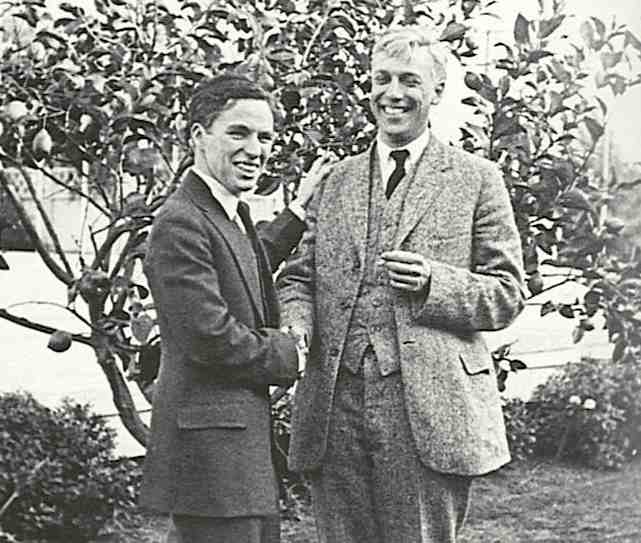
Charlie Chaplin and Max Eastman in Hollywood 1919. 
Book Review from the June 1927 issue of the Socialist Standard

A crimson-covered volume of some two hundred and odd pages has come to hand possessing the above ambitious title. The author, Max Eastman, poses as something of a psychologist of the analytical type, having apparently imbibed Freud in large doses. Thus fortified, he trains his critical guns upon what he regards as the tottering fabric of the Marxian philosophy, or as he terms it, “dialectic materialism” ; which procedure, he would have us believe, is animated by nothing more than a friendly desire to rid Marxism of a paralysing encumbrance, and to convert it, at last, into a real practical science.

The effect is somewhat bewildering, to say the least of it, and the present scribe, afflicted with a mere working-class education, candidly confesses his inability to make any practical head or tail of the involved argumentation in which Mr. Eastman indulges. In his first chapter on “The Function of Thinking,” he drills into the reader the idea that “Thought is purposive,” yet at the end of the book the said reader is left guessing as to just what purpose the author considers himself to have served.

There is not a single criticism of Marx that is new in the whole volume, and nothing is added, even by way of suggestion or example, to our knowledge of the social revolution. All that the author attempts is to shake the confidence of the Marxist in the reality and objective basis of his conclusions. Economic knowledge is derided and belittled, and a simple faith in our own desires and will is offered as a substitute. All this, of course, the author would have us lay at the door of psychology.

According to Mr. Eastman, Marx’s conception of history as a process based upon economic development, was merely a “rationalisation” of his desire for a revolution. We are asked to believe that in the “ideological” and “metaphysical” pages of “Capital,” Marx satisfied the mystic yearnings of his soul by philosophical communion with an “Economic God” of his own invention.

The present writer is not, of course, in a position to divulge what subtle “complex” dominates Mr. Eastman’s mind, but it appears to be one which leads him, for some obscure reason, into hostility against any form of abstract thought as applied to history and economics. He would throw overboard both metaphysics and dialectics and confine himself to the common-sense methods of practical investigation. Yet in the realm of biology he accepts Darwin and in psychology he accepts Freud.

He appears to be unable to see that both of these investigators are compelled to use the dialectical method whenever they generalise their conclusions, and leave for the nonce the realm of particular facts.

Darwin was forced to connect the evolution of organisms with changes in the earth’s crust. Are we therefore entitled to suggest that he was merely “rationalising” a subconscious hostility to the Book of Genesis? Marx, we are told, does not explain the practical variations in prices, etc., by his theory of value. Neither did Darwin attempt to explain the variations which occur in every succeeding generation. He looked for the law of survival and found it—horror of horrors, Mr. Eastman—in the material conditions of existence which alone could determine what were “favourable” variations, regardless of the will and desire of unfavourable ones.

In the sphere of psychological theory, Freud elaborates the conception of a conflict between the conscious and the unconscious mental processes. This he attributes to the existence of a censorship which represses the thoughts and feelings incompatible with civilised behaviour. Obviously, as Freud himself admits, this censorship is nothing but the reflection in the individual mind of the social conventions necessarily arising from a given stage of economic development. The professed object of psychoanalysts is to resolve the conflict, i.e., to bring the buried “wish” into harmony with reality, and what is this, Mr. Eastman, but the essence of dialectics?

It matters not to what realm of investigation we turn, the same law holds good, that a thing is and moves, and has its being only in relation to that which is not itself. So-called realists like our author may wriggle this way and that, but the only practical way of escape from the barren waste of metaphysics is the dialectical materialism which they affect to despise.

This is obvious whenever a scientist leaves his own realm and pronounces as with pontifical authority upon some subject of general interest of which his knowledge may easily be less than that of the average man. Men like Crookes and Lodge, for example, exhibit all the vices of the metaphysician when dealing with the subject of spiritism, while the number of Anti-Socialist professors has not been counted.

Marx’s “metaphysics” were attacked and the attacks answered by him in his own preface to “Capital” long before Mr. Eastman was heard of. Economic forces being social in character, cannot be dealt with in the same way as chemical compounds. Acids and microscopes are useless when we want to analyse a commodity.

Only the force of abstraction can help us. Abandon that force, and a science of economics becomes impossible, and we are left a prey to every Utopian fantasy liable to be misled by any will-o’-the-wisp “reform,” whether proposed by the professional politician or the crack-brained “rebel.”

Mr. Eastman endeavours to maintain that an idea cannot at one and the same time be a “reflex” of conditions, expressing some class interest, and also have objective validity. He holds that the Marxian “ideology” is thus no more scientific than the “ideologies” of the capitalist class, which it attempts to replace. In other words, Marx only saw what he wanted to see and described the result as “science !” This line of argument leads us to the conclusion that a truth ceases to be such if we want to make use of it. Thus, mechanics are no more scientific than magicians, since they simply express in their theories a “rationalised” form of their desire to control the universe.

For sheer puerility, some of the self-styled “psychologists” would be hard to beat, but as Engels has it, “The proof of the pudding lies in the eating, and human action had solved the problem long before human ingenuity had invented it.”

The soundness of Marx’s economic view is evidenced by facts which become daily more obvious, e.g., the concentration of capital and the intensification of exploitation, and of the consequent class-struggle. Mr. Eastman affects to regard these facts as immaterial to the main issue. “Look at Russia !” he exclaims. “Never mind about whether the triumph of the proletariat is inevitable ! Suffice that it is possible.” Yet in a very few pages further on he has to lament the appalling growth of bureaucracy in Russia !

Lenin, of course, comes in for eulogy in comparison with poor old Marx.

We have the “brilliant social revolutionary engineer” held up to admiration in comparison with the “foggy old metaphysician.”

The Bolshevik upheaval proved Marx wrong according to Mr. Eastman. Had it succeeded in its alleged object, we might agree with him, but all the evidence of its failure surely proves that Marx was right, and that social and political forms cannot be forced upon countries where the backward economic conditions make them premature.

Throughout the book the author negligently confuses historical materialism with “economic determinism,” and blind fatalism. He follows innumerable bourgeois “critics” of Marx in attributing contradictions to his thought which do not exist, and generally re-hashes all the stale metaphysical dualism in the guise of psychology. It is difficult, however, to believe that Professor Freud would recognise many of his “disciples” who appear anxious to show themselves off as “Jacks” in all and sundry branches of inquiry and “masters” of none.

As for dialectics, this method of reasoning will no doubt survive the attempts on the part of the “Communists” to drag it in as a support for their alternate criticism and support of Labour leaders; but this is a practical question of working-class politics here and now, which appears to be beneath the notice of such a “practical scientist” as Mr. Eastman.
Eric Boden

Blogger's Note:
The full title of Max Eastman's book was 'Marx and Lenin: The Science of Revolution'.

Tuesday, June 1, 2021

Self-Deception (1956)

From the June 1956 issue of the Socialist Standard

Of late years modern psychology, with its Freudian basis, has had considerable appeal for the shallow intellectual. It is so elevating, and causes so little cultural embarrassment, to stand before the mental mirror contemplating one's brain and imagining what one thinks it thinks it is thinking. Needless to say the reality is far from the loftiness of the conception. But it is a very self-satisfying game; puffs one's conceit without the toil of acquiring real useful knowledge, and, like the card-sharper's ability, acquires some financial gain and social standing from, what Barnum referred to as, "the mug that is born every day."
Gilmac.

Saturday, July 25, 2020

Letters: Scientific proofs (2006)

Letters to the Editors from the July 2006 issue of the Socialist Standard

Scientific proofs

Dear Editors

As both a scientist and a socialist, I was dismayed to read two statements in the May Socialist Standard which appear to reflect an anti-science or anti-academia bias. The first statement, found in the Pathfinders column, is that “science itself is unable to prove anything very much at all, whether it is a theory of gravity, evolution, or climate change”. While this is ‘technically’ true, it is more than a little disingenuous, and may lead readers to believe that the Socialist Party rejects science as a tool for understanding nature and the human condition.

Science works by proposing theories, which are tested to see if they account for the available data, and then modified if they do not. Because new data is always being discovered, scientific theories are never proved with absolute certainty in the sense of a mathematical or logical proof, but rather in the sense of a legal proof – “beyond a reasonable doubt”. The overwhelming evidence in support of the theory of evolution is such that no biologist disputes its ability to account for the fossil record and origin of species; in this informal sense the theory can rightly be said to be “proven”.

Socialists should therefore not reject calls for scientific proof of our social and economic theories; rather, we should meet them by providing supporting evidence, or by modifying our theories when presented with contradictory evidence.

The second passage with which I take issue appears in Voice from the Back, where some professors are ridiculed for speculating on some matter of Christian mythology instead of speaking out against world hunger.

I’d like to know what evidence the author of this piece has that these professors are not socialists and are unsympathetic to the problem of world hunger. And is it his belief that the study of ancient history and literature has no redeeming value, and that it will be abandoned in socialism? Or merely that any activity not directly related to bringing about socialism should be held up to condemnation and ridicule?

Perhaps the author may be able to devote every waking hour of his life to socialist propagandizing, but most of the rest of us need to set aside at least some of our time for employment, hobbies, relaxation, and yes, even inconsequential philosophical debates.
Tristan Miller, 
London SW4


Another view of Freud

Dear Editors

I’d like to comment on the article “Freud and Marx: do they mix?” (May Socialist Standard) and put forward some of my own thoughts on the subject. In order to appreciate Freud you really need to approach him with the right mind-set. That mind-set, in my opinion, is an ability to understand where he’s “coming from”, together with a willingness to appreciate his insights without necessarily buying into his ideas wholesale.

This second point was explained by J.A.C. Brown in his book Freud and the Post-Freudians:
“It is convenient to regard the total body of Freudian thought as falling into roughly three categories: its basic psychological concepts; the theories based on clinical observations and described in terms of this conceptual scheme; and the essentially philosophical conclusions on such subjects as the nature of society and civilization, war and religion, which Freud drew from his own thought and experience. 
Whether or not such a division is logically justifiable it is undoubtedly empirically useful in any consideration of his influence on scientific thought; for many would accept his general approach to psychological problems who would not be uncritical of his theories, and others would accept both without taking very seriously his metaphysical conclusions.”
Freud’s outstanding fault was over-generalisation. But even this criticism of him has to be qualified because you have to judge each of his points individually. Making sweeping statements about someone who made so many different individual points over so many years is it itself an overgeneralisation. Many people have claimed that Freud’s ideas are untestable. This isn’t necessarily true. Seymour Fisher and Roger P. Greenberg have made a concerted effort to test Freud’s ideas against a wide range of scientific evidence. Their findings are compiled in their two books The Scientific Credibility of Freud’s Theories and Therapy and Freud Scientifically Reappraised.

The following paragraph, which appears in their first book, gives you an idea of their general approach:
“Overall, the best argument we can muster for scientifically testing Freud’s models is the fact that many competent people have already tried their hand at it and discovered new, interesting things. It should be added that their fairly precise quantitative observations are making it possible to speak in terms of the degree to which Freud’s ideas are valid or not valid, rather than simply Freud, at least in terms of his theoretical conclusions, had a somewhat pessimistic view of human nature, and in this sense saw things differently from socialists."
However, I believe that this should be set against Freud’s compassionate acceptance of human weakness and limitation, and in this respect, I believe, Freud and Marx were soul mates. Many of their peers would have been happy to regard the hysterical men and women as well as the poor oppressed masses as both, each in their own way, the cause of their own misfortune. Freud and Marx regarded them as fellow human beings, championed their causes, and sought to relieve them from their suffering. In doing so they both went completely against the grain of the societies they lived in, and for that bravery of spirit alone, deserve our gratitude and respect.

The idea that people are the cause of their own misfortune is a central argument of those on the political right. This is particularly so in America where it’s even accepted by many of those who suffer as a result of it. The idea is that whether someone is emotionally disturbed, or mentally ill, or a single mother, or lacks the skills, strength, or ability to get a well paying job, they are somehow supposed to have chosen to be exactly as they are. Giving them no support is then justified on the grounds that they could choose to somehow magically change themselves and their circumstances if they really wanted to. It’s interesting to note that these right-wingers choose to see emotional and economic difficulties in a very similar way.

Freud and Marx would have been united in opposing this absurd idea. Freud would have pointed out that people with emotional problems are victims of their own natures and certainly don’t choose to be the way they are. I don’t need to say what Marx would have said about the source of economic hardship.

In spite of the huge differences in their areas of interests there are quite a number of ways in which Freud and Marx parallel one another. They were both big fans of Darwin and saw themselves as doing work in a similar vein to him.

For an explanation of how Marx’s views on religion correspond to Freud’s ideas about paranoia see Paranoia by David Bell. This is an excellent little booklet which I thoroughly recommend. It gives a brilliant explanation of “false communities”, racism, hatred of asylum seekers, resentment welfare recipients, etc. from a  psychoanalytic point of view. Psychoanalysis has a tremendous amount to offer to anyone who wants to have a better understanding of human behaviour.

I can’t resist mentioning the books of Robert Jay Lifton in which he applies his background in psychoanalysis to the study of recent historical and political situations. Socialists should simply take from Freud and psychoanalysis whatever they find helpful or interesting and leave aside that which they don’t.
Adam Waterhouse, 
Bristol


Dear Editors 

The article on ‘Freud and Marx’ (May Socialist Standard) was quite interesting and may lead some readers to study more of the works of Freud, Reich and Fromm. However, it appears to make the usual errors by critics of their pioneering work

Freud’s discovery of psycho-analysis is used by the medical profession world-wide and has proved to be beneficial and invaluable in treating patients with deep emotional difficulties.

The article states that “Instinctual Sexual Energy” has never been found. This is not the case. Any objective observation of older babies and very young children will demonstrate that they have a natural and “instinctive” sexual or sensual drive for genital play for long before they have any understanding or knowledge of sexual functioning.

While there have been advances in sexual liberation for adults, in recent years, this has not led to much improvement in social attitudes. There is a specific reason for this. Development in the first five years of life pass through the stages of oral, anal and genital evolution of pleasure zones.

By puberty, on average, girls are menstruating at 10 years of age and boys, on average, are ejaculating at 12 years. So physiologically they are ready for mating.

This in our “Civilised” society is understandably unacceptable. So unlike all other living creatures, the “Sexual Instincts” must be repressed and thwarted. Freud and Freudians understood this and suggested that a price in emotional terms would be made. Hence the ‘Life and Death’ instincts evolve that give rise to the emergence of all kinds of sexual perversions that can develop. These are also expressed in ‘death’ drives in addictions, such as drug taking, smoking, alcohol, etc. And as Wilhelm Reich proved, into homoerotic political diversions, such as fascist and nazi fantasies. (Study the Nazi symbols and expressions and the “death instinct” is self-evident.) Sexuality or sensuality is the deepest natural emotional instinct all humans possess.

Most people, though unaware of their repressed emotions, are able to cope sufficiently in life. It is essential, however, to understand the complexity of our personalities, if we are ever going to be able to create a fully successful socialist society that will be really lasting. For we are not machines or robots, but thinking animals with many emotional layers. Just as the work of Marx is a guide to understanding, and not a dogma like religions. So also, is the work of Freud, Reich and Fromm.
Lionel Rich, 
London NW6

Sunday, May 31, 2020

Freud and Marx: do they mix? (2006)

From the May 2006 issue of the Socialist Standard
Freud was born 150 years ago this month. Here we look at those who have tried to combine his theories with those of Marx.
Freud, who was an atheist and regarded himself as a scientific materialist, put forward a theory to explain irrational behaviour. As a doctor specialising in mental disorders and a pioneer in this field, he was quite entitled to put forward the hypothesis that mental disorders were generally connected with sexual repression in early childhood. But he was equally required to propose a mechanism as to how this could come about. His suggested materialist explanation was that there existed in human beings a special form of instinctual energy—sexual energy—to which he gave the name “libido”. That gave other scientists something to go on, something to look for in the physiology of human beings.

The trouble is that no such instinctual sexual energy has ever been found. Freud has, however, been proved right that what happens in early childhood is of crucial importance for the development of the adult personality. Other scientists have confirmed that this is the period of fairly rapid learning. But there is no reason to suppose that this is all about sex. Sexual preferences and orientations will be just one amongst many other things that will be learned during this period.

It is also true that people have been taught (more in the past than today) irrational ideas and attitudes about sex and this has had a harmful effect on their adult sex life and, in extreme cases, on their mental health. Freud’s critics don’t deny this but say he was wrong to seek to reduce everything to the expression or repression or diversion of some instinctual sexual energy.

Instinctual energy?
Wilhelm Reich, like Freud, was a medical doctor. At first he had been interested in the physiology of sex but then, under Freud’s influence, became interested in its psychology as well. But he always retained an interest in physiology and was the one of Freud’s followers who took the most seriously Freud’s hypothesis that there existed a material energy form called “libido” or “instinctual sexual energy” and set about trying to find it.

His break with Freud did not come over this, but over politics. Freud was an ordinary defender of liberal capitalism and wanted to keep his theories as essentially a clinical cure for certain forms of mental illness. Reich didn’t agree. He felt that a free society could exist if people in general were taught to take a rational attitude to sex. This led him in 1927 to join the Communist Party, from which he was to be expelled in 1933.

Reich offered an explanation as to why fascism had developed: sexual repression in early childhood. According to him, the particular form of sexual repression and family life practised in pre-Nazi Germany led to people, including workers, coming to have an authoritarian personality which inclined them to follow and be dependent on leaders, who represented the patriarchal father-figure they had been brought up to believe in and which, as a result, they had a psychological need for.

Reich’s theory didn’t have much impact at the time but it was revived in the 1960s and 70s when his The Sexual Revolution and The Mass Psychology of Fascism were hugely popular, being reprinted many times and translated into many languages. The combination of Marxism and sexual liberation caught the mood of the time. His argument in The Mass Psychology of Fascism as to why people had supported fascism was transferred virtually unchanged to explain why people supported capitalism; it was as if its title had been “the mass psychology of capitalism”. In this way sexual liberation came to be seen as being intrinsically anti-capitalist.

There is nothing wrong with sexual liberation but it stands on its own and doesn’t need Reich’s psychological theories to justify it. Since the 60s and 70s the so-called sexual revolution has proceeded. The patriarchal family is not half so patriarchal as it used to be and is not so widespread either—yet capitalism is as solidly supported by the majority of people as it ever was. Which in itself undermines theories based on Reich as to why workers support capitalism.

In 1939 Reich claimed to have found Freud’s posited instinctual sexual energy, calling it “orgone”. After that, he went completely haywire, claiming that it came from outer space and could cure cancer. As a result of refusing to stop selling “orgone boxes” to cure cancer, he was jailed for contempt of court and in fact died in the hospital wing of a prison in 1957.

This pathetic end should not disguise the fact that he was merely trying to prove what was at the basis of Freud’s theories: that there was such a thing as sexual energy. He failed, and so has everybody else. These days not even most Freudians defend the existence of sexual energy in the sense Freud understood it, as an instinctual bodily energy that could be repressed or diverted into other forms of bodily energy.

Philosophical speculations
Although Freud did believe that ultimately a materialist basis for mental states would be found—that the nature of the “sexual energy” he posited would eventually be uncovered—he himself never claimed it had been or was anywhere near to being discovered. This didn’t him prevent him from continuing to speculate on the basis that it did exist. Indeed, from one point of view, Freud can be better seen as a speculative philosopher than as a practising scientist, at least in his later years. The trouble was that he came up with speculative theories which could neither be proved nor disproved.

For instance, he posited a “life instinct” and then, later, a “death instinct”. He talked about a “pleasure principle” and a “reality principle”. But how could the existence of such “instincts” and “principles” be proved? Some (most, in fact) of his followers—Reich for instance—denied that there was such a thing as a “death instinct”. So, Freud said there was; Reich said there wasn’t. But how to prove which one was right? You can’t. There’s no way of doing so.

One philosopher who took up Freud’s philosophical speculations was Herbert Marcuse. He started from a book written by Freud in 1930, Civilisation and Its Discontents. This is one of the most anti-socialist books ever written since it provides a pseudo-scientific justification for the so-called “human nature” objection to socialism. Freud was quite explicit about this:
“(. . .) men are not gentle creatures, who want to be loved, who at most defend themselves if they are attacked; they are, on the contrary, creatures among whose instinctual endowments is to be reckoned a powerful share of aggressiveness. As a result, their neighbour is for them not only a potential helper or sexual object, but also someone who tempts them to satisfy their aggressiveness on him, to exploit his capacity for work without compensation, to use him sexually without his consent, to seize his possessions, to humiliate him, to cause him pain, to torture and to kill him”.
According to Freud, human civilisation is based, and has to be based, on the repression of the basic “sexual” or “instinctual” energy he believed humans to have. What happened, in Freud’s view, was that this repressed sexual energy was diverted into the work which had to be engaged in to produce the things humans needed to survive and build up the material side of civilisation. This speculation that the energy for work comes from diverted sexual energy is baseless. We know where we get this energy from—the food we eat, which is a form of chemical energy which the body converts into potential mechanical energy.

Without such sexual repression, Freud taught, we would all behave like babies do in the first year or so of their life seeking immediate gratification, which in Freud’s mind meant sexual gratification. But more, by this time Freud had introduced a “death instinct” into his speculative philosophy. So, without sexual repression, human society would collapse into an orgy of sex and violence.

Marcuse—who was a philosopher and not a scientific researcher—set out to show, in his Eros and Civilisation (1955), that Freudian theories did not necessarily rule out a free, non-repressive society. He accepted Freud’s speculation that civilisation had originally been based on a necessary sexual repression, but added two riders: (1) that only a part of this had come from the conditions of scarcity which obliged humans to work, another part came from living in class-divided societies where ruling classes imposed an extra repression over and above that arising from natural scarcity, and (2) that, with the coming of automation and the like, scarcity had now been conquered. This being so, sexual repression—that imposed by natural conditions as well as that imposed by class-divided society—was no longer necessary. Civilisation need no longer be based on sexual repression. A free, non-repressive society was possible. Freud and socialism could be reconciled.

Marcuse’s explanation as to why people accepted capitalism was that they had been psychologically manipulated into wanting it. In other words, that their basic “instincts” had been remoulded so as to fit in with capitalist society. In so doing he presented himself with a dilemma: if this was really the case, how could such people ever come to want to get rid of capitalism?

Community life
Erich Fromm tried to combine Freud’s ideas with those of Marx in a quite different way. Whereas Freud (and Reich and Marcuse) saw the mind as something that could be explained in terms of the individual’s instinctual biological development, Fromm said that the mind was a social phenomenon. Thus, while Freud explained mental illness in terms of the failure of an individual to develop normally through the various stages of sexual development which his theory posited, Fromm (a medical doctor and practising psychiatrist himself) explained mental illness in terms of the failure of the individual to relate properly with other individuals. For him, not only the mind but (most) mental illnesses were social.

This might even be said to amount to the complete overthrow of the Freudian system. Fromm himself didn’t go that far. He still believed in psychoanalysis as a therapy and he still thought in terms of a “life instinct” and a “death instinct”. In his book The Sane Society (which also appeared in 1955) he wrote the following (which led orthodox Freudians to say that he wasn’t really a Freudian at all):
  “Freud, searching for the basic force which motivates human passions and desires, believed he had found it in the libido. But powerful as the sexual drive and its derivations are, they are by no means the most powerful forces within man and their frustration is not the cause of mental disturbances. The most powerful forces motivating man’s behaviour stems from the conditions of his existence, the ‘human situation’” (chapter 3).
By “the conditions of the human situation” Fromm meant that humans are the only animal species whose individual members have an awareness of themselves as separate individuals, have “self consciousness”. This gives us a sense of individuality and freedom, says Fromm, but at the same time a sense of aloneness. According to him, the driving force behind human behaviour is not, as Freud claimed, the search for pleasure which was ultimately sexual, but the desire to overcome this sense of aloneness, the desire to feel part of a greater whole, the desire to be liked and accepted by other human beings.

This is a theory of human nature. In the argument about human nature that has gone on amongst socialists—is it human nature to be completely adaptable or are there conditions that humans couldn’t adapt to because it would be contrary to their nature?—Fromm comes down in favour of the second view. Humans are social animals, and we need each other not only practically so as to collectively produce the material things we need to live but also psychologically—we need to feel part of a group, of a community. From which it follows that any society which does not satisfy this psychological need, or which actively works to prevent it being satisfied, is incompatible with human nature.

The basic theme of Fromm’s The Sane Society is that capitalism, because it encourages competition between individuals, pitting them against each other in a rat race for power, privilege and prestige, is a society that is incompatible with human nature. It is an “insane society”, a “sick society”. Only a society based on co-operation and community is a sane society as one which properly meets the psychological needs of human beings for a sense of belonging; not just a sense of belonging but a state of actually belonging to a real community.

The existence of false communities—such as those provided by racism, nationalism and religion—would seem to confirm Fromm’s theory that there is a human need to be part of a community with other human beings and that capitalism is against “human nature” because it denies, and works against, this basic need. Although capitalism continually seeks to reduce us to isolated social atoms who only collide in the marketplace as buyers and sellers, the basic human need for community still expresses itself even if in distorted and perverted forms.

If true, this is the answer to the dilemma that Reich and Marcuse had got themselves into with their theory that capitalism had learned how to manipulate what they regarded as the driving force behind human behaviour—Freud’s imaginary “sexual energy”—so as to create people whose very personality and character structure has been moulded for life under capitalism. It would mean that there was still hope for socialism. Capitalism can try to suppress the human need for co-operation and community but will never be able to succeed.
Adam Buick

Sunday, October 6, 2019

And Fromm Where . . . (1995)

From the January 1995 issue of the Socialist Standard

Born in Frankfurt, Germany, in 1900, Erich Fromm was one of the first to attempt a synthesis of Marx and Freud (Reuben Osborn had previously made such an attempt, in his Freud and Marx, in 1937, from a Stalinist viewpoint), and to develop a Marxian social psychology. Fromm was trained in psychoanalysis, and worked with the Institute for Social Research in Frankfurt from  1930 to  1933, when he fled from Nazi Germany. He then went to America.

In his early essays, Fromm combined the dialectical and materialist elements in both Marx and Freud; and applied Marxian social psychology to interpret such phenomena as religion and the sado-masochistic roots of the authoritarian personality.

In 1941 Fromm wrote probably his best-known work, Escape From Freedom, published in Britain in 1942 under the title The Fear of Freedom. In it he asks if freedom is a psychological problem; and discusses in detail authoritarianism, destructiveness and conformity. He also deals with the psychology of Nazism. His conclusion is that “changing social conditions result in changes of the social character; that is, in new needs and anxieties . . . social conditions influence ideological phenomena through the medium of character; character, on the other hand, is not the result of passive adaptation to social conditions, but of a dynamic adaptation on the basis of elements that either are biologically inherent in human nature or have become inherent as a result of historic evolution”.

Fromm’s old friend, Herbert Marcuse, engaged in polemics with him during the 1950s, beginning with his Eros and Civilization. Marcuse accused Fromm of being a “Neo-Freudian revisionist”, and Fromm retaliated by calling Marcuse a “nihilist”. Fromm, however, argued that people must free themselves, whilst Marcuse, particularly in his One-Dimensional Man, looks largely to the “substratum of the outcasts and outsiders, the exploited and persecuted of other races and other colours, the unemployed and the unemployable”, when “they get together and go out into the streets, without arms” to lead the fight against “domination”.

In 1955 Fromm wrote The Sane Society in which he deals with the concept of alienation in some depth, as well as so-called education in capitalist society and what he calls the “roads to Sanity”, a sane socialist society. In 1949 he had already written Man For Himself: An Enquiry into the Psychology of Ethics, and in 1957 he wrote The Art of Loving – not a sex instruction manual, I might add. In 1965, Fromm published a collection of essays based on a symposium of various academics such as the Polish writer, Adam Schaff, Maximilien Rubel, T.B. Bottomore and others, titled Socialist Humanism.

Erich Fromm actively opposed the Vietnam war, and all other wars in which the United States became involved. He died in 1980. Of all his works, I have found his Fear of Freedom and The Sane Society the most useful, although all are worth reading.
Peter E. Newell


Blogger's Note:
From the same issue of the Socialist Standard, see also 'To Have or To Be . . . ' 

Friday, August 9, 2019

Freud and Marxism (1) (1989)

From the September 1989 issue of the Socialist Standard

Fifty years ago this month one of the century's most controversial figures died: Sigmund Freud, the founder of psychoanalysis. He has been celebrated as a genius or condemned as a charlatan, but one thing is certain: he cannot be ignored.

Freud's influence has been overwhelming. His views have informed issues and debates in every field of knowledge dealing with human affairs, and have contributed to forming present-day 'common sense'. His views have influenced many of the institutions that are a part of our social world. Child care clinics and a whole apparatus of systems to intervene in the family have been established in the belief that a healthy child requires certain sorts of experiences. Other institutions that deal with the problems encountered by adults, such as psychiatry, social work and clinical psychology, have been influenced in how they conceive of the problem and its treatment.

It would be false, however, to believe that Freudian views have swept all before them. This is far from the case. Freudian ideas and practices exist within fields in conflict with other viewpoints which claim that psychoanalysis is invalid. This is so within Marxism.

Freud's Life and Ideas
Sigmund Freud was born on 6 May 1856 in Freiberg, Moravia, a small town some 150 miles north-east of Vienna, in present-day Czechoslovakia. Although tine family was Jewish, orthodox practices and beliefs were not emphasised. When his father’s wool business began to fail in 1860 the family moved and settled in Vienna.

Freud remained there, except for brief visits away, until 1938 when the Nazis invaded Austria. It was then that he moved to London, dying there on 23 September 1939, aged 83. Freud showed early academic promise and, as an adolescent his interests were broad and varied. The rampant anti-semitism in Vienna severely restricted the opportunities open to Jews. Freud chose medicine primarily because of the openings it provided to science. In 1873 he entered the University of Vienna and in 1882 entered practice at the Vienna General Hospital.

In 1885 he managed to get a travelling grant which allowed him to go to Paris to study with the famous French psychiatrist, Jean Charcot, at the Saltpetriere. The contact with Charcot marked an important watershed in Freud's intellectual development, as it led to the beginning of his concern with the psychical rather than the physiological basis of neurosis. At the time nervous diseases (neuroses) were treated by physical means such as electrotherapy. However, Charcot had shown that the use of hypnotic suggestion could be effective in recovering the lost function (such as vision or walking) in hysterics. This work was highly controversial and when Freud gave a presentation of it to the Vienna Society of Medicine it was met negatively.

On his return from Paris, Freud married and set up in private practice. He used hypnosis to enable patients to recall forgotten events and for making suggestions to change their behaviour. In doing so, Freud was using a technique developed by Josef Breuer whom Freud had known from his days at the University of Vienna.

An account of the case of one of Breuer's patients. Bertha Pappenham, together with the varying interpretations of Freud and Breuer, was published in Studies in Hysteria in 1895. This can be considered the founding publication of psychoanalysis. Through further experience with his patients and his own lengthy self-analysis beginning in 1897 Freud came to focus attention on childhood experiences and the role of early sexual development in the formation of neurosis. The Interpretation of Dreams was published in 1900. In it Freud presented his theory of the unconscious and of repression. Dreams were seen as the royal road to the unconscious. Freud's views on the development of the sexual instinct from infancy to maturity, and the link between early development and sexual perversion and neurosis in adulthood, were presented in the Three Essays on the Theory of Sexuality in 1906. Freud was beginning to gather around him a group of followers: Alfred Adler, Carl Jung, Sandor Ferenczi, Otto Rank, Karl Abraham, Ernest Jones and others. He had also been appointed to a professorship. International recognition was growing and psychoanalysis was establishing a vigorous institutional foundation of congresses and journals. In 1910 the International Psychoanalytical Society was formed. However, with the growth and development there was also conflict and dissent. Adler left in 1911 and Jung in 1914.

Freud continued to refine and develop psychoanalytic theory and extend his analyses. The theory of psychoanalysis had expanded from a therapeutic technique based on clinical observation into a general account of neuroses, and into a theory of psychological processes in general. Finally, it had become a system in which most phenomena in body, mind and society were explained.

Psychoanalysis was always a source of controversy. But 1933 saw a new way to oppose it. When Hitler came to power Freud's writings, along with those of Einstein and H.G. Wells, were heaped on blazing public bonfires. Freud was reported as saying: "What progress we are making. In the Middle Ages they would have burned me, now they are contented with burning my books".

Freud's Geography of the Mind
Freud's views developed and changed over the years. It was in 1923 in The Ego and the Id that he presented his final account of the structure of the mind in terms of the Id, Ego and Superego. These, combined with the concepts of the unconscious, sexual energies and repression, form the basic framework of psychoanalysis.

One of the earliest findings for Freud was that the real motivation for an act may be disguised even to the person who performs it. Unconscious processes are the most important and the least accessible. Since these processes are outside awareness they can only be understood by way of their practical effects (for example, dreams, slips of the tongue). Unconscious processes can not be controlled by consciousness.

Of the three regions of the mind Freud described in 1923, the id was the most fundamental and basic aspect of the personality. It was the source of all the instinctual energy and was rooted in the biological characteristics of the human species. The id was governed by the pleasure principle and the immediate gratification of desire. The infant personality contained no other structure. The id was entirely amoral and incapable of making judgements of right and wrong. It pulsated with greed, envy and desire.

Out of this evolved a portion of the mind devoted to reason, the evaluation of external conditions and self-activity. This was the ego. Eventually, it became the executive of the personality, controlling the demands of the id and the super-ego. Whereas the id was shaped by instinctual forces, the ego was shaped by conscious perceptions and contact with the external world. The ego was governed by the reality principle.

The super-ego developed out of the ego as the child took on the standards of the parents. In the child's early development it had to learn right from wrong. This was done through the rewarding and punishing practices of the parents. As this was incorporated the super-ego was formed, and the child took on these parental functions by itself. The super-ego was just as unbending and unreasonable as the id. It would not tolerate any deviation from its rigid code of morals. If these morals were broken the super-ego produced a feeling of guilt in the ego, and if they were met a feeling of pride. The super-ego was governed by the morality principle.

In Freud's account of the structure of the mind the concept of energy was important, as it was this which he held quite literally fuelled the three systems and allowed for their development. All energy originated in the instincts, in the id. Of especial importance as a source of energy was the libido which consisted of the sex instinct. This differed from other instincts in that it could be diverted from its biological aim (sex) and sublimated or canalized into cultural activities and work.

The concept of the unconscious does not make much sense without the notion of repression, to help explain the relationship between the id and the ego. For Freud, the psyche (mind) was in a continuous state of conflict. In the middle of this conflict was the ego balancing the demands from the id, the super-ego and the external environment. This produced a state of anxiety which the ego attempted to ameliorate. The process whereby it achieved this was defence. The most pervasive and significant of the defence mechanisms of the ego was repression. Impulses from the id which might be disturbing to the ego and super-ego were shut out of consciousness. Repression was not a conscious process. Once repressed the material did not remain static, but attempted to break through to consciousness in a disguised form in fantasy, dreams and behaviour, often related to the original conflict.

In his account of the sexual development of the child, Freud argued that the child passed through oral, anal and phallic stages. In the phallic stage at 4-5 years of age the child turned to the genitals as a source of erotic gratification. It was at this age that male and female sexual differences became significant. Up to this time psychosexual development had been much the same for both sexes. But now the feelings of the boy towards the mother became more erotic. These feelings were complicated by feelings of rivalry with the father and a fear of loss of love and castration. This conflict Freud called the Oedipus complex and he believed it was universal to human development.

Marx or Freud?
The relationship between Freud and Marx's views has been one that has been a topic of controversy for half-a-century—and is likely to continue for some time. Those who favour an integration of Freud and Marx, and those who argue that there is an incompatibility between the two, are equally determined that theirs is the correct viewpoint. There does not seem to be a prospect that one or other will win the day. This tension, however, is not without benefit; it ensures that the issue of the role of the person in socialist theory remains a topic of debate, and not an arena left solely in the hands of the ideologues of capitalism, to be used to argue that socialism suppresses the individual. In fact, it is socialism that will ensure the free development of the individual. But this will not "just happen"; it is something that needs to be consciously produced. And that requires a valid theory of the individual.

Those who favour a Marx-Freud partnership, with Marx providing the social theory and Freud the psychology, are attracted to Freudianism on a number of grounds. First of all, they point to the dialectical quality of Freud's theorisation, with its emphasis on contradictions between the psychic regions, a quality they see as paralleling Marx's social dialectic. But this similarity is surely an inadequate reason to justify integration.

Perhaps the most important reason why Freud is chosen from the vast range of psychological theories is that he seems to offer an explanation as to how capitalist ideology can have such a hold on working class consciousness. For Marx, being determines consciousness, and the early Marxists assumed that as the means of production developed to the point where they came into contradiction with capitalist relations of production, so socialist consciousness too would develop in a relatively automatic way. However, the participation of the working class in the First World War. the rise of fascism and Stalinism, and the apparent decline in the ability of socialist ideas to attract support, cast doubt on this relative optimism; matters were far more complex. Freud's concepts of the unconscious as a realm of irrationality and of repression seemed to offer an explanation of how capitalist ideology buried deep into the personality beyond the control of the "rational conscious. Freud also offered a mechanism of how this occurred—in the early years of family life. It seemed as if the unconscious determines being.

However, Freudian theory has not remained unchallenged. both by academic psychologists and by Marxists. Not only has the tripartite division of the mind into id. ego and superego been seen as an idealist fiction derived from a religious tradition rather than an authentic materialism, but it has also been seen as giving too much emphasis to unconscious processes. Certainly Marx refers to events which people are not conscious of and of the unintended consequences of actions. But to explain these he does not refer to the unconscious wishes of individuals, but to the character of the social structure and of our ignorance of its mode of operation. Moreover, socialism was to come about not through the power of the unconscious, but through the development of consciousness within the working class. Revolutionary social change will be a result of the awareness of the contradictions of capitalism and not because of the libido.

Perhaps the most fundamental criticism of Freud concerns his concept of mind. For him the mind was an entity that could be separated from society. The mind had its own laws independent of society. Certainly Freud recognised that there was an interaction between mind and society but the mind nevertheless remained for him an individual phenomenon. To understand an individual it was not enough to know the history of the observable interactions of that individual's mental apparatus with the world.

In opposition to this dualism, a Marxist view sees mind as a relation and one that is embedded in specific, historically-determined social relations. In one sense, there is no theory of the individual in Marxism; there can be no Marxist psychology. This is because the individual-as-such is only an abstraction. For Marx, the individual is a concrete individual in a society of a certain kind characterised by a certain mode of activity. Thus a Marxist theory of the individual must have a basis in a different conception of psychology than that Freudianism shares with most other theories. This is a psychology that defines the object of study not as the individual, but as the study of the specific interactions of the "individual-m-relationship-with-the-world”.