Showing posts with label Clifford Groves. Show all posts

Sunday, November 8, 2026

The Magic Formula (1951)

From the November 1951 issue of the Socialist Standard

In the Middle Ages the alchemists (the witch doctors of their day) spent much time searching for the philosopher’s stone. This stone if found was to change the base metals into gold. But their searching was in vain. They should have lived in the 18th, 19th and 20th centuries, when they might well have thought that their wishes had come true. In this period the wealth of a few increases and continues to increase without any effort on the part of those who own it. This surely must be the philosopher’s stone in action. But the explanation is a very different one—it lies in the formula M-C-M'.

This formula means money-commodities-MONEY, the second item “Money’’ being greater than the first. In this formula lies the explanation of capitalist production. The capitalists start with money which they change into commodities and back again into money—more money than they began with. Where does this extra money come from? The explanation is to be found in one of the commodities they purchase. This commodity is the labour power of the workers. This commodity, like all other commodities, is bought and sold at a price based on its value. This value is determined by the amount of socially necessary labour involved in the production of the food, clothing and shelter the workers must have in order to function as workers. And so the worker is not cheated on the sale of his labour power, or his wages. From a legal point of view it is a perfectly fair transaction. But this commodity labour power has a quality not possessed by any other commodity, which makes it to the capitalist the most treasured commodity of all. It can increase values beyond the value it contains itself. Other commodities can only transmit their own values into the commodities produced. Here then is our philosopher’s stone. And here also in the formula quoted above is the explanation of the world we live in. The formula, for example, explains wars. In order to bring in the extra amount of money shown in the last item of the formula the commodities produced have to be sold. The workers can only receive the amount their wages will purchase. And so there is an endless conflict between the various groups of world capitalist powers to find markets for the commodities produced by their workers. These conflicts lead to war.

This formula also explains the general and continued poverty of the working class. The workers can never obtain more than the value of their labour power. This means that they can only receive back a portion of what they produce. The part left over, which we socialists call surplus value, belongs to their masters. And so while workers may not be destitute, yet compared with a few, the capitalist class, they are poor. This formula also explains the intensification of exploitation. The capitalists must find markets in competition with their rivals. Production must be cheapened, and the only way to cheapen production is by lessening the labour time involved. And so we have speeding up. The formula given above explains all of the attributes of the capitalist system of wealth production.

The alchemists never solved this problem. They were unable to find the philosopher’s stone which would change base metals into gold. But we have found out how it is possible for wealth to increase under capitalism while the condition of the working class remains unchanged. And now we must take the next step. The next step is to bring about a state of affairs in which the formula M-C-M' ceases to exist—in other words Socialism, so that those who produce may enjoy the fruits of their labour. For the bringing about of that we invite the co-operation of each member of the working class. The working class must do that—we cannot do it for them. If we could we should have done it long ago.

And now—how will things be produced under Socialism? In the first place there will be no commodities—that is things produced primarily for sale. In fact there will be no buying or selling, and because of this no money. The one test for production will be the satisfaction of human needs.

There are those, of course, who argue against us that when we can have anything we want people will make pigs of themselves, but the pig turns away from the trough when he has had enough. But all of these arguments arise from the conditions we live under now. No member of the working class has enough. His needs are never satisfied. Given conditions where needs can be satisfied then mankind will take what is needed and leave the rest.

There are of course many other arguments put forward against Socialism, which space precludes us from dealing with here. We would say, however, that it is worthy of your serious consideration. Get to grips with the problem and you will soon be on our side.
Clifford Groves

SPGB Meetings and Economics Classes (1936)

Party News from the November 1936 issue of the Socialist Standard 


Blogger's Notes:
'Reginald' was the name that Augustus Snellgrove used for speaking engagements and writing for the Socialist Standard. 
'G. Clifford' was Clifford Groves.
'R. Robertus' was Robert Reynolds.
Though 'N. Nesbit' is listed repeatedly in the Socialist Standard during this period, either as a Party lecturer or as an outdoor speaker, there is no record of a 'Nesbit' in the Party membership records.
'Hardy' was the name Edgar Hardcastle used when listed as a speaker at Party meetings. He wrote for the Socialist Standard under the pen-name of 'H'.

SPGB Meetings and Educational Visits (1936)

Party News from the November 1936 issue of the Socialist Standard 


Blogger's Notes:
  • 'L. Otway' was the husband of May Otway. Both Otways joined Walthamstow Branch of the SPGB in October 1924. Whilst May Otway resigned her membership of the Party in April 1940, L. Otway was lapsed from Party membership in May 1942.
  • Thirty years before debating the SPGB in Glasgow in November 1936, Guy Aldred was in correspondence with the SPGB about possibly joining the Party. He never did. Twenty-six years after that debate at the Clarion Scouts' Hall against John Higgins of the SPGB, Aldred stood against a SPGB candidate at the November 1962 Glasgow Woodside bye-election. What's interesting about the debate with Aldred is that there is no mention of the fact that in 1936 he would have been a leading member of the United Socialist Movement. I wonder if he spoke as their representative in the debate, or was he just speaking in an individual capacity?
  • 'Robertus' was Robert Reynolds.
  • 'G. Clifford' was Clifford Groves.
  • 'H. Russell' was Henry Russell. He joined the Southwark Branch of the SPGB in September 1933 and he was a member of the Party until his membership was lapsed in November 1952.

Wednesday, October 28, 2026

SPGB Meetings and Lectures, etc. (1937)

Party News from the September 1937 issue of the Socialist Standard


Blogger's Note:
The name, 'G. Clifford' — see the Bristol meeting advertised — was used by Clifford Groves as his party name during this period. 

Monday, July 20, 2026

SPGB Meetings (1936)

Party News from the July 1936 issue of the Socialist Standard


Blogger's Note:
'Comrade Clifford', who was the London speaker at the Durdham Downs, Bristol meeting, was Clifford Groves.

Sunday, November 23, 2025

Party News Briefs (1947)

Party News from the November 1947 issue of the Socialist Standard

The Autumn Delegate Meeting was held at the Trade Union Club, London, and not at the Conway Hall as originally arranged. The change was caused by factors beyond the control of the party. The question of increasing the number of pamphlets published by the party was discussed at length by delegates, and the whole of the party’s literature came under review. Methods of increasing sales were also discussed. The other organised activities of the party were dealt with under their various headings. These items included propaganda, publicity, internal education, finances, contact with companion parties, abroad, etc. There was a good attendance of delegates from London and the provinces who gave an excellent illustration of socialist democracy in action.

Edinburgh Group (Secretary—D. Lamond) have been running outdoor meetings at the Mound throughout the summer, and have planned to recommence indoor study and discussion meetings in the Melbourne Hall, Edinburgh every Sunday from the beginning of October, at 6.30 p.m. They are looking forward to some Glasgow speakers coming over, and there appear to be good prospects of an Edinburgh branch being formed soon. The Melbourne Hall is at George IV Bridge.

Kingston-on-Thames Branch have arranged a debate with the Trotskyists at the Co-operative Hall, Hampton Wick, for November 19th (Wednesday) at 8 p.m. The General Secretary is representing the party, but we have not yet been given the name of our opponents’ speaker. A number of Kingston members went to Brighton on Sunday, 21st, and arranged with the comrades living there to hold a meeting on the front. The beach authorities called in the police to stop the meeting after a very successful start had been made and a large, and rapidly increasing audience, gathered together. Another meeting was held later in the day at “The Level” with moderate success. The Kingston members, had an enjoyable day and the Brighton comrades were enthused by the effort. Friends and members living in the Brighton district who are interested in the formation of a group in or near Brighton can communicate with W. Craske, Green Road, Wivelsfield Green, Sussex.

Islington Branch held two very encouraging indoor meetings during the recent by-election in their area. The Central Library was filled on Sunday, September 21st, and the West Library provided a very interested audience on September 23rd. There were good collections and literature sales at both meetings.

Paddington Branch are firing away consistently with propaganda in their area. There were two indoor meetings in September, one at the Paddington Town Hall, and the other at Harvist Road School, Kensal Rise, N.W. Both were excellently attended and the speakers had to deal with keen questions and discussion. The branch mean to continue with meetings in the Willesden area with a view to laying the foundations for a branch there. Paddington now have their own amplifier which they use on a car for publicity purposes. They are convinced that this method is more effective than posters. There have been weekly outdoor meetings at the “Prince of Wales,” Harrow Road, but the police are shutting our meetings down early because of the rowdy meetings run by other organisations at the same place. The branch also report small, but good, outdoor propaganda meetings at Pennard Road, Shepherd’s Bush, which they describe as a political wilderness. These meetings have been run in conjunction with Ealing branch.

Croydon Branch has now been formed with the sanction of the Executive Committee. Many months of activity as a discussion group has thus borne fruit.

The Metropolitan Theatre, Edgware Road, London, is being booked for a concerted propaganda effort by Paddington branch and the central Propaganda Committee on Sunday, December 7th. Confirmation of the booking has not been received at the time of writing, but no difficulties are anticipated. Paddington branch are putting everything they have into the preparations for the meeting, and intend to engage in wide loud-speaker advertising, posters, handbills, etc. Will members and sympathisers please leave this day free so that this Sunday evening meeting will have the success it deserves.

Hackney Branch’s first meeting in the winter indoor campaign at the Bethnal Green Central Library justified the branch’s initiative in arranging the series. An attentive audience listened to the party’s views on “The Jewish Question”—a particularly appropriate subject as a large meeting of an anti-semitic political organisation was being held at the same time on a street corner a few yards away.

Ealing Branch have two big items in their programme for November. On Monday, November 10th, they are responsible for a debate at the Kensington Town Hall where our A. Turner will oppose Mr. A. Raven Thompson of an organisation called the Union of British Freedom. This party has views which are very much the same as those put forward by a number of other organisations which have been attempting to get in to the political limelight lately by holding large (and generally noisy) outdoor meetings in various parts of London. However much we disagree with the policies of our opponents we are always prepared to subject them to socialist analysis in public, and in doing this we do the only thing that can prevent the spread of false and dangerous ideas in the ranks of the working-class. The second Ealing branch effort is at Baling Town Hall, Ealing Broadway, on Wednesday, November 26th, where C. May and the General Secretary will be speaking. The branch are putting a considerable amount of work into both of these meetings, and expect success.
Clifford Groves, 
General Secretary.

SPGB Meetings (1947)

Party News from the November 1947 issue of the Socialist Standard


Blogger's Notes:
S. Lustigman was a member of South West London Branch of the SPGB from October 1942 until he resigned his membership for personal reasons in December 1952. According to the SPGB's membership records, he was a relative of longstanding SPGBer Julius Merry, who shared the same surname until he changed it because of anti-semitism.

The Revolutionary Communist Party's Jock Haston first encountered the SPGB at Hyde Park in the early 1930s. He recounted his experience in Sam Bornstein and Al Richardson's 1986 book, Against the Stream: A History of the Trotskyist Movement in Britain 1924-38:
"When I first began to question the C.P. line I still sold the Daily Worker, but at Marble Arch I came into contact with the Socialist Party of Great Britain, and a guy who was then the Secretary of the S.P.G.B. called Cohn. He gave me a terrible hammering one night on my ‘Leninism’, and I spent the whole night reading, and when I went back the following night he gave me a bigger hammering. For some months after that I used to attend S.P.G.B. meetings, and learned a great deal from the S.P.G.B. over the course of the next eight or nine months."
The 'Cohn' mentioned in the quote would have been Adolph Kohn. I'm not sure Kohn was the [General] Secretary of the Party in the 1930s but, at various times, he was on the editorial committee of the Socialist Standard.

Thursday, November 6, 2025

North Paddington bye-election (1946)

Party News from the November 1946 issue of the Socialist Standard

In view of the forthcoming bye-election in North Paddington and the decision of the Party to contest it, we make an urgent appeal for funds. Elections need not only active work, but money for posters, literature, etc. What we can do is largely dependent on your support.
Please send Donations to:—
E. LAKE, S.P.G.B., Rugby Chambers, Rugby St., Great James St., W.C.1.
Election Committee Rooms are not yet available. Will members and sympathisers willing to assist in election work please communicate with Parliamentary Committee at the above address.

Parliamentary Committee


Blogger's Note:
The December 1946 issue of the Socialist Standard carried a report by Gilbert McClatchie ('Gilmac') about the Party contesting the North Paddington bye-election.

SPGB Meetings (1946)

Party News from the November 1946 issue of the Socialist Standard

Sunday, June 22, 2025

Photographs and illustrations from the 70th anniversary issue of the Socialist Standard (1974)

From the June 1974 issue of the Socialist Standard

Blogger's Note:
This special 70th anniversary issue of the Socialist Standard carried a number of historical photographs within its pages. Some of the photographs tied in with specific articles, but a number appeared as standalone images illustrating aspects of the history of the SPGB. I thought it best to place all the images in one separate post. For certain images that tie in with a text, I've provided a link to the article where they originally appeared.


The handbill below was issued by the Watford Branch of the SPGB in 1905. This image appeared within Robert Barltrop's article, "Seventy Years for Socialism".


#    #    #    #

The undated photograph below is of the party headquarters in Great Dover Street, which was located in the Southwark area of South East London. This was the party's head office from 1929 until it was hit by a bomb - and partially destroyed - in 1941.

'Gilmac' mentions Great Dover Street in his September 1954 article, "Our Many Head Offices":
In 1927 Fitzgerald, with the aid of map and compass, succeeded in proving to a majority of the E.C. members that the Elephant and Castle was really in the centre of London. Anyhow we moved over near there to 42, Great Dover Street. We took an old house with three floors and a basement. One of the members made fittings for keeping the S.S. and literature in proper order in one basement room. The other basement room ( a very small one) had tables and chairs, and a stove on which a woman member cooked for those who wanted a meal. The smoke and heat in the little place was stifling, and getting out when one had finished was a problem.

The ground floor front room was used for selling literature and packing. There was a small shop front in which literature was displayed. The first floor consisted of one good sized room in which meetings were held as well as an occasional social—when the place shook as if it was about to collapse. E.C. meetings were also held in this room. Here we had some interesting discussions on the Spanish Revolt and at the beginning of the last war. In the room above lectures were given on many subjects during the winter months.
I know 'Gilmac' mentions 1927 in the excerpt above but Great Dover Street is first listed in the Standard as the Party's Head Office in its June 1929 issue.

I've always wondered if the young woman front and centre in the photograph was May Otway. I guess I'll never know.


#    #    #    #

The text accompanying the photograph below from the Standard was 'Conference photograph, 1928. at Fairfax Hall. Harringay, where Party Conferences were held from 1910 to 1936.' 

There's a strong chance that the bald man holding the board at the bottom centre of the photograph was Ted Kersley.


#    #    #    #

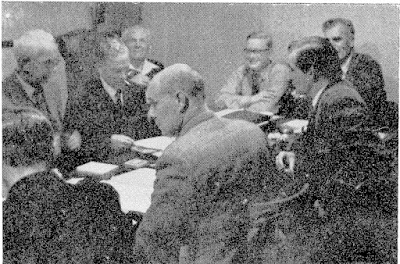
The text accompanying this photograph was 'No leaders: The Executive Committee in session, 1956.' It was part of the article "This is Socialism !'" I believe the younger man with the darker hair in the right of the photograph was Robert Barltrop, and the older, bald man to his left was Harry Young. ('Horatio')


#    #    #    #

Clifford Groves contested the Paddington North constituency for the SPGB at the 1945 General Election. He also stood in the same seat in the 1946 by-election. The July 1945 issue of the Standard carries the Party's election manifesto.


#    #    #    #

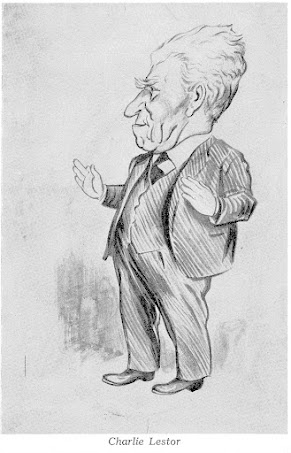
Both the photograph of Jack Fitzgerald and the cartoon caricature of Charlie Lestor were part of the "Some Members" article. I'm guessing that Robert Barltrop drew the image of Lestor.


#    #    #    #

The Metropolitan Theatre was located in Edgware Road, and was used on many occasions in the 1940s and early 1950s when the SPGB were contesting parliamentary seats in Paddington, but also when the Party held mass rallies. By all accounts these mass meetings had upwards of two thousand people in attendance. This photograph accompanied the "Early Election Campaigns" article.


#    #    #    #

No name for speaker on the platform. This photograph illustrated the "On the Platform" article.


#    #    #    #

Sadly, no names are listed but members of Walthamstow Branch in the late 1920s included, amongst others, Mr and Mrs Francis Brooks, Maurice Cole, Thomas Davis, C. Elliott, A. J. Godfrey, A. McDermott, May Otway, L. Otway, Jane Robinson, Frederick Wellavise, J. Wilkinson, S. E. Williams, Byron Young and Percy Young.

Surely May Otway is in this photograph? I know I keep mentioning her but she was one of my favourite Socialist Standard writers in the interwar years.


#    #    #    #


So, here's the conundrum: The June 1974 Socialist Standard states that the Conference photo below dates from 1950 but when it was included in the June 2004 Socialist Standard, the text said the photo was from the 1951 Annual Conference. I demand a recount.

As a point of interest, the September 2004 issue of the Socialist Standard carried a letter from Richard Botterill, identifying two of the delegates from Dartford Branch in the photo. (Spoiler alert: one of them was his dad.)


With regards to the June 2004 Standard already mentioned above, that was also a special anniversary issue  and it also carries a number of photographs relating to the history of the SPGB. I recommend you check it out. It serves as an excellent companion to the June 1974 issue.