Showing posts with label June 1928. Show all posts

Sunday, August 7, 2022

The Socialist Party versus the I.L.P. (1928)

From the June 1928 issue of the Socialist Standard

(Our Debate with James Maxton, M.P.)

On Wednesday, May 23rd, a well-attended debate was held at the Memorial Hall between J. Maxton, M.P., representing the I.L.P., and J. Fitzgerald, representing the S.P.G.B. Mr. Chapman Cohen, Editor of Freethinker, took the chair. The subject was “Which Party Should the Working Class Support, the I.L.P. or the S P.G.B.?”

J. Fitzgerald spoke for the first half-hour. He began by defining terms. By working class is meant those who depend upon the sale of their services for their living. By the capitalist class is meant those persons who buy the services of the workers. Capital does not mean merely wealth used for the production of further wealth, but wealth invested for the purpose of obtaining a nett surplus, called interest. This is the view not only of a Socialist, Marx, but also of capitalist economists like Bohm-Bawerk. Wealth is the product of the application of human energies to Nature-given material. The capitalist purchases the mental and physical energies of the workers, and after the payment of all expenses, he retains the nett surplus. The workers may not use the machinery of production — land, railways, factories, etc. — without the permission of the capitalists who own these things. The lives of the workers are under the control the capitalists who own their means of living. The workers are a slave class — wage-slaves.

How the workers are enslaved.
The armed forces of society — the police, the army, the air force, the navy, etc. — are under the control of the capitalist class. These armed forces are provided for annually by Parliament. Those who control Parliament control the armed forces by which they retain control of the means of wealth production. The capitalists and their agents are voted into Parliament at each election by the workers, who form the bulk of the electors. The only way to secure the “emancipation of the workers” is, first, to obtain control of the political machinery. When the workers want Socialism they can, through the vote, secure this control.

Is there wealth enough?
It is not true that the means of wealth production are inadequate. In spite of a million or more unemployed and of the waste of capitalist production, markets are overstocked, and combines are compelled to limit production in almost every industry. Five firms are reported by an American Government report to control half of the food supply of the world. In face of this, little reforms of capitalism are futile. The social ownership of the means of wealth production is the only remedy and can be secured only by the workers taking control of the political machinery.

Where does the I.L.P. stand?
I.L.P. leaders, at times, deny the existence of the class struggle. Keir Hardie and Ramsay MacDonald both did this.

 
Mr. Maxton's Case.

J. Maxton said that he was disappointed because he felt that he entirely agreed with the case put forward by his opponent. This statement of Socialist first principles was unassailable. The definitions were clear and correct. He accepted absolutely the diagnosis given. The workers accept capitalism and believe that the capitalists are a superior and necessary class. The only remedy is for the workers to awaken to the loss they suffer in being deprived of the necessities and luxuries of life. The problem before the Socialist is to awaken the worker to his subject position in society. The justification for this debate is that it may help towards this awakening and also that it may help towards achieving unity of working-class forces.

Points of Difference.
He had great difficulty in finding points of difference. Mr. J. Fitzgerald had quoted certain leaders of the I.L.P., but he, Mr. Maxton, held that he is the present leader of the I.L.P. and could speak on their behalf. It was not fair to quote against him statements made by someone else in 1902. He did not believe in those statements quoted. He fully accepted the theory of the class struggle and the necessity of basing Socialist tactics on that theory. He definitely repudiated the application of biological theories to politics and social questions.

The first necessity of an effective working-class organisation is the possession of a clear aim and policy. He and his opponent are equally doing the necessary propaganda. He denied that any Socialist organisation had done propaganda work equal in quality and quantity to the I.L.P.

I.L.P. Propaganda
Socialist propaganda must be delivered in a way understandable by the average worker. This the I.L.P. had done. It must be related to the circumstances of the ordinary worker’s life. The I.L.P. had pointed out to the workers the outstanding evils which are the effects of capitalism, but they did not believe that by these means they were abolishing capitalism. Psychologically that is the sounder method of approach to the workers, to awaken them to the realities of capitalism. But propaganda is not enough. The way to freedom is by the capture of political power. He and his opponent agreed on this also. He, however, thought there might be a point of difference. The I.L.P. said that it was necessary to start now capturing political power. It was needful to gather together into one great organisation – the Labour Party – all working-class organisations. To this end the I.L.P. fought elections challenging all capitalist candidates. Year by year they had increased in representation in the House of Commons. To-day there are far more representatives of the working class than ever before. He challenged contradiction on that. He agreed that a working-class party must have no other object than the establishment of Socialism. The I.L.P. seeks to induce the Labour Party to accept Socialism as its object. They wanted to give the Labour Party a clear majority in the House. All of this kind of work went on side by side in the: I.L.P.

The Labour Party and Socialism.
The I.L.P. has formed the Labour Party and got it to accept Socialism. It was now the task of the I.L.P. to lay down these steps to be taken to secure Socialism. This was the purpose of its “Socialism in Our Time” policy.

He cast no reflection on any working class organisation. He appreciated the Fabians, the S.P.G.B., and also the Communist Party.

 
Fitzgerald replies.

He pointed out that while Mr. MacDonald applied the theory of uninterrupted evolution to society, the son of Charles Darwin had shown that the Marxian view of social development by revolution is correct.

The debate was not between two individuals but between two parties. Mr. MacDonald only this year had written that poverty is largely the result of the pressure of population on the means of subsistence. This was untrue when Malthus said it in the eighteenth century, and is untrue to-day.

Right from its inception the I.L.P. urged the workers to put political power into the hands of the capitalist class.

In the New Leader for April 13th Mr. Maxton said that he wanted to narrow the gulf between rich and poor. The Socialist wanted to abolish the gulf, not narrow it. The I.L.P. wanted to abolish the conception of master and servant, so do the Liberals. Capital – admitted by Mr. Maxton to be the means of robbing the workers – cannot be “communally-owned,” as is the object of the I.L.P. For 35 years, in Mr. Maxton’s words, the I.L.P. had fought for the living wage – and had not secured it.

The I.L.P. Programme.
The I.L.P. had recently run a competition for a Labour programme in the columns of the New Leader. One part was a minimum wage low enough not to bring Press opposition. This programme did not even refer to Socialism. It proposed nationalisation with compensation.

The War.
The War in 1914 brought to a focus the difference between the I.L.P. and the Socialist Party. In August, 1914, the S.P.G.B. declared plainly that the War was a capitalist war, in no way involving interests of the working class.

In August, 1914, in the Labour Leader Keir Hardie spoke of “our interests as a nation” being at stake. We, the workers, had no interest. Mr. Ramsay MacDonald in Parliament offered to support the War if the nation were in danger.
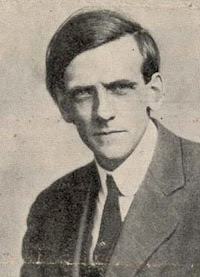
 
Mr. Maxton replies.

He could this time say that he faced points of difference, but he would repeat that he looked to the future, not the past. The statements quoted did not controvert the statement that the I.L.P. stood definitely against the War. He would challenge anyone to question his attitude or statements during the War. He was prepared to defend his own position. It must be common knowledge that Ramsay MacDonald is just as critical of the I.L.P. as Fitzgerald is, and the points he criticises are just the same. The I.L.P. wants Socialism, but what the workers want is a living wage. The fact that capitalism cannot provide this is the biggest propaganda point against capitalism.

The Gulf Between Rich and Poor. 
In speaking of the narrowing of the gulf between rich and poor, he said, “narrowing to vanishing point “ – this was not reported in the New Leader. He denied that the Liberal Report asked for the abolition of the status implied by the terms master and servant. In Socialism, as the I.L.P. understood it, there would be no exploitation. He admitted that the word capital was carelessly used in the declaration of the objects of the I.L.P., but the workers are not interested in the splitting of hairs. He, Mr. Maxton, had himself carelessly talked of the public ownership of capital when he should have said the public ownership of the means of wealth production. But it is of no importance in the real work of Socialist education.

Practical Work.
The I.L.P. devotes its time to the practical work of building up an effective machine for the establishment of Socialism. The S.P.G.B., in laying down its general principles, was only saying something which would be agreed with by every member of the Parliamentary Labour Party from MacDonald downwards. The difference only begins when it is a question of practical work. The S.P.G.B. refuses to face up to its responsibilities. Socialism is a question of human will and human organisation. Socialism can be attained by violence or by the “inevitability of gradualness.” All depends on human will and human intelligence. It depends not on any god or other power outside ourselves.

 
Fitzgerald concludes.

He was not responsible for incorrect passages of Mr. Maxton’s speech quoted in the New Leader. The S.P.G.B. expelled those of its members who supported the War. The I.L.P. did not deal with its leading members who supported the War. When the I.L.P. misuses the word “capital” it misleads the working class. Of the 154 Labour M.P.s, 106 are members of the I.L.P., and the I.L.P. cannot therefore condemn the Labour Party without at the same time condemning itself. Under Socialism there is no question of remuneration. Money is a feature of private property systems. With Socialism it will not be needed. Where there is plenty for all there is no question of remuneration, equal or otherwise.

The final point was that any Party which urges the workers to place power in the hands of the master class is betraying the interests of the workers.

 
Mr. Maxton winds up.

Mr. Maxton gave a blank denial to the charge that the I.L.P. has supported, or is supporting, the enemies of the working class. Never has the Party supported other than Labour and Socialist candidates. He gave that on his personal word of honour. He had heard that there had been friendly understandings between Labour and Liberal candidates, but he had also heard the denial of these statements.

But again he would urge that stirring up garbage was no work for Socialists. Since 1911, when he commenced his active work, there had never been any bargaining.

He agreed that the I.L.P. had not expelled dissentient minorities except in one or two very extreme cases. But there must be immense toleration if we are to succeed in organising the working class. There must be give and take. In view of the time it takes to make a Socialist, we must not fling a man out for his first mistake. It was the choice between being a narrow sect and being an effective organisation. When Mr. Maxton made mistakes he wanted to be treated tolerantly and he would give others the same toleration. Expulsion must be used only in the most extreme cases. The greatest problem is not to get a few men with a narrow view of Socialism, but to get millions with a great determination and as much knowledge as can be given in the time available. He believed that the time is short before the majority make up their minds to have Socialism. The work rendered by the I.L.P. in the past has been a good and valuable contribution to the building up of the Socialist movement. The I.L.P. will play an important part in achieving Socialism, a work not for the I.L.P. or the S.P.G.B., but for the workers of the world.

Letter: Ballot or Barricade Again: Mr. Chapman Tries Once More. (1928)

Letter to the Editors from the June 1928 issue of the Socialist Standard

East Street, S.E.17.

To the Editors of the “Socialist Standard.”

(1) I am writing again to the S.S., in the first place to admit that I made a mistake re Engels’ work, “Revolutionary Tactics.” I was quoting from memory, and in doing so I realise that I was “skating on very thin ice.” However, Engels does give the support I claim in another of his works, which I will quote.

(2) H. says (page 139 of May issue, S.S.) “That after 1848 neither Marx nor Engels then or thereafter drew such a conclusion as he (I) fastens on them” (Column 1, page 139). This is not true! Engels in his article “Con­cerning Authority,” written in 1873, and published in “Plebs,” Jan., 1923, writes as follows (page 27) :—”It (a revolution) is an act whereby a part of the population enforces its will upon the rest of the population—enforces its will by rifles, bayonets and big guns.” Also Engels says : “The party that gains the victory must maintain its dominion by virtue of the terror which its weapons inspire in the hearts of the reactionaries.”

(3) The phrase I claim to be in Marx’s Address to the Communist League, was slightly altered, but really means the same thing. I hope H. will not quibble over a word. Here is Marx’s phrase, verbatim, from “The Labour Monthly,” Sept., 1922 (page 142) : It is a matter of course that in the future sanguinary conflicts, as in all previous ones, the working men by their courage, resolution and self-sacri­fice will form the main force in the attainment of victory.” Further on (same page) Marx says : “Far from opposing so-called excesses and making examples of hated individuals, or public buildings to which hateful memories are attached, by sacrificing them to popular revenge, such deeds must not only be tolerated, but their direction must also be taken in hand.” It is obvious that Marx himself took “violence” to mean “revolution.” I now challenge H. to state if he has any knowledge of any revolution that involved the total transformation of property- relations, that has taken place without violence ?

(4) Re Marx and the Franchise. Marx says : “The universal suffrage had served its historic purpose. The majority of the people had passed through an instructive stage of development to which the suffrage, in a revolutionary epoch, had supplied the materials. It had to be ended either by revolution on reaction” (“Inquiry into Dictatorship,” Max Beer, “Labour Monthly,” August, 1922, page 118). Max Beer (same page, next paragraph) says : “Marx particularly points out that universal suffrage ‘weakened the energy of the French people by habituating them to legal triumphs instead of revolutionary ones. ‘ “

(5) Re the early dates of those works of both Marx and Engels, are they, together with their economic writings, out of date, or is this a non-sequitur? I should like to be enlightened on this point.

(6) As to the constitution: Does H. imagine it to be some mediaeval parchment like Magna Charta, hidden away in some museum or the Record Office, or is it only the “mode of government” in vogue to-day, which all “So­cialists” regard as a sham “democracy”? If H. means a tertium-quid by constitution, will he condescend to explain?

(7) Regarding the vagueness of my final ques­tion : In view of Marx’s declaration given above that “Universal suffrage has served its historic purpose,” then why waste time in opening election funds, and electing candidates into an utterly useless institution?

(8) According to the Logical Law of the Ex­cluded Middle, the S.P.G.B. is either Marxian or non-Marxian. Now ! (1) Marx advocated Violence. (2) The S.P.G.B. does not advocate violence, therefore (3) the S.P.G.B. is a non-Marxian party.

(9) Finally, to use an apologue, I am not like the man who lived in a garret, and whilst playing with an eighteenpenny box of chemicals, thought he had solved the “riddle of the universe.” I am ready to learn and study the “new Socialism” if the Socialism of Marx and Engels is out of date.

I now close, thanking H. of the S.S. for his answer to my first letter, and for keeping the discussion free from abuse.
I remain, Yours faithfully,

Robert Chapman.

(10) N.B.—As to the letter H. quotes from Marx to Kugleman of Jan. 15, 1866, it was published long after Marx’s death. Marx hated the “Social Democracy,” and in his “Criticism of the (Gotha) Socialist Programme” of 1875 (pub­lished in the “Neue Zeit,” No. 18, 1890-1), Engels in his introductory notes (pages 3 and 4 of “Socialist Programme”) admits that he has deleted several harsh and acrimonious phrases used by Marx. This criticism teems with Marx’s scorn for “Democracy,” and on page 12, he says : “May we not, from the mere fact that the representatives of our Party have been capable of so gross a departure from the view generally accepted by the Party, deduce with how much levity they have set to work upon drafting this compromise programme !” All this shows that Marx had a strong bias against the ballot.


Our Reply.
Mr. Chapman, abandoning several of his quotations, presents some more. Before dealing with them, it seems to be necessary to remind our correspondent that a policy is not proved to be sound because Marx or someone else said so. It is sound only if it is appropriate to the object in view, the obstacles to be overcome and the means available for overcoming them. Therefore, while it is necessary to correct Mr. Chapman’s misquotations “from memory,” it would be much more useful if discussion were confined to the important question of the proper policy to be applied by the workers here and now.

In paragraph 2 Mr. Chapman quotes passages from Engels’ writings showing that Engels advocated violence. These passages (he says, prove that what I wrote (in the May S.S.) “is not true.” Those who do not refer to what I did write will suppose that I denied that Engels advocated violence. Mr. Chapman takes half of a sentence of mine, puts a full-stop where I had a semi-colon and omits entirely my words indicating what was the conclusion that Marx and Engels “never drew.” The words Mr. Chapman omits follow directly on those he quotes, and were as follows : “They never omitted to stress the import­ance of gaining control of the machinery of government, as distinct from destroying it.” Mr. Chapman’s quotations about violence have nothing whatever to do with this policy of destroying the machinery of government as opposed to the policy advocated by Marx and Engels and ourselves of gaining control of it.

(3) Our correspondent blandly admits that he “slightly altered” the quotation from Marx. I can only say that quotations ought not to be “slightly altered.” Mr. Chapman completely ignores the fact, pointed out in my reply to his first letter, that the passage referred to is not Marx’s advice to the workers in the struggle for Socialism, but in the struggle alongside the capitalists to raise the capitalist class to power. Marx, writing about Germany in 1850, puts his statement under three headings :—
(i) “During the continuation of the present conditions in which the petty bourgeoise democracy is also oppressed ” ;
(ii) “In the ensuing revolutionary struggles which would give them momentary ascendancy.“; and
(iii) “After those struggles, during the time of their ascendancy over the defeated classes and the proletariat.”
In Germany in 1850, before the rise of the capitalists to power, there was no vote for workers or capitalists, and Marx, in common with many of the revolutionary capitalists themselves, advocated an armed rising. Mr. Chapman quotes from Section (i) without mentioning the heading under which the passage appears. In section (iii), which deals with the period after the capitalists have attained power and after the vote has been won, Marx does not mention an armed struggle. He deals instead with the necessity of fighting elections. Mr. Chapman does not quote from this section. Mr. Chapman ignores completely the fact that the capitalist class in England achieved their victory over their feudal aggressors long before 1850. A policy which was appropriate under those, conditions is not appropriate under fundamentally different conditions which exist here now. We are not fighting to raise the capitalist class to power, but to raise the working class to power. (The final part of this paragraph of Mr. Chapman’s letter is dealt with under paragraph 8.)

Marx and the Franchise.
(4) Mr. Chapman here quotes two passages about the struggles in France between 1848 and 1850, but he does not even mention that the passages refer to those particular struggles. He fails to see that a statement made in 1850 about certain conditions which existed in France at that time, even if they correctly interpreted those conditions, cannot be lifted out of their context and applied to a quite different set of circumstances such as exist here to-day. In order to back up his misuse of the first passage, Mr. Chapman resorts to his apparently usual practice of “slightly altering” the words. Marx, referring to France in 1850, wrote, “The universal suffrage had served its historic purpose.” Mr. Chapman wants to give this particular statement a general application and repeats the quotation in paragraph (7) of his letter, but calmly altered ‘had’ into ‘has,’ in order to give the impression that Marx was writing about the suffrage in general. Mr. Chapman’s view that Marx in 1850 considered it impossible to be revolutionary and yet make use of Parliament is shown to be incorrect by the Address to the Communist League which was written at the same time as the passage Mr. Chapman misquotes. Marx wrote in the “Address” as follows : “Even in constituencies where there is no prospect of our candidate being elected, the workers must nevertheless put up candidates in order to maintain their independence, to steel their forces and to bring their revolutionary attitude and party views before the public. “

Is Marx out of date?
(5) I did not say that Marx and Engels were out of date. It is not a question of date but of widely differing conditions. As I point out above, a policy which was correct in the struggle by capitalists and workers to crush feudalism and introduce representative government, is not correct in the struggle to establish Socialism. Where Marx dealt with the policy for the latter struggle his views were extraordinarily sound, considering the relatively undeveloped conditions of capitalism on which his observations were based.

(6) The constitution is, as Mr. Chapman remarks, the mode of government in vogue. Its strength and importance do not rest on any written document, but on the needs of the existing system of society. The capitalists cannot with impunity ignore the needs of their own economic system. Mr. Chapman does not explain what he means by “sham” democracy. The fact of importance is that the voters, at least 85 per cent. of whom are members of the working-class, vote overwhelmingly and voluntarily for capitalism at each election. They do this because they still believe that capitalism is the only possible system.

(7) I have already pointed out, in dealing with paragraph (4) of Mr. Chapman’s letter, that this alleged quotation is not as Marx wrote it, but as it appears after Mr. Chapman has “slightly altered” it.

(8) Mr. Chapman tries to present a simple argument in logical form, and by omitting two essential points, “proves” that the S.P.G.B. is a non-Marxian Party. He says : “Marx advocated violence” and “The S.P.G.B. does not advocate violence.” These are two half-truths. Marx advocated an armed struggle to help the capitalist movement of 1850, but he also advocated a Parliamentary struggle for the period after the capitalists had come to power. (See Address to Communist League.) The S.P.G.B. advocates capturing the machinery of government by means of the vote in order, among other things, to control “the armed forces.” We wish to gain control of the forces which alone will make our “violence” effective should capitalist rebels use violent methods against the Socialist majority. Control of the machinery of government is the deciding factor. The violence is incidental. The lesson to be learned from the Fascist episode in Italy is not in the use of violence, but in the circumstance so often overlooked— that the Fascists became the rulers of Italy only because governments which had been democratically elected deliberately used their control of the political machinery and the regular armed forces to place Mussolini in power.

Mr. Chapman tells us that the workers must appeal to “force of arms” against the organised forces of the State while these are still controlled by the capitalist class. He ignores my question as to how he proposes to gather, train and equip his armed forces. That doctrine is nonsense, and dangerous nonsense.

(9) It is curious that Mr. Chapman, who finds it necessary to improve upon Marx and Engels by “slightly altering” their words, should accuse us of regarding them as out of date.

(10) If our correspondent questions the accuracy of the quoted text of the letters from Marx to Kugelman, it is up to him to give what he regards as the correct text and some evidence that his version is correct. Does he deny that Marx took an active part in the campaign for universal suffrage ?

Mr. Chapman says that Marx’s comment on the Gotha Programme “teems” with his “scorn for Democracy,” but instead of quoting one of these “teeming” passages in which Marx “showed his scorn for Democracy,” Mr. Chapman quotes a passage in which Marx denounces the programme as a “compromise.” “All this,” says Mr. Chapman with delicious lack of logic, “shows that Marx had a strong bias against the ballot.”

So that if I say that the programme of the I.L.P. is a compromising programme, this, according to Mr. Chapman, would prove that I “scorn Democracy” and that I “have a strong bias against the ballot.” Really, Mr. Chapman !
Edgar Hardcastle

[EDITORIAL NOTE. —Correspondents must keep their letters short in view of the many questions continually needing reply in our limited space.]

Answers to Correspondents. (1928)

From the June 1928 issue of the Socialist Standard

 J. Cohen (Manchester).—Your question, “Would it be right to claim that there are individuals in society who could be called “intellectuals,” is too indefinite for useful reply. The term “intellectual” is used variously by different persons. Will you explain what meaning you attach to it?

H. W. R. Keeble (Catford).— Your letter received too late for this issue. Reply next month.

Letter: Socialism and Reform. (1928)

Letter to the Editors from the June 1928 issue of the Socialist Standard

Mr. F. L. Rimington (Leicester), in the course of a long letter asks several questions. (1) Would the S.P.G.B., with only a minority of M.P.s in the House of Commons, adopt any “meantime proposals” while working for the return of a majority? The answer is that Socialist candidates would fight elections as candidates of the S.P.G.B. on our programme of Socialism, not on a programme of reforms or “meantime proposals.” They would be elected by the votes of Socialists wanting Socialism, not by reformists still imbued with the idea that capitalism can be “reformed” out of existence. If they or the Party adopted “meantime proposals” the Socialist electors would seek to further their object—Socialism—and thrust us and our meantime proposals aside. Possibly Mr. Rimington or other readers may be interested in the further point as to whether Socialist M.P.s would vote on particular questions arising out of capitalist administration. That would depend on the nature of the question. A situation might, for instance, arise when capitalist parties were divided for and against war. Should such a question arise, Socialist M.P.s would naturally be required to cast their votes against a course which would lead to the destruction of working-class life and health. That is a matter not for the M.P.s to decide but for the Socialist Party to decide on the merits of each case as it arose. The Socialist Party would, of course, make it clear that such action was in line with working-class interest and not based on the reasons which underlie the action of the capitalist parties.

Party News. (1928)

Party News from the June 1928 issue of the Socialist Standard

To Cyclist Members. 
All cyclists in the Party are asked to communicate with Com. lies at Head Office, with a view to the formation of a Cycling Section for propaganda purposes.

Economics Class.
The above class is held at Head Office, 17, Mount Pleasant, W.C., every Saturday, at 8 p.m. All welcome.

Southwark and Lambeth. 
All sympathisers agreeing with the Party are invited to communicate with the General Secretary at Head Office with a view to formation of a branch.

Derby.
Readers and sympathisers in Derby and district are asked to write to Gen. Secretary in order to further the activities of the Party there, and to form a branch.

SPGB Parliamentary Fund. (1928)

Party News from the June 1928 issue of the Socialist Standard


Letter: The Treachery of the Leaders. (1928)

Letter to the Editors from the June 1928 issue of the Socialist Standard
A correspondent sends the following questions :—
Albert Road, Hornsey, N.
21st May, 1928.

Dear Comrade,

Having read this month’s S.S. and noticed reproduced therein a letter criticising your Party, I take an opportunity of placing before you one or two points concerning the S.P.G.B. on which there is much controversial matter.

It is a tenet of your policy that Parliament is the means through which the working-class will achieve Socialism. Once returned why should your members be any more true to the workers than say labour representatives? Would not a growing Socialist Party provide plenty of scope for parliamentary position hunters who, if necessary, would emasculate your policy as has happened of late with that of the Labour Party.

When, if it should happen, the Socialist Party develops to the second party of the State all the forces at the disposal of the Capitalist class, yet in power, will be brought to bear for the suppression of Socialist teaching. At that stage the workers who have been lulled into an “all will be well in the future" feeling will find themselves faced with the alternative of engaging in a revolution for which the parliamentarism of the S.P.G.B. has left them unprepared, or of submitting to a still more stringent and harsh suppression which the Capitalist class would find necessary to use to smash the possible resistance of the workers.

Yet again, it is likely that, following the hypothesis of a growing Socialist Party, the workers at a period may be prepared in the majority to overthrow Capitalism only the fact of a Capitalist Government being in power, having been elected prior to the swelling of the Socialist Party, forces them to withhold themselves until a new general election (2, 3, 4 or more number of years may be the waiting time —Socialism by permission of Capitalists).

A bare majority of Socialists in the House of Commons would necessarily have to resort to force in order to break the resistance of the Capitalists who they are dispossessing (unless by this time the S.P.G.B. policy of "revolutionary” action has dwindled to the gradualness and legislative tinkering of the reformist Labour Party). This would entail the use of the army. The generals, officers, bureaucrats, etc., from whom the soldiers take their direct commands are drawn from the ranks of the Capitalist class and its lackeys—would they be prepared to translate a Socialist Government's decrees into action? I rather think that they would use the obedience of the soldiers, sheltered from Socialist teaching, in supporting the refractory Capitalist class.

It appears to me that the Socialism of the Socialist Party of Great Britain leads inevitably to an open and unashamed dictatorship of the Capitalist class with a further and acuter exploitation of the masses.

I trust that you can answer these points!
Yours fraternally,
R. M. Phillips.


Our Reply.
(1) Mr. Phillips has read the last month's issue of the “S.S.,” but appears to be quite unfamiliar with the principles of the Socialist Party. He asks what guarantee there is that Socialists would “be any more true to the workers than, say, Labour representatives,” and is evidently unaware that the Socialist Party does not offer itself to the workers as alternative leaders, willing to replace the Labour Party and promising to conduct the working class to Socialism. Socialists, like other beings, cannot escape the pressure of the forces surrounding them, and there is no reason to believe that Socialists would be more trustworthy than other people, except that they at least understand the social forces and may be expected to avoid gross blunders of ignorance. If Socialism depended upon finding trustworthy leaders, in or out of Parliament, then Socialism would never come into being. The S.P.G.B. tells the working class that they alone can replace capitalism by Socialism, putting their trust in no leaders at all. The only guarantee against the evil effects of betrayal by leaders is to have no leaders. The capitalist class do not buy leaders for their brains or their ability, but because they have a sheep-like following. Socialists know what they want and how to get it, and are not followers. A Socialist membership will make their own policy, and M.P.s will not be able to “emasculate" that policy. The policy of the Labour Party has never been Socialist because its members have never been Socialist. Its past and its present policy accurately reflect the views of the majority of its members. A Socialist membership would not formulate a non-Socialist policy, and if an M.P. elected by Socialists advocated a non-Socialist policy he would lose his seat.

(2) Mr. Phillips claims that he knows what the capitalist class will do at some particular point in the future development of Socialism. We are not quite so confident of our powers of prophecy, but we can at least point to some improbabilities in his forecast. How does he know that the capitalist class, who do not suppress Socialist teaching when Socialists are few in number, will decide that it is a wise policy for them at some future date when Socialists form a large part of the population and suppression will be difficult, if not impossible?

It is plainly absurd to suppose that the Socialist workers will lull themselves into an "all will be well in the future ” feeling, if the circumstances around them are incompatible with such a feeling. Mr. Phillips does not trouble to explain why the use by a revolutionary working class of the franchise to obtain control of Parliament should unfit them to face whatever situation may arise. Conversely, whatever may be the state of "feeling” of a minority, if they are too small and powerless to resist those who control the machinery of government and have the majority behind them, then the minority has to submit to superior force and continue their work in whatever manner they consider best until they have become strong enough to take some other action. Does Mr. Phillips know of any alternative?

(3) Mr. Phillips wants us to consider the hypothesis of a working class suddenly converted in great numbers to Socialism in the short space of two, three or four years between elections. If Mr. Phillips looks round him and observes how desperately hard and slow is the work of making Socialists he would perceive that his hypothesis is absurd, even allowing for a considerable speeding up in the progress of Socialist propaganda with the development of capitalism.

But even if it should happen, would Mr. Phillips consider it sound policy to pursue a difficult and dangerous course of action only in order to save a year or two’s delay?

(4) Mr. Phillips bases his argument here on two confident assumptions—both of which happen to be false. He says the "Generals, officers, bureaucrats,” etc., "are drawn from the ranks of the capitalist class and its lackeys.” The truth is, of course, that the great majority of "generals, officers, bureaucrats, etc.,” are people dependent on their pay for their living, members of the working class like the rest of the so-called professional sections of the working class. At worst these officers, etc., would be divided.

The second assumption is that soldiers are, or could be, "sheltered from Socialist teaching.” Soldiers come from working-class homes, and when those homes are pre-dominantly Socialist these soldiers cannot possibly remain unimpressed by Socialist teaching.

And Mr. Phillips has overlooked the fact that soldiers schooled in the necessity of obedience to orders from above will not be likely to follow blindly and unthinkingly orders given to them by a section of their officers who are themselves flouting the lawful orders of their superiors, as well as defying their fellow-officers.
Editorial Committee.

Unemployment: We Do Not Shirk the Issue. (1928)

From the June 1928 issue of the Socialist Standard

”Unemployment.” ”Shirking the issue.” These are the striking headlines of an editorial in the “Daily Chronicle” of February 10th, commenting on the debate in the House of Commons the previous day.

This article, after criticising the present Government for evading its responsibility for the relief of those affected, and having told us that Protection is no remedy, draws our attention to the “remedy” proposed by the Labour Party.

Mr. Arthur Henderson asked what the Labour Party’s remedy was, “Gave one comprehensive answer—the abolition of the system of private ownership—Socialism.”

This, we are informed, is not an answer to the question as to how work is to be found for the unemployed.

Then our very Liberal Editor treats us to the following: “That the question at issue is not one of ownership, but of work, production, business.”

Now, short of having a copy handy of that day’s Parliamentary debates, we cannot, of course, say whether Mr. Henderson used the word Socialism or not, while, assuming that he did, his use of the word is misleading. His conception of Socialism is nationalisation and has been exposed in these columns.

One becomes suspicious that the Editor of the “Daily Chronicle” knows that the Nationalisation of Industry, the object of the Labour Party, is not Socialism when he asks, “How the State is going to create employment” when the change of ownership is made?

Quite so, Mr. Editor. The State being but the executive machinery of the employing class, private ownership of the means of wealth production would still exist in the sense of class ownership.

It follows therefore that the other conditions of capitalist production would still apply, i.e., production for profit of goods that must be sold on a market before such profit is realised.

When the market ceases to absorb these goods, or does so only on a restricted scale, profits either cease or are greatly reduced. Production is accordingly restricted or stopped altogether. When this happens unemployment, partial or general, follows for the very people, the workers, who have, by their productive diligence, produced more than the market requires.

Just when thousands, nay, possibly millions, of people are prevented from receiving wages, and consequently from being able to buy things, there are more things for sale than there are people to buy.

The reason for this being that as pointed out earlier—production to-day is for profit, not for use.

Then, with all the brazen impudence of the capitalist apologist, we are told that “The question is not one of ownership but of work, production, business.”

With the development of modern productive methods and intensified machine production, along with existing class ownership in, say, the newspaper world, a surplus of workers exists that meet with disappointment continually at such places as the United Newspapers because employment at all times for all workers is not profitable.

After all these facts in our everyday experience, it is sheer nonsense for the Liberal Editor to tell us it is not a question of ownership.

Given Free Trade Liberalism, Protectionist Toryism or Free Trade Labourism, unemployment cannot be abolished or remedied while private ownership remains.

Whether the victims are relieved by relief works, benefits, or both, is the business of those who are involved, consciously or otherwise, in the defence of the private ownership of the means of wealth production.

While for workers who can see their class position through all the surrounding confusion, the remedy is the common ownership and democratic control of the means of life.

It will then be seen that this is not to be attained by supporting Liberal, Tory or Labour political parties, including any others that may be hanging on to one or the other.

The attainment of such a remedy, involving their emancipation as a class, must then be reached by political organisation and action on the basis of their class interests for the overthrow of the capitalist system.

The Party that fulfils all these requirements that is in fact the Party of the workers, the Socialist Party will, with the support of the workers arising from their understanding, carry on to the political field for the first time the class struggle, now so blindly fought industrially over wages and conditions.
J. B.

Letter: Should We Use the Terms “Faith” and “Belief”? (1928)

Letter to the Editors from the June 1928 issue of the Socialist Standard

“C.C.” (who does not give his address) comments on the fact that Socialists avoid the use of such abstract terms as “faith” and “belief” in reference to Socialism. He suggests that this attitude is not helpful in the matter of making members, and, secondly, that these words represent real things: We “have to believe in one another to have faith in one another, to confide in one another.” “Is it, then, correct or incorrect to make use of these words? “

“C.C.’s” difficulty appears to arise from his having failed to notice that these words as loosely used in popular speech have widely different meanings. If a Christian says “I believe in God,” he means that he is confident that there exists a supernatural being. But if he also says ‘”I believe in Lloyd George,” he is not affirming the existence of Lloyd George. He simply means that he trusts Lloyd George and considers his political principles to be sound. The first is based not on verifiable evidence, but on what is sometimes called “faith,” and as there are people who hold unverifiable “belief ” and “faiths,” then there is need of words to describe those attributes.

Socialism is not a “faith,” like Christianity, and it would therefore be incorrect to describe it as such. Moreover, although sympathy with one’s fellow human beings is a deeply-rooted instinct, past experience has shown that personal attraction is not the foundation upon which can be built the organised movement for the abolition of capitalism. “C.C.” writes: “We have to believe in one another, to have faith in one another,” but is it entirely true? Does he “have to believe” in Mussolini or “have faith” in Winston Churchill? His recognition of his class position inside capitalism prevents this. Socialists do not base their policy and actions on “belief”‘ or “faith” in the religious sense, but on their knowledge of their class interests. The justification for Socialist principles is that they are in accordance with observed facts, and we subscribe to those principles because they show us the means of escape from the evils of capitalism from which we as workers suffer. We avoid the use of these terms because they would obscure the nature of Socialist principles and Socialist organisation.

“C. C.” will perhaps have noticed that it is the practice of the Socialist Party to seek to make Socialists, not merely to make members.
Editorial Committee.

Monday, February 15, 2021

Hero Worship: A Conversation With a Visitor from Mars. (Part 7) (1928)

From the June 1928 issue of the Socialist Standard


“I trust your question is not actuated by Martian impishness,” I smiled, “but it is easily answered. As a socialist, my friend, I subordinate the influence of any one person to the mode of production prevalent in society, but I am not insensible to the fact that men obviously differ in ability and talents. I do not deny that Newton had a great brain, or that Beethoven was a musical genius, and I endeavour to appreciate their work—the heritage not merely of these isolated individuals, but of the influences and reactions of the society in which they lived. The healthy thing to do is not to idolise these men and prostrate oneself before them in awe, but to take the trouble to hear what they have to offer, build up upon it, and recognise (as a fellow being, not as a superstitious slave) the fact that they have given of their best to mankind. As Alexander Pope says, ‘The fool admires, the man of sense approves.’ "

“And now, Marty, I must try to outline to you the effects of ‘hero-worship’ on human history, but time and the very magnitude of the subject compel me to be as brief in my descriptions as an English summer.

“Early in my remarks I mentioned the ‘witch-doctor’ or ‘medicine-man’ of primitive societies, and left you to draw the obvious inference that this individual affords the earliest example in recorded history of a ‘hero.’ To the savage mind, my friend, all objects that are strange, powerful, vast or invisible arouse feelings of awe and dread, and are thought worthy of veneration. Sooner or later, however, there arise men who are capable of relegating natural happenings to natural causes, and these men, alone in this knowledge, are able to take advantage of the ignorance and superstition of the tribesmen in order to obtain for themselves power, wealth and comfort. Originally working among his own circle of friends (distributing charms against ‘evil’ or personal enemies, and love potions, etc.), the witch-doctor—known to various tribes as the Mulgarrodock, Shaman, Biraack, Bodio, Nepu, etc.—develops into an important functionary, who administers ‘magical’ rites for the supposed benefit of the community. You will readily believe, Marty, that when this stage has been reached, the position becomes one of extreme danger to the holder, and only the wily impostor, experienced in the arts of trickery and fraud, utterly unscrupulous and ruthless, is able to keep the confidence of the tribe in his power to avert ‘evil,’ to bring rain or sunshine, or to act as mediator between the tribesmen and their gods,”
W. J.

(To be continued.)

Friday, November 17, 2017

The International - Part 1 (1928)

Book Review from the June 1928 issue of the Socialist Standard


History of the First International by G. M. Stekloff. (Martin Lawrence. 12/6. Trans, by Eden & Cedar Paul.).

The author of this work has written a very interesting and informing account of the International Working Men’s Association, now described as the First International.

He starts out by investigating the earlier bodies such as the Communist League, which had an international character, and proceeds to show that they were the forerunners of the International. Like most of the Bolshevik writers, Stekloff paints too highly the English organisations that existed in the earner part of the nineteenth century.

Of the Chartists he says :—
  “In the middle thirties of the nineteenth century began the Chartist movement, the first attempt to create a mass party of revolutionary workers.” 
Now this is not correct, for neither in membership nor in their objects were the Chartist's revolutionary.

The conditions of the early sixties, industrially and politically, led to discussion of the need for international action among the workers, but the immediate occasion of the inauguration of the First International was the bloody suppression of the Polish rising by Russia. The first meeting took place at St. Martin's Hall on September 28th, 1864. Karl Marx was elected a member of the Committee to draft the rules and constitution, and the draft presented by Major Wolff, Mazzini's secretary, was rejected as well as that of Weston, the Chartist.

After a long and animated discussion, the draft drawn up by Marx himself was accepted. This address insists upon the importance of political action in these words: “To conquer political power has, therefore, become the great duty of the working class.”

The author of this history shows the very mixed outlook of a large part of the active members of the International. Many of them had distorted ideas of the meaning of the organisation and did not appreciate the truth Marx set out in the Preamble to the Rules stating that the emancipation of the working class must be the work of the working class itself.

In the Latin countries the followers of Proudhon advocated peasant holdings and petty enterprise assisted by mutual credit banks. They repudiated political action. The followers of Bakunin (whose numbers were large) held that political activity was treachery. All these schools of Anarchist reform reflected the backward state of capitalism in the countries where their policy was popular. Their individual outlook and objection to State interference was shown at the Geneva Congress in 1866, where the French delegates opposed an eight-hour law on the ground that it was improper to interfere in the relations between employers and employed.
Adolph Kohn

Friday, March 4, 2016

"An Illustrated History of the Russian Revolution" (1928)

Book Review from the June 1928 issue of the Socialist Standard

"An Illustrated History of the Russian Revolution" Editors : W. Astrov, A. Slepkov, J. Thomas (Vol. I. 195 pages. Publishers: Martin, Lawrence, Ltd., 26, Bedford Row. Price 10s.)

The work of which this is the first volume is described by the publishers as the "only complete history of the Russian Revolution.” The material was supplied by the Lenin Institute in Moscow and by many of the prominent men who played a part in these struggles. It contains a large number of excellent reproductions of photographs , relating to the events described.

This volume covers the period from the beginning of the present century to the middle of 1917. A second volume, to be published this year, is to bring the history up to the introduction of the New Economic Policy and the effort to reconstruct Russia’s industrial life.

It is, on the whole, an exceedingly readable and useful account of the forces which led up to the overthrow of the Czar’s Government, the seizure of the land by the peasants and the withdrawal from the War. It is, however, needlessly inaccurate in dealing with the attitude of Socialists to the War. While Lenin and his associates retained their pathetic trust in the Second International right up to 1914, the Socialist Party of Great Britain had years before realised the non-Socialist character of that body. The British Labour Party, like its French and German counterparts, was not Socialist and could not be expected to take up a Socialist opposition to the War. It is therefore misleading for the writers of this work to state (page 56) that the “Socialists” of Germany, France and England supported the War. The Socialist Party of Great Britain, alone in this country, took up a Socialist stand in 1914 and maintained it throughout the War. That we did so was known to the Bolsheviks.

In 1915, when the British Labour Party and its fellow-parties in the Second International refused to admit the Bolsheviks to their Conference because the Bolsheviks opposed the War, it was to us that the Russian Party came in order to secure publication of its manifesto denouncing this action and repudiating the rights of these jingoes to speak in the name of Socialism. The manifesto in question was published in the March, 1915, issue of the “ Socialist Standard.”
Edgar Hardcastle

Tuesday, December 17, 2013

Socialists and Local Government (1928)

From the June 1928 issue of the Socialist Standard

Mr. Rimington (Leicester), asks, would the S.P.G.B. fight local elections in view of the fact that local bodies are part of the machinery of capitalist administration ultimately subject to the control of the central government? Another correspondent signing himself "Revolutionist," asks similar questions with regard to Boards of Guardians. He asks : "What actions would a member of the S.P.G.B. adopt on the Board of Guardians, seeing that these institutions exist to issue out charity, thus tending to keep the workers quiet and helping the capitalists by administering capitalist law."

Both correspondents appear to be considering this question from a standpoint which leaves out of account the reason for which the S.P.G.B. seeks to control the machinery of government, and also the method by which we seek to gain control. Our purpose and our method both invalidate comparison with the Labourites, I.L.P.ers and Communists who at present secure election to local and national bodies. None of them has behind him the backing of a majority of Socialists. All are elected on reform programmes, not by Socialists but by reformers of various schools.

Secondly, we want control of the machinery of government, national and local, because that is essential to the achievement of Socialism. This is our reason for contesting elections. We do not invite Socialists to vote for our candidates because of the possibility of getting "something now" on either local Councils or in Parliament, but because we cannot afford to leave this machinery in the hands of the capitalist class. All candidates on local Councils are limited in two directions — by the wishes of the electorate and by the over-riding powers of the central government. The Socialist, provided he carries out Socialist policies, is free from the first limitation. He can justify himself to the electors and retain his seat only by doing what his Socialist backers want. The Labourite or Communist elected on a reform programme, is in an entirely different position. He must please his electors, which means that he cannot consistently carry out a Socialist policy. Almost invariably he is, for instance, compelled to refrain from "wasting the ratepayers' money." The Socialist, backed by workers who understood that rates are ultimately a burden on property owners, not on workers, would be free from this and other restrictions.

The other limitation is control by the central government. While the central government is in the hands of the capitalist class it is obvious that local bodies can act only within the limits which it suits the government to impose. Here again it is for the Socialist electors to decide whether in any given issue it is better to act within the law or defy it and have their powers taken away. The important point to bear in mind all the time is that while Socialism cannot be achieved by local Councils, whether they accept or reject these laws, neither the Socialist members of such Councils nor their electors would be under any illusion. This is not true of the reformist members of local Councils.

With regard to the handing out of "charity" to the workers, "Revolutionist" appears to overlook the fact that the capitalists will see that this charity is issued (for their own sakes) whether Boards of Guardians do it or not.

Does "Revolutionist" seriously hold that starvation makes Socialists, or that Socialists cease to be Socialist when they receive "charity" from the Boards of Guardians? The problem before us is to make Socialists. The existence of a Socialist electorate is a sufficient, and the only solvent of all these minor problems of action. 
Ed. Comm.

Monday, December 16, 2013

Mr. Maxton's Apology for the ILP (1928)

Editorial from the June 1928 issue of the Socialist Standard

Elsewhere in this issue we report a debate between the S.P.G.B. and Mr. James Maxton, who is Chairman of the I.L.P. Mr. Maxton insisted on treating the debate as one concerning him and his record rather than the record and policy of the I.L.P. In view of the chequered history of the I.L.P., this was not surprising, but such an attitude of repudiating the past and present leaders of his own party is not good enough. Mr. Maxton may, as an individual, repudiate the anti-Socialist actions and principles of Mr. Ramsay MacDonald, but there is only one way in which the I.L.P. can clear itself of responsibility for Mr. MacDonald, that is by expelling him.

To offer as an excuse the plea of tolerance for old comrades who "make mistakes" is an attempt to obscure the facts of the situation. When MacDonald and other prominent I.L.P.-ers supported the war in 1914, and Keir Hardie boasted of his success as a recruiting agent in Merthyr Tydfil, were these "mistakes"? (Will Mr. Maxton mention this when he speaks at the Keir Hardie Demonstration on June 23rd?) Was it a "mistake" that not one of the I.L.P. Members of Parliament voted against war credits during the war? Was it a " mistake " that I.L.P. Members were in the War Government?

The I.L.P. cannot escape the full responsibility for the actions of the Labour Party, since it has been content to remain inside that body. In the 1924 parliamentary Labour Party, raised to office by Liberal votes to carry on the administration of capitalism, out of 192 Labour members 120, a clear majority, were members of the I.L.P. As Mr. Roden Buxton, M.P., declared at the 1928 I.L.P. Conference,

The I.L.P. in Parliament was doing exactly the same thing as the Labour Party was doing. There could be no difference of opinion on fundamental issues. The fact was that they were doing the same day to day work.
Apart from its pre-war bargains with the Liberals, the I.L.P. is still guilty of urging the workers to return to Parliament men committed to the retention of the capitalist system. Mr. Maxton is perfectly well aware that MacDonald, Thomas, Hodge, Clynes, Henderson, and scores of other Labour M.P.'s, are not Socialists — why, then, does he and his party support these men at elections? Why does the Editor of the New Leader (May 25th) offer congratulations to the German Labour Party on their recent electoral successes, while admitting that that party is ready to "enter a coalition with the centre," that is, with the Catholic Party, open and avowed enemies of Socialism?

In debate, Mr. Maxton admitted that, after being in existence for more than 30 years, the I.L.P. still have in their statement of their aims the absurd phrase that "capital" should be "communally owned." He agreed that capital, being wealth used for the purpose of gaining a profit by the exploitation of the workers, cannot be communally owned, but he dismissed this as being merely a loose phrase of no importance. That it is more than a loose phrase is shown clearly enough in The Socialist Programme, published by the I.L.P. in 1924. Under the heading, "A Socialist Policy for Industry" (page 24), we find these words :—

The present shareholders in mines and railways could receive State mines or railway stock based on a valuation and bearing a fixed rate of interest.

The object of the I.L.P. is not, and never has been, Socialism. They do not propose to abolish the right of the capitalist to live by owning and to continue the exploitation of the workers. Their object is merely State capitalism or nationalisation, a reform which will not improve but worsen the condition of the working class. When Mr. Maxton announces his acceptance of Socialism and his repudiation of the policy of voting into power the defenders of capitalism, he is repudiating the programme, the propaganda, literature and the bulk of the members of his own Party.

THE GULF BETWEEN RICH AND POOR.

Mr. Maxton's continual objection that he had not done the things that other leaders of the I.L.P. had done was met by our representative with the point that Maxton's own address last month (as Chairman of the I.L.P. Annual Conference) contained proposals that could be supported by any Liberal Capitalist. These proposals were: (1) "A narrowing of the gulf that separates rich and poor." (2) "Abolition of the status implied in the terms master and servant, employers and employed, ruler and ruled." (3) "Reduction of arduous labour to the minimum necessary to material comfort and the more equitable distribution of that type of labour throughout the entire community." (4) "Land and capital must be communally owned."

A summary of Maxton's speech was printed in their official organ — the New Leader (April 13th, 1928) — to correct the mistakes of the daily press. When our representative drove home the point that every parson and politician talked of narrowing the gulf between rich and poor but that the socialist stood for the abolition of the gulf altogether by abolition of classes, Maxton said that their own paper had not printed the words in full, which were that the gulf between rich and poor was to be narrowed to vanishing point.

Several weeks have elapsed since his speech was reported, but no correction has been made by Maxton in their own paper. Only when challenged by our speaker did he plead that it wasn't a proper report. But the "narrowing of the gulf" idea is actually the "philosophy" of the I.L.P., as is easily shown by the Living Wage proposals upon which they spend so much time.

THE PATCHING-UP POLICY.
Maxton's defence of the I.L.P. was similar to the reform campaign of Lloyd George or any Liberal or Tory vote hunter. He claimed that, as they wanted large numbers, they could only get them if they advocated what the workers wanted and concentrate on bad housing, low wages and similar details of working-class life.

That outlook is completely opposed to the Socialist case. The Socialist recognises that, however much the conditions are reformed, the real causes of poverty, unemployment and insecurity will be untouched, and the effects, therefore, always be with us.

If our programme were concerned with the reform of capitalist conditions, and, as Maxton put it, we went on dealing with one evil of capitalism after the other, then our policy would be no different to that of any Capitalist Party, and just as ineffective. We are Socialists because we realise the entire system must be abolished before the evils can be remedied.

The policy pleaded for by Mr. Maxton that we must offer the workers what they want and appeal to what is in their mind, is a justification for preaching any nostrum for the sake of numbers. Not what the workers in their ignorance think is the right policy, but what we Socialists know to be the only remedy is what we must advocate. If the workers want wars or tariffs, then the I.L.P. should advocate them, because that is the way to get numbers on their side.